Lesufi admits local government crisis but says coalitions are turning the tide
When Panyaza Lesufi stepped up to deliver his State of the Province Address in southern Johannesburg on Monday night, he didn’t sugarcoat it.
Local government, he said, is where the state feels its weakest. And in Gauteng, residents don’t need a speech to tell them that.
From dry taps in parts of Johannesburg to billing chaos in Tshwane, crumbling infrastructure in Emfuleni and ongoing political tensions in Ekurhuleni, frustration has been building across the province.
Yet Lesufi’s message was firm: despite the noise, ANC-led coalitions are stabilising municipalities and laying foundations for recovery.
The big question many residents are asking? If that’s true, why does daily life still feel so unstable?
“Local government is where we are most challenged”
Lesufi openly acknowledged that municipalities are under strain.
“Local government is the backbone of service delivery,” he said but it’s also where the cracks are most visible.
That admission matters. For years, residents have complained that provincial leaders speak optimistically while refuse piles up, potholes deepen and water interruptions stretch into days.
On social media, reactions to the speech were split. Some welcomed the Premier’s direct tone. Others questioned whether fleet purchases and audit improvements translate into real change on the ground.
Ekurhuleni: Political fallout, but promises of stability
In Ekurhuleni, tensions within the governing coalition recently flared again. Lesufi said he has been assured governance challenges will be resolved without delay.
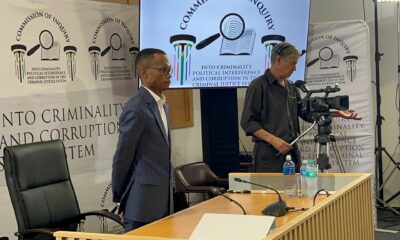
The metro has also taken steps against officials implicated during the Madlanga Commission hearings, where allegations of collusion with criminal elements surfaced. For many residents, that’s long overdue accountability.
On the practical side, the city has invested in a new fleet aimed at improving refuse removal, road maintenance and law enforcement. It has also reclaimed hijacked buildings in Pharoe Park and Airport Park a symbolic and operational move in a province battling urban decay and illegal occupation.
Still, critics argue that stability on paper must translate into consistent services in townships and older suburbs alike.
Tshwane: Paid-up bills and a billion rand promise
In Tshwane, Lesufi highlighted what he described as financial progress.
The city reportedly has no outstanding debt to Eskom or Rand Water a significant milestone given how many municipalities across the country are drowning in unpaid bulk service bills.
He also welcomed the Mayoral Committee’s decision to reimburse workers over R1 billion in backdated salary increases and long-outstanding benefits. According to Lesufi, this shows a willingness to respect bargaining council resolutions and correct what he described as a lack of empathy under the previous administration.
Tshwane attained a qualified audit, rather than the anticipated unqualified one, but Lesufi framed this as progress arguing that the municipality is cleaning up financial records inherited in poor condition.
For residents, however, the lived test is simple: will rates, power and water services remain stable?
Johannesburg: A city in a water crisis
No issue feels more immediate than water in Johannesburg.
Lesufi acknowledged the crisis but pointed to collaboration between all three spheres of government. He welcomed the Presidential Johannesburg Working Group, which aims to tackle service delivery failures, infrastructure decay and financial instability.
For many Joburg residents, this intervention can’t come soon enough. In recent months, entire suburbs have experienced prolonged outages, while aging pipes and reservoirs buckle under pressure.
The bigger story? Johannesburg is the economic engine of South Africa. When it falters, ripple effects are felt nationally.
Emfuleni: The province’s most troubled municipality?
If there’s one municipality that consistently comes up in conversations about dysfunction, it’s Emfuleni.
Long plagued by sewage spills into the Vaal River, infrastructure collapse and financial mismanagement, Emfuleni has often been described as one of Gauteng’s worst-performing municipalities.
Lesufi announced the unveiling of 145 new fleet vehicles to accelerate service delivery, including traffic, bylaws, waste management, electrical and road maintenance vehicles.
The fleet is a visible step, but residents will be watching closely. Emfuleni’s problems run deep, and turning it around requires more than equipment. It requires sustained governance reform.
West Rand: Sinkholes and zama-zamas
In the West Rand, sinkholes continue to disrupt communities. Lesufi said measures are underway following national government’s declaration aimed at bringing relief.
Security also featured prominently. A recent joint operation recovered 75 AK47 rifles and ammunition after illegal miners allegedly intimidated residents in the community of Sporong. The West Rand is also a major beneficiary of the recently announced SANDF deployment.
Despite these challenges, the West Rand District Municipality achieved its second consecutive clean audit, a rare bright spot in a difficult landscape.
Sedibeng: Political tremors continue
In Sedibeng, political instability remains a concern. A motion of no confidence was tabled by the Pan-Africanist Congress of Azania against the Executive Mayor.
Lesufi acknowledged that proposed changes within ANC-controlled municipalities could create governance challenges, with discussions scheduled to address the tensions.
For residents, ongoing political reshuffles often mean uncertainty and delays in service delivery.
A shining exception: Midvaal
Lesufi congratulated the DA-run Midvaal, describing it as a shining municipality in Gauteng.
Midvaal has long been cited as one of the province’s better-managed municipalities, and its governance model is frequently referenced in debates about coalition politics and administrative discipline.
So which town is the worst?
Lesufi did not explicitly name a single “worst” municipality. But by his own framing and by public perception, Emfuleni remains the most troubled.
That said, the reality is more complex. Each municipality faces its own crisis: water in Johannesburg, coalition tensions in Ekurhuleni, political volatility in Sedibeng, sinkholes and illegal mining in the West Rand.
The Premier’s argument is that coalitions, while messy, are stabilising governance.
Residents, however, measure success differently. They measure it in running taps, collected refuse, safe streets and working streetlights.
The next few months will determine whether Gauteng’s municipalities are truly turning a corner or whether speeches continue to outpace service delivery.