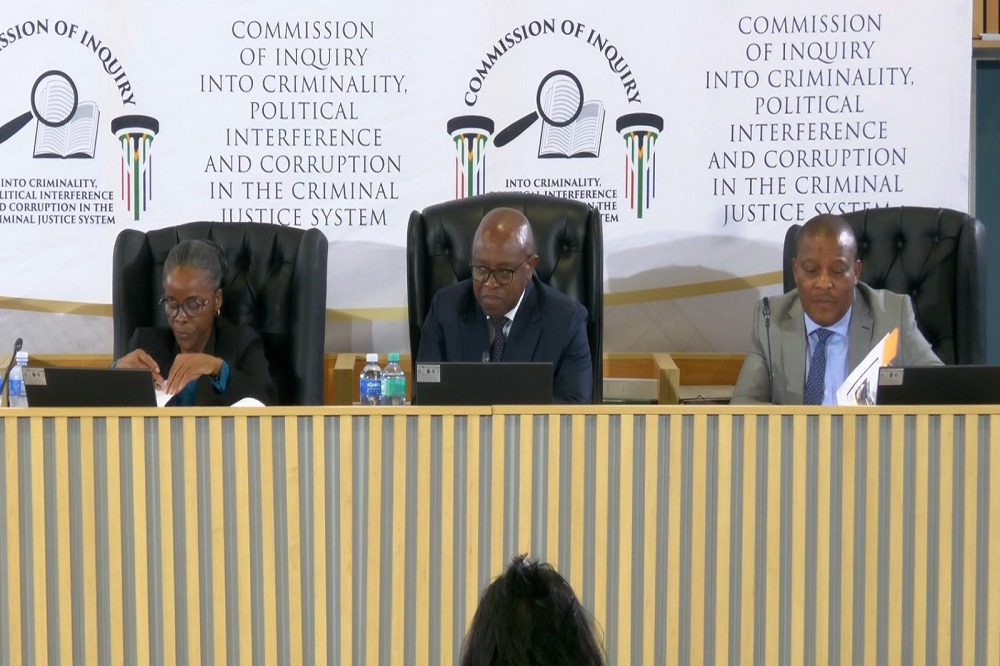
As South Africa continues to grapple with questions around corruption and political interference in its justice system, the Madlanga Commission of Inquiry is making one thing clear. It cannot be everything to everyone.
After months of growing public interest and a steady stream of submissions from concerned citizens, the commission has stepped in to clarify its role and its limits.
What The Commission Is Actually Investigating
The inquiry, which resumed hearings this week following a short Easter break, is focused on a very specific set of allegations. These stem from explosive claims made by KwaZulu-Natal police commissioner Nhlanhla Mkhwanazi in mid-2025.
Those allegations, first aired during a high-profile media briefing, pointed to possible criminal networks and political interference within South Africa’s justice system. It was those claims that ultimately triggered the establishment of the commission.
According to spokesperson Jeremy Michaels, the inquiry is bound by those original terms. While the commission welcomes information from the public, it cannot extend its reach beyond what it was specifically tasked to investigate.
Why The Limits Matter
In a country where public trust in institutions is often tested, many South Africans have hoped the commission could serve as a catch-all solution to long-standing concerns about corruption.
But commissions of inquiry, by design, operate within strict legal frameworks. Their powers are defined from the outset, and stepping beyond those boundaries could undermine both their credibility and their findings.
That means even credible allegations that fall outside the commission’s scope may not be explored in this forum, no matter how pressing they may seem.
Extended Timeline Signals Growing Stakes
The work of the commission is far from over. President Cyril Ramaphosa has already extended its mandate, signalling both the complexity of the investigation and the importance of getting it right.
A second interim report is expected by 29 May, with the final report scheduled for submission by the end of August 2026.
For many observers, that timeline suggests the inquiry is entering a critical phase. What emerges in the coming months could shape not only accountability within the justice system, but also public confidence in how South Africa confronts allegations of high-level wrongdoing.
A Reminder Of The Bigger Picture
While the commission continues its work, its message to the public is clear. It is not a blanket investigation into every issue facing the justice system.
Instead, it is a targeted probe rooted in specific claims, with a defined purpose and a finite scope.
In a landscape often dominated by sweeping expectations, that reminder may be necessary. It is also a reflection of how accountability processes work in practice. Focused, deliberate and, at times, frustratingly limited.