News
When Testifying Becomes a Death Sentence
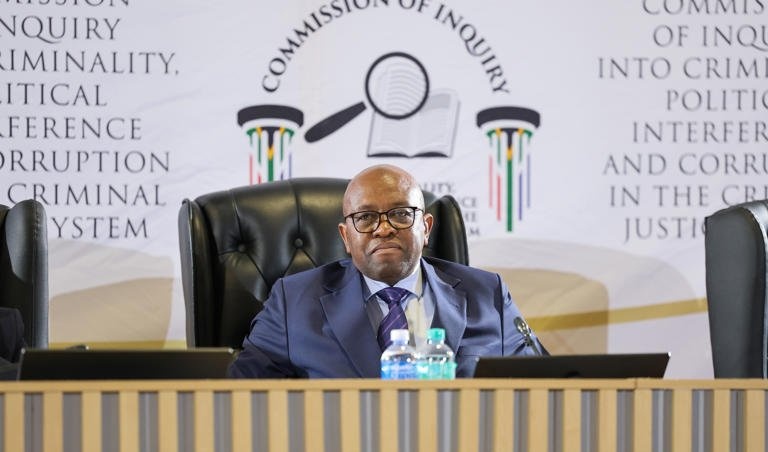
The Madlanga Commission, tasked with untangling a web of corruption and political interference in law enforcement, is now embroiled in a crisis that threatens its very purpose: the safety of those who speak up. Two chilling incidents have laid bare the terrifying risks whistle-blowers face. Marius van der Merwe, a witness who detailed torture and a murder cover-up, was shot dead outside his home. Lieutenant General Dumisani Khumalo, head of Crime Intelligence, fell violently illamidst speculation of poisoningwhile testifying about cash payoffs to police bosses and the deliberate sabotage of a hit squad unit.
These are not isolated threats; they are a direct assault on the search for truth. Van der Merwe, who testified under the alias “Witness D,” had explicitly feared for his life, telling the commission he felt he would be “next” if he didn’t comply with a cover-up. Less than three weeks later, he was assassinated. His testimony implicated suspended Ekurhuleni Metro Police Deputy Chief Julius Mkhwanazi in the torture, killing, and dumping of a suspect.
A Blueprint of Corruption and Retribution
Khumalo’s testimony painted an even broader, more sinister picture. He presented evidence alleging his superior, Lieutenant General Shadrack Sibiya, used a junior officer to collect cash from alleged crime kingpins like Katiso “KT” Molefe. He linked the controversial disbandment of the Political Killings Task Team to protecting a powerful cartel and implicated associates close to the Police Minister. His sudden collapse while giving this evidence sent a shockwave through the proceedings.
A “Non-Functional” Protection System
The state’s response has been widely condemned as inadequate. Political analyst Zakhele Ndlovu stated bluntly, “This clearly shows that there is no functional system to protect witnesses and whistle-blowers,” drawing parallels to the murder of Babita Deokaran. Justice Minister Mmamoloko Kubayi’s suggestion to move testimony behind closed doors has been met with skepticism. While it may offer some shield, security expert Andy Mashile notes that voices can still identify witnesses to those in the know.
Professor Sipho Seepe called the incidents a “lapse in the system,” arguing such high-risk witnesses should have been automatically placed in protection. The National Joint Operational and Intelligence Structure (NATJOINTS) has now pledged to “enhance” security, but for Van der Merwe, any enhancement comes too late.
The commission now stands at a precipice. It can either become a monument to the extreme cost of truth-telling in South Africa, or it can trigger a fundamental overhaul of how the state safeguards its citizens from the powerful figures they dare to expose. The murder and intimidation of its witnesses are not side issues; they are the central story, proving that the corruption under investigation is not just about stolen money, but about a criminal ecosystem willing to kill to protect itself.
{Source: IOL}
Follow Joburg ETC on Facebook, Twitter , TikTok and Instagram
For more News in Johannesburg, visit joburgetc.com