News
“Basking in the sun”: Mantashe’s words ignite anger as voters warn ANC of a 2026 reckoning
A comment that hit a raw nerve
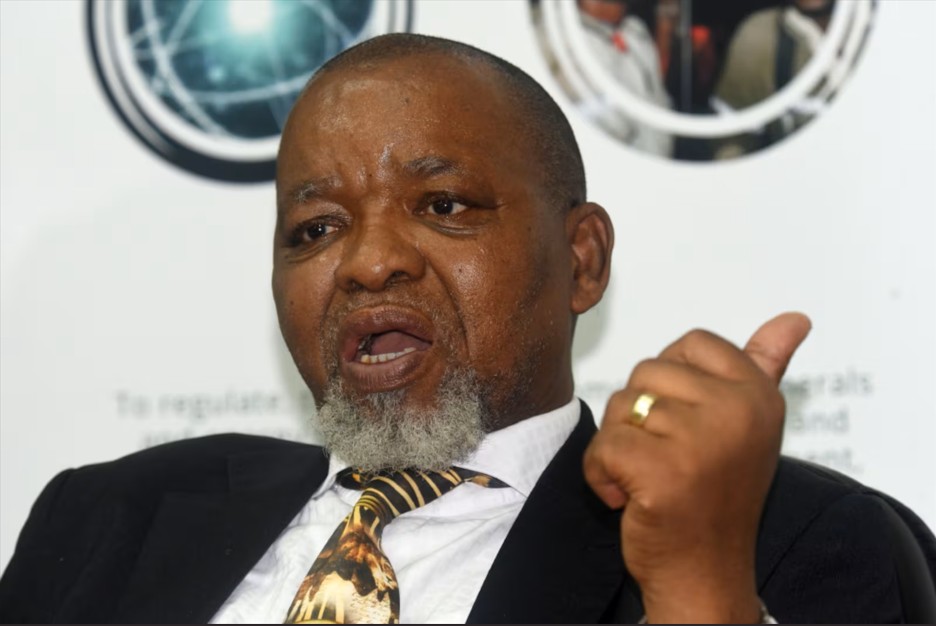
Few issues cut as deeply in South Africa as unemployment. So when ANC national chairperson Gwede Mantashe suggested that many unemployed South Africans are “sitting in the sun” waiting for the government to provide jobs, the backlash was swift and fierce.
What may have been intended as a blunt call for self-reliance has instead landed as an insult to millions struggling to find work in an economy that simply isn’t creating enough jobs. Political analysts now warn that the remarks could further erode support for the ANC as the country heads into crucial local government elections this year, with an eye on 2026.
“Out of touch”: critics pile in
Across political lines, commentators, labour groups and opposition parties condemned Mantashe’s comments as insensitive and disconnected from reality.
At the heart of the criticism is a simple point: people are looking for work the jobs just aren’t there.
Political analyst Makhosini Mgitywa said the remarks wrongly suggest that unemployment is a personal failure rather than a structural crisis.
“We all see thousands of young people standing in long queues for a handful of jobs,” he said, adding that jobseekers cannot create opportunities that don’t exist.
Social media tells a different story
Online, South Africans wasted no time pushing back.
One user, Senzo Ndlazi, pointed out that a single job post often attracts more than 5,000 applications. Another, Bra Tshidi, described the remarks as a “total insult” to the poor, especially coming from leaders perceived to be living comfortably.
The anger reflects a broader frustration, not just with unemployment, but with what many see as a widening gap between political leadership and everyday lived reality.
Labour and opposition voices turn up the heat
South African Federation of Trade Unions general secretary Zwelinzima Vavi delivered one of the harshest responses, accusing Mantashe of abandoning the working class after achieving personal success.
Vavi said the remarks amounted to “spitting in the face of the unemployed”, blaming decades of failed economic policy for the crisis rather than individual effort.
ActionSA leader Herman Mashaba echoed that sentiment, calling the comments reckless and urging voters particularly non-voters, to reconsider their political choices.
According to Mashaba, statements like these reveal a leadership more focused on self-interest than service.
Experts warn of electoral consequences
Economist and Wits University lecturer Dr Lumkile Mondi described Mantashe’s comments as evidence of how disconnected some senior leaders have become from the masses.
He argued that government policy choices have helped create dependency and unemployment, not the attitude of jobseekers themselves.
More importantly, Mondi warned that such statements could be politically damaging.
“This tells people to choose wisely,” he said, especially as service delivery failures and unemployment continue to dominate daily life.
Inside the ANC: divided views
Within the ANC, reactions appear mixed.
One senior party member defended Mantashe, suggesting his message was misunderstood and poorly phrased rather than malicious. The leader argued that unemployment is a “moving target”, with more young people entering the job market each year, and encouraged youth to explore entrepreneurship and social innovation.
But younger voices within the party were far less forgiving.
A member from ANC youth structures described the remarks as irresponsible, stressing that job creation remains the state’s responsibility.
They pointed to recent examples, such as tens of thousands of applicants competing for a small number of public-sector posts, as proof that young people are actively seeking work, often against overwhelming odds.
More than a PR problem
Mantashe’s office declined immediate comment, citing his involvement in the ANC’s January 8 celebrations. But for many South Africans, the damage has already been done.
This controversy is about more than one comment. It speaks to a growing perception that parts of the political elite no longer grasp the daily struggle of ordinary citizens.
As elections approach, the message from the public is becoming harder to ignore: words matter and so does empathy.
{Source: IOL}
Follow Joburg ETC on Facebook, Twitter , TikTok and Instagram
For more News in Johannesburg, visit joburgetc.com