“I was never consulted”: Masemola breaks ranks over disbanded political killings unit
A leadership rift comes into the open
South Africa has seen its fair share of political tension, but it’s not every day that cracks within the country’s top police leadership spill into public view this clearly.
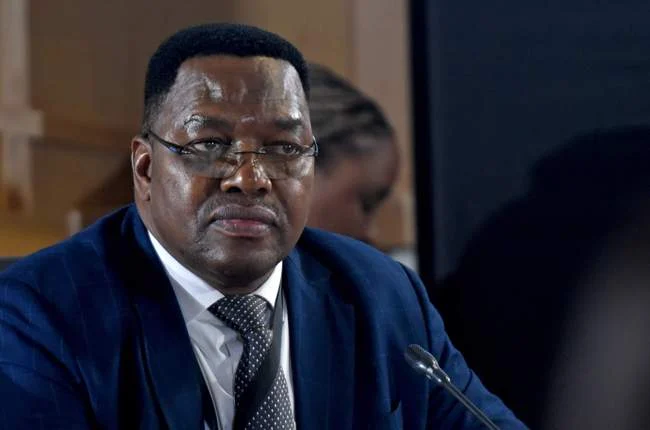
This week, National Police Commissioner Fannie Masemola made one thing unmistakably clear: when the decision was taken to shut down a key investigative unit, he says he wasn’t part of it.
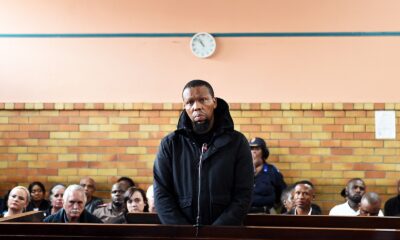
Appearing before Parliament’s ad hoc committee, Masemola maintained that suspended Police Minister Senzo Mchunu never consulted him before disbanding the Political Killings Task Team (PKTT).
In a system built on chain of command, that’s no small claim.
“There was no discussion whatsoever”
Masemola painted a picture of missed opportunities, meetings attended, conversations held, but no mention of what would become a controversial directive.
According to him, even in late December 2024, when senior officials gathered to discuss an unrelated contract issue, there was no indication that the PKTT was about to be dissolved.
He insists the decision came without warning, despite what he described as ample time for consultation.
For many watching the hearings, the question isn’t just what happened, but why such a major decision would bypass the country’s top police official.
The task team at the centre of it all
The Political Killings Task Team wasn’t just another unit.
It was established to investigate politically motivated murders a sensitive and often volatile area, particularly in provinces like KwaZulu-Natal, where such cases have historically made headlines.
Disbanding it raised eyebrows from the start. Now, with conflicting accounts emerging, the move is under even greater scrutiny.
Masemola told MPs that one explanation he later heard from Mchunu was that political killings were no longer a current issue a statement that has sparked debate given the country’s recent history.
A trail of unanswered questions
As the testimony unfolded, more layers emerged.
Masemola said he tried repeatedly to get clarity from Mchunu about the reasons behind the decision, but those attempts never led to a direct answer.
At one point, he even briefed President Cyril Ramaphosa, who he claims appeared surprised by the development and indicated he would follow up with the minister.
That moment alone has raised eyebrows, suggesting that even at the highest level, the decision may not have been widely communicated.
The link to a wider investigation
The situation became more complex when investigators analysed information linked to businessman Vusimuzi “Cat” Matlala.
Masemola said messages found during the probe pointed to a possible connection between the disbandment of the task team and efforts to halt certain investigations.
He stopped short of making definitive claims but suggested the timing and circumstances raised serious concerns.
Adding to the tension, he admitted he never briefed Mchunu on these findings, not out of choice, but because he says the minister was unavailable.
Mkhwanazi’s role and the controversy
KwaZulu-Natal police commissioner Nhlanhla Mkhwanazi also features prominently in the unfolding saga.
Masemola confirmed that Mkhwanazi had sought permission to brief the public on the work of the task team something he approved.
However, he criticised the commissioner for going beyond that mandate during a press briefing, saying he “went overboard” by discussing matters meant for internal reporting.
That moment has since become a flashpoint, with some seeing it as whistleblowing and others as overreach.
Denials, allegations, and a growing storm
Masemola also used the platform to firmly deny any wrongdoing tied to a controversial tender involving Matlala’s company.
Responding to allegations that he had received money, he dismissed the claims outright and challenged those making them to provide evidence.
He also pushed back against suggestions of internal plots or coordinated efforts involving other political figures, calling for proof rather than speculation.
Public reaction: confusion and concern
On social media, the reaction has been a mix of disbelief and concern.
Many South Africans are struggling to make sense of the conflicting accounts, with some questioning how such a critical decision could happen without alignment between top officials.
Others see it as yet another example of deeper issues within the police service, where politics, power, and policing often collide.
More than a leadership dispute
At face value, this may look like a disagreement between two senior figures.
But zoom out, and it becomes something bigger: a test of transparency, accountability, and how decisions are made within one of the country’s most important institutions.
If the disbandment of the PKTT was mishandled or worse, influenced by external factors the implications could be far-reaching.
What comes next
With more testimony expected and investigations ongoing, the full story is still unfolding.
What is clear, however, is that the issue has struck a nerve, both inside Parliament and across the country.
For now, Masemola’s statement hangs in the air: he was never consulted.
And in a system where coordination is everything, that single claim may end up being one of the most important details of all.