News
Overnight Escalation: Missiles Rain Across the Middle East as Conflict Widens
The night sky across the Middle East lit up not with stars, but with the trails of missiles and drones. What began as a focused conflict has rapidly expanded into a multi-front confrontation, drawing in regional powers and international actors. As dawn breaks, the scale of the overnight escalation becomes clearand it’s unlike anything seen in recent years.
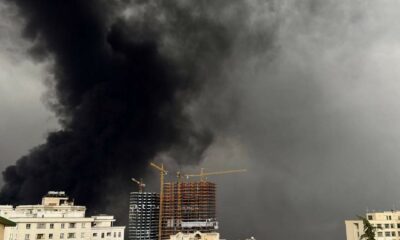
Beirut Burns: Israel Targets Hezbollah Strongholds
The Lebanese capital woke to explosions. In the early hours of Wednesday, the Israeli military issued evacuation warnings to residents of a central Beirut neighbourhood, signalling an imminent attack on Iran-backed Hezbollah positions. The warnings came too late for some. Lebanon’s health ministry confirmed that two earlier strikes, conducted without warning, killed at least six people and wounded 24 others in central Beirut.
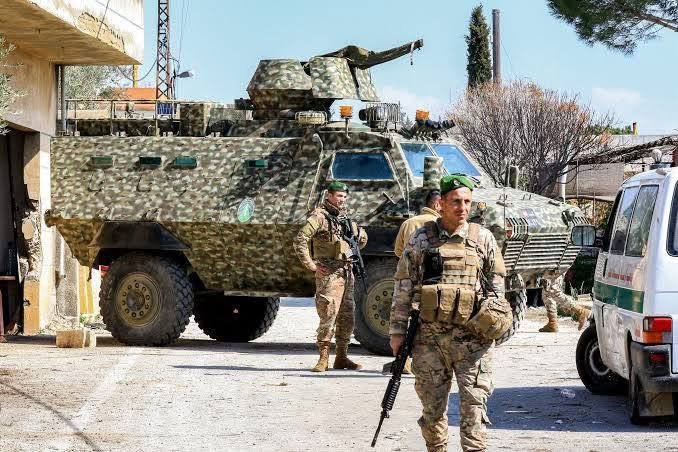
The strikes on Beirut were part of a broader campaign. Israeli forces said they were targeting Hezbollah positions around the southern city of Tyre in response to rocket fire toward Israel. Lebanon’s military paid a heavy price, confirming that three of its soldiers were killed in separate strikes in the country’s south. The death toll in Lebanon since the latest conflict erupted on March 2 now stands at 912, according to the health ministry, a stark increase from 886 just a day earlier.
Iran Strikes Back: Missiles Headed for Israel
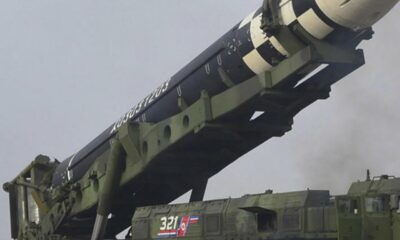
In Tehran, the rhetoric matched the action. Iranian army chief Amir Hatami threatened a “decisive and regrettable” retaliation for the killing of security chief Ali Larijani in an Israeli air strike. Within hours, that threat became reality. Iran’s Revolutionary Guards announced they had launched missiles at central Israel “in revenge for the blood of martyr Dr Ali Larijani and his companions.”
The missile barrage had lethal consequences. Israeli medics reported that two people were killed near Tel Aviv from Iranian missiles, bringing the total death toll from missiles fired on the country to 14. Iran’s Supreme National Security Council had confirmed Larijani’s death on Tuesday after Israel claimed responsibility for the strike.
Hamas swiftly offered condolences to Iran, posting on Telegram: “We renew our solidarity with the Islamic Republic of Iran, which is being subjected to Zionist-American aggression, and affirm that the continuation of this aggression is a crime that targets the entire region and threatens its security and stability.”
Gulf Nations Caught in the Crossfire
The conflict is no longer confined to Israel and Lebanon. Gulf nations found themselves on the front lines overnight. An Iranian projectile struck near Australia’s military headquarters for the Middle East in the United Arab Emirates, according to Prime Minister Anthony Albanese. The location of the strike raises troubling questions about the safety of international military facilities in the region.
Saudi Arabia’s defence ministry reported intercepting a ballistic missile near Prince Sultan Air Base, which houses US military personnel. The kingdom also shot down eight drones. Kuwait’s air defences responded to both rocket and drone attacks, authorities confirmed. Even Qatar, often seen as a more neutral Gulf player, was not sparedits defence ministry intercepted a missile attack as explosions were heard in Doha.
The coordinated nature of these attacks suggests a deliberate strategy to overwhelm air defences across multiple nations simultaneously, testing the limits of regional and international military cooperation.
The Strait of Hormuz: America’s Deep Punctures
Near one of the world’s most critical oil chokepoints, the US military unleashed significant force. US Central Command announced it had hit Iranian missile sites with “multiple 5,000-pound deep penetrator munitions” near the strategic Strait of Hormuz. These are among the most powerful bombs in the American arsenal, designed to destroy heavily fortified underground facilities. The choice of munitions signals an intent to degrade Iran’s military capabilities at their most protected locations.
Baghdad: The US Embassy Under Fire
In Iraq, the conflict reached the heart of American diplomatic presence. The US embassy in Baghdad was targeted by both drone and rocket attacks, a security official confirmed. The strikes sparked a fire on embassy grounds, with a witness reporting seeing flames from her balcony. The attack on such a high-profile diplomatic facility marks a significant escalation, potentially drawing Iraq deeper into the widening conflict.
Ukraine’s Unlikely Role: Fighting Iranian Drones
In a development that connects two of the world’s major conflicts, Ukrainian President Volodymyr Zelensky revealed that over 200 Ukrainian anti-drone military experts are currently deployed in several Middle East countries. Their mission: to help defend against Iranian-designed drones, weapons that Ukraine has become intimately familiar with defending against in its own war with Russia. This quiet deployment represents a remarkable intersection of conflicts, with Ukrainian expertise now being used to protect nations from weapons developed by Iran and used extensively by Russian forces.
Iran’s Home Front: Rallies and Resolve
Inside Iran, authorities mobilised their population. Crowds gathered in cities across the country after officials called for nationwide rallies to defy enemy “plots,” according to state television. The timing was significantthe gatherings occurred on a night usually marked by Persian new year (Nowruz) festivities. By shifting the focus to national defiance, authorities appeared keen to prevent any anti-government dissent at a time when people traditionally take to the streets in celebration. The message was clear: in times of external threat, internal unity is paramount.
Washington’s Warnings: Trump Lashes Out at Allies
From Washington, President Donald Trump delivered a series of sharp rebukes to traditional allies. He declared that NATO was making a “foolish mistake” on Iran after most alliance members rebuffed his calls to help reopen the Strait of Hormuz to oil traffic. The dispute highlights growing tensions between the US and its traditional partners over how to handle the escalating crisis.
Trump was particularly critical of the UK. “He hasn’t been supportive, and I think it’s a big mistake,” Trump said of Prime Minister Keir Starmer. “I’m disappointed with Keir I like him, I think he’s a nice man, but I’m disappointed.”
In a remarkable social media post, Trump declared American self-sufficiency. “We have had such Military Success, we no longer ‘need,’ or desire, the NATO Countries’ assistance WE NEVER DID!” he wrote on Truth Social. “WE DO NOT NEED THE HELP OF ANYONE!”
A Resignation in Protest
The human cost of the conflict extends beyond casualties. Joseph Kent, a top US counterterrorism official appointed by Trump, resigned in protest. “I cannot in good conscience support the ongoing war in Iran,” Kent wrote in his resignation letter. Trump dismissed the departure, calling Kent “weak on security” and saying it was a “good thing” he quit. The resignation signals that even within the administration, the expanding conflict is causing moral and professional distress.
What Comes Next
As the region awakens to a new reality, several questions loom. Will Iran’s missile and drone attacks draw direct retaliation against its territory? How will Gulf nations respond to being targeted? Can international shipping through the Strait of Hormuz continue safely? And what role will the Ukrainian anti-drone experts play in the coming days?
One thing is certain: the conflict has moved far beyond its origins. What began as exchanges between Israel and Hamas, then expanded to Hezbollah in Lebanon, has now engulfed Iran, the Gulf states, Iraq, and drawn in the United States and its allies. The Middle East is once again at the centre of global turmoil, and the overnight escalation suggests the worst may be yet to come.
{Source: The Citizen}
Follow Joburg ETC on Facebook, Twitter , TikTok and Instagram
For more News in Johannesburg, visit joburgetc.com