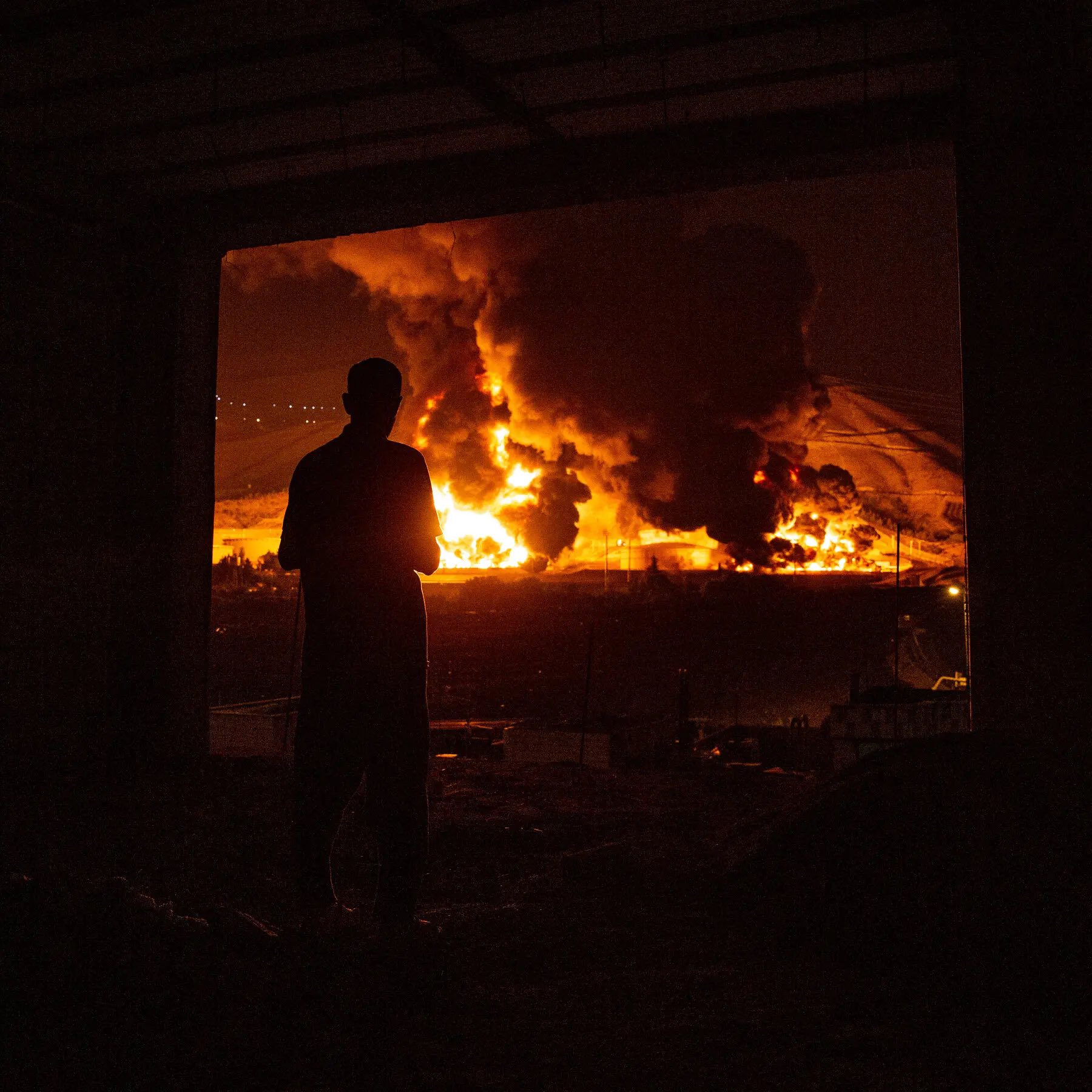
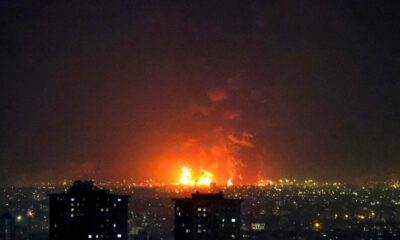
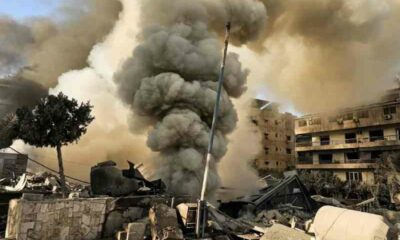
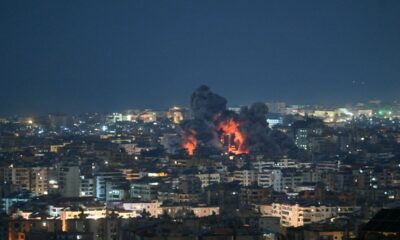
The flames that lit up the night sky over Qatar’s northern coast have been extinguished, but the damage they caused extends far beyond the walls of the Ras Laffan Industrial Area. For the first time in this escalating conflict, a major energy facility has been directly struckand the world is watching to see what comes next.
Qatari civil defence teams worked through the night to contain fires that erupted at the Gulf state’s primary gas hub following an Iranian missile attack. Early Thursday, the interior ministry announced that all fires were under control. “Cooling and sites-securing operations are still ongoing,” the ministry posted on X. No injuries were reported.
But the damage assessment tells a more concerning story. Qatar’s state-run energy firm confirmed that several of its Liquefied Natural Gas facilities were hit, causing “extensive” damage. Ras Laffan is not just any facilityit is one of the world’s largest natural gas processing plants, a critical node in global energy supply. When it burns, the world feels it.
The Chain of Strikes
The attack on Qatar did not happen in isolation. It was retaliation, part of an escalating cycle of strikes that now spans the region.
It began with Israel striking Iran’s South Pars gas fieldthe massive offshore facility that Iran shares with Qatar. US President Donald Trump confirmed the Israeli operation but claimed the United States “knew nothing” of the attack in advance. “We had no involvement, no knowledge, and no warning,” Trump posted on his Truth Social platform.
Iran responded by targeting Qatar’s Ras Laffan facility. The logic was strategic: hit the Qatari side of the shared gas field, send a message that energy infrastructure is on the table, and demonstrate that Iran can reach critical assets.
Trump’s response was immediate and threatening. “If there are further attacks against Qatar’s main gas plant, I will destroy Iran’s South Pars field completely,” he warned. The language was characteristically blunt, the implications enormous.
The Human Toll
While energy infrastructure burns, the human cost continues to mount.
Iran executed three people on Thursday, convicted of killing police officers and carrying out operations in favor of the United States and Israel during unrest earlier this year. The judiciary’s Mizan Online website identified them as individuals convicted in the “Dey (January) unrest, on charges of murder and operational actions in favor of the Zionist regime and the United States.” They were involved in the killing of two law enforcement personnel.
In Israel, a foreign worker was killed by Iranian missile fire approximately 20 kilometers northeast of Tel Aviv. Medics confirmed the death, bringing Israel’s toll from the ongoing war to 15.
And in the occupied West Bank, three Palestinian women were killed by falling shrapnel near Hebronthe first reported Palestinian deaths of this conflict. Several others were injured, with one woman initially reported dead before being found in critical condition. The Palestinian Red Crescent confirmed the casualties.
The Regional Ripple
The strikes are sending shockwaves across the Gulf.
The United Arab Emirates has shut down operations at a gas facility due to falling debris from missile interceptions. A vessel near the Strait of Hormuz was hit by a projectile, causing a fire, according to a British maritime security agency.
Kuwait announced the arrest of 10 militants affiliated with Iran-backed Lebanese Hezbollah, accusing them of plotting “terrorist” actions against vital infrastructure. The interior ministry’s statement suggested that the threat to energy facilities is being taken seriously across the Gulf.
Saudi Arabia’s capital Riyadh was hit again, with loud explosions reported late Wednesday. The defence ministry said it intercepted four ballistic missiles and destroyed a drone headed toward a gas plant. The kingdom is finding itself increasingly drawn into a conflict it did not seek.
Qatar’s Response
Qatar is in a difficult position. It shares the South Pars/North Field gas reservoir with Iranthe largest natural gas field in the world. Its economy depends on that resource. Its relationship with Iran has historically been more pragmatic than confrontational.
But an Iranian missile strike on its sovereign territory changes calculations. Qatar’s foreign ministry ordered Iran’s military and security attaches along with their staff to leave the country within 24 hours. The expulsion is a sharp diplomatic rebuke, signaling that even pragmatic Doha has limits.
At the same time, Qatar joined the UAE in condemning strikes on Iran’s gas plant. The condemnation reflects the delicate balancing act required: reject Iranian aggression while acknowledging that Israeli strikes also contribute to escalation.
The Iranian Position
Iran’s Revolutionary Guards issued a stark warning to neighboring Gulf nations. Their oil and gas industries would be “completely destroyed” if Israel or the United States conduct any further attacks against Iranian energy infrastructure.
“Our response will be much more severe than tonight’s attacks,” the Guards said in a statement, referring to the strike on Ras Laffan.
President Masoud Pezeshkian blamed Israel and the United States for the strikes on South Pars, warning of “uncontrollable consequences” if energy infrastructure attacks continue. The message was aimed at Gulf states as much as at the West: you are not safe. Your energy is not safe. No one is safe.
New Supreme Leader Mojtaba Khamenei, who has not appeared in public since taking office, issued a written message vowing revenge for the killing of security chief Ali Larijani in an Israeli strike. “Every drop of spilled blood comes at a price, and the criminal murderers of these martyrs will soon have to pay it.”
International Reactions
French President Emmanuel Macron spoke with Trump and the Qatari emir about the attacks, calling for restraint. “It is in the common interest to implement without delay a moratorium on strikes targeting civilian infrastructure, particularly energy and water infrastructure,” Macron posted on X.
The call for a moratorium reflects European anxiety about where this is heading. Energy infrastructure is not just a military targetit is the foundation of modern civilization. When it burns, everyone suffers.
The US Federal Reserve raised its outlook for inflation as it held interest rates steady, citing an “uncertain” economic outlook due to the war. The message from the world’s most powerful central bank was clear: this conflict is already affecting global economic calculations.
The Iraqi Dimension
Iraq’s Kataeb Hezbollah, an influential pro-Iran armed group, announced it was halting attacks on the US embassy in Baghdad for five days, pending certain conditions. The group demanded that Israel stop bombing Beirut’s southern suburbsa Hezbollah strongholdand that US-Israeli operations not target residential areas in Iraq.
The conditional pause suggests that Iran-aligned groups are calibrating their responses, perhaps under pressure from Tehran to avoid opening too many fronts simultaneously. But the conditions also highlight how deeply the conflict has spreadfrom Gaza to Lebanon to Iran to Qatar to Iraq, with no end in sight.
What Comes Next
The fire at Ras Laffan is out, but the region remains ablaze. Iran has demonstrated its willingness and ability to strike critical energy infrastructure. The United States has threatened devastating retaliation. Gulf states find themselves caught between superpowers, their vulnerabilities exposed.
Israel vows to continue targeting senior Iranian officials. “We will continue to hunt down all of the regime’s senior officials. The series of eliminations will not stop,” a military spokesman said.
Iran’s leadership promises revenge. Gulf states scramble to protect their assets. The world watches energy prices and holds its breath.
The strikes on gas facilities mark a dangerous escalation. Energy infrastructure has historically been off-limits in Middle Eastern conflictstoo important, too interconnected, too likely to trigger uncontrollable responses. That taboo has now been broken. What comes next is anyone’s guess.