
News
Sewage, Not Red Tide: The Real Cause Behind Mossel Bay’s Fish Deaths
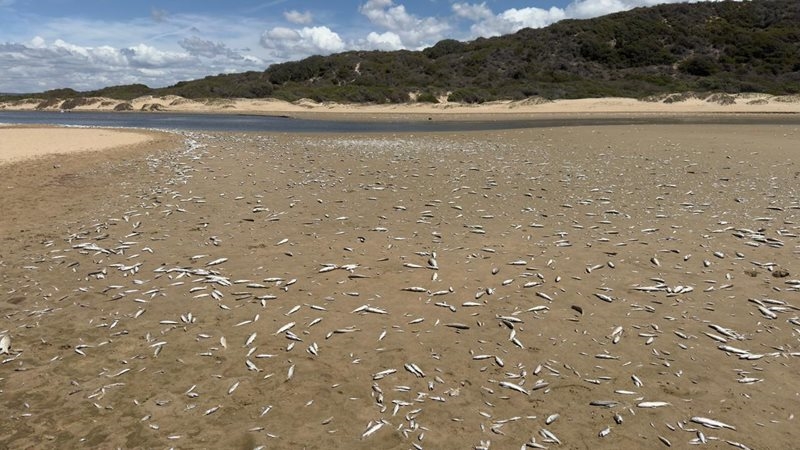
For days, images of lifeless fish floating in the Hartenbos Estuary unsettled residents and holidaymakers in Mossel Bay. Many feared the worst. Was another red tide devastating the coast?
According to South Africa’s environmental authorities, the answer is no.
The Department of Forestry, Fisheries and the Environment has confirmed that the mass fish deaths in the estuary were caused by sewage discharge. This pollution triggered eutrophication and ammonia toxicity, stripping oxygen from the water and leaving fish with no chance of survival.
What Went Wrong in the Estuary
The affected area was the Hartenbos Estuary, a sensitive system that depends on a careful balance between freshwater, seawater, and oxygen levels.
Officials explained that nutrient-rich sewage entering the estuary fuelled an algal bloom. As algae multiplied, oxygen levels dropped sharply. With low water levels and high summer temperatures, conditions worsened quickly. Fish and other aquatic life simply suffocated.
Emergency tests recorded critically low dissolved oxygen levels, prompting authorities to mechanically breach the estuary mouth. This intervention, allowed under the Approved Estuary Mouth Management Plan, aims to restore natural flow and prevent long-term ecological damage.
Why This Was Not a Red Tide
At the same time as the Mossel Bay incident, visible red tides were detected along parts of the West Coast, stretching from Elandsbaai northwards past the Olifants Estuary. Satellite imagery and Fisheries Control Officers confirmed these blooms, yet no fish or shellfish deaths were linked to them.
Further south, a separate red tide appeared in Walker Bay near Hermanus. This bloom is bioluminescent, lighting up the water at night with glowing flashes that many locals shared excitedly on social media. Despite the spectacle, there have been no reported mortalities in that area either.
The key difference lies in the cause. Red tides can be toxic, which is why authorities continue to warn against harvesting or eating any shellfish. However, the Mossel Bay fish deaths were driven by oxygen depletion from pollution, not by red tide toxins.
Municipality Response and Public Reaction
The Mossel Bay municipality initially stated that routine water samples from the estuary met applicable standards. After the emergency breaching and further investigation, officials acknowledged that severe oxygen loss was the direct trigger for the fish kill.
Cleanup operations began immediately, with contractors removing dead fish and monitoring water conditions. Locals, meanwhile, took to social media to express frustration and concern, with many questioning how sewage could reach such an ecologically important waterway during the peak holiday season.
For Garden Route communities that rely on clean coastal environments for tourism, fishing, and recreation, the incident has struck a nerve.
A Bigger Warning for Coastal Towns
Beyond Mossel Bay, this incident highlights a growing challenge facing coastal towns across South Africa. Ageing sewer infrastructure, population pressure, and heatwaves increase the risk of pollution-related fish kills. Estuaries are often the first to suffer.
The Department of Forestry, Fisheries and the Environment has confirmed it will continue monitoring both the Mossel Bay situation and the spread of red tides along the South and West Coasts. For now, the message is clear. Avoid collecting or eating shellfish anywhere affected, even where no fish deaths are visible.
The water may look calm again, but the warning signs are impossible to ignore.
Also read: Matric Results vs Privacy: The Court Fight That’s Splitting South Africa
Follow Joburg ETC on Facebook, Twitter, TikT
For more News in Johannesburg, visit joburgetc.com
Source: IOL
Featured Image: Mossel Bay Advertiser


