News
New water crisis committee won’t fix taps unless governance changes, warn experts
New water crisis committee won’t fix taps unless governance changes, warn experts
South Africans have heard the promise before: a new committee, a coordinated response, urgent intervention from the top.
But as President Cyril Ramaphosa announced the formation of a National Water Crisis Committee during his State of the Nation Address, some governance experts were already warning that the country’s deepening water crisis is unlikely to improve and could even get worse.
A crisis years in the making
South Africa’s water problems did not begin this summer.
The national crisis has been building since around 2015, when severe droughts, intensified by climate change, collided with ageing infrastructure, neglected maintenance and financial mismanagement.
The result? Chronic shortages across multiple provinces.
In Gauteng, parts of Johannesburg including Midrand, Melville and Laudium have endured outages lasting more than 10 days. Frustration has boiled over into protests in some communities.
KwaZulu-Natal’s South Coast has faced erratic or nonexistent supply since mid-December, largely due to power interruptions affecting water extraction pumps.
In the Eastern Cape, Nelson Mandela Bay’s five key dams, Impofu, Churchill, Koega, Loeries and Groendal recently dropped to a combined potable water level of just 9.31%, placing the metro on edge.
Major pipe bursts, deteriorating systems and a lack of technical capacity have compounded the problem in both Gauteng and KZN.
Ramaphosa’s intervention
During SONA, Ramaphosa acknowledged that water outages reflect a local government system that is failing.
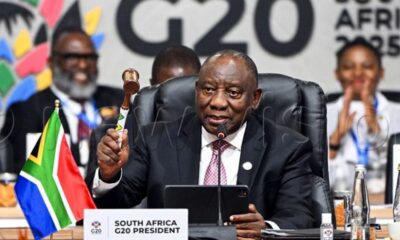
He announced that he would personally chair the newly established National Water Crisis Committee (NWCC), modelled on the National Energy Crisis Committee. The goal: centralised coordination, swift deployment of technical experts and better use of national resources to assist struggling municipalities.
He also tasked Water and Sanitation Minister Pemmy Majodina and Cooperative Governance and Traditional Affairs Minister Velenkosini Hlabisa with urgently addressing the crisis, particularly in Johannesburg.
In a show of accountability, Ramaphosa revealed that criminal charges have already been laid against 56 municipalities for failing to deliver water. He said municipal managers could now face charges in their personal capacity under the National Water Act.
The government, he added, has committed more than R156 billion over the next three years for water and sanitation infrastructure.
On paper, it sounds decisive.
“Committees don’t fix pipes”
Governance expert Professor Andre Duvenhage is not convinced.
He argues that South Africa’s tendency to create committees and commissions often substitutes for structural reform. According to him, the problem lies deeper in what he calls the blurred line between political appointments and technical expertise.
“You cannot appoint a politically connected cadre to a role that requires engineers and specialised technicians,” he has warned.
For Duvenhage, the crisis cannot be resolved within the current framework if political loyalty continues to trump administrative competence.
Another governance analyst, Sandile Swana, echoes similar concerns. While he acknowledges Ramaphosa’s hands-on approach, he points out that the Constitution, the National Water Act and municipal laws already outline how water services should be delivered.
In his view, incompetence, corruption and non-performance not the absence of oversight committees sit at the heart of the problem. He suggests that institutions like the Public Service Commission should be empowered to remove underperforming officials and appoint qualified professionals instead.
Government pushes back
Ramaphosa’s spokesperson, Vincent Magwenya, did not respond to requests for comment.
However, Water and Sanitation Ministry spokesperson Cornelius Monama defended the creation of the NWCC. He described it as part of ongoing reforms rather than a “new promise,” arguing that crises demand strong central coordination.
He also dismissed claims that the intervention is politically timed, insisting that government cannot pause service delivery obligations because of the electoral calendar.
A country running dry and out of patience
On social media, the public mood is mixed. Some welcome the president’s personal involvement, seeing it as a sign of urgency. Others are sceptical, pointing out that electricity, rail and municipal collapses have all previously prompted similar high-level task teams.
The bigger question is whether coordination at national level can overcome dysfunction at municipal level.
Water crises are not abstract policy debates. They mean mothers waking at 4am to queue at tankers. Small businesses closing early. Schools sending children home. Hospitals scrambling to maintain hygiene standards.
South Africa’s water infrastructure requires engineers, maintenance budgets and functional governance. Committees may help align strategy, but they cannot weld pipes or replace pumps.
Unless systemic governance issues are addressed alongside funding commitments, experts warn that the taps may continue to run dry.
And for millions of South Africans, that is not a political metaphor, it’s daily reality.
{Source: IOL}
Follow Joburg ETC on Facebook, Twitter , TikTok and Instagram
For more News in Johannesburg, visit joburgetc.com