Courts & Legal
Former NPA prosecutor raises concerns over Paul O’Sullivan’s role in IPID probe
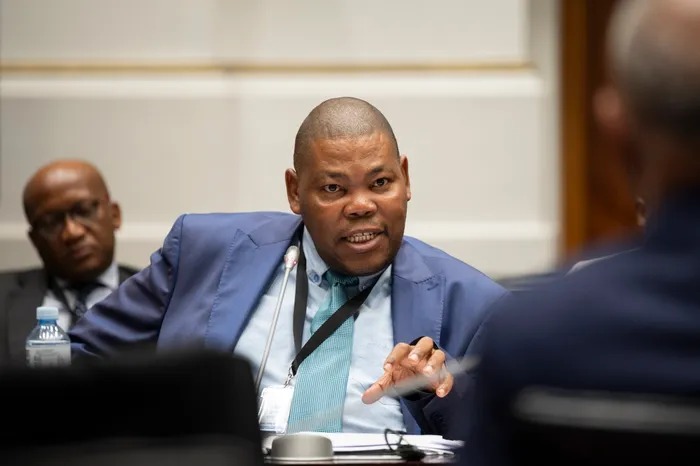
A parliamentary committee hearing into the work of South Africa’s police watchdog has taken a dramatic turn after a former National Prosecuting Authority prosecutor alleged that private individuals were deeply involved in an official investigation.
Advocate Michael Mashuga, who previously worked for the National Prosecuting Authority, told Parliament’s Ad Hoc Committee that forensic fraud examiner Paul O’Sullivan and his assistant Sarah Jane Trent were involved in the Independent Police Investigative Directorate investigation linked to former acting national police commissioner Khomotso Phahlane.
His testimony has reignited debate about the independence of watchdog bodies and how investigations involving senior police officials should be handled.
Claims of outside influence in an official investigation
Mashuga told the committee that the IPID investigation was compromised because individuals who were not part of the directorate were allowed to participate in the process.
According to his testimony, O’Sullivan and Trent were involved in investigative activities even though they were not IPID officials. Mashuga argued that this undermined the principle that the directorate must conduct its work independently and without outside interference.
He told the committee that the IPID Act clearly outlines rules designed to protect the integrity of investigations. One of those principles is that investigators should not participate in cases where personal interests or relationships could influence the outcome.
Mashuga said the alleged involvement of the pair raised serious questions about whether those rules were followed.
Allegations linked to the Phahlane investigation
The matter centres on the investigation into former acting national police commissioner Khomotso Phahlane.
Phahlane previously told the Ad Hoc Committee that the police watchdog had been infiltrated by O’Sullivan during the investigation into him. O’Sullivan has rejected those claims and has maintained that he did not conduct investigations on behalf of IPID.
Mashuga told the committee that he believes O’Sullivan and Trent had a motive to implicate Phahlane and that their involvement created the perception that the investigation was not impartial.
Financial contribution raises further questions
One of the key issues raised during the hearing involved a financial contribution linked to the former IPID head.
Mashuga told the committee that O’Sullivan had previously contributed R200 000 toward the legal expenses of Robert McBride during a period when McBride was suspended from his position as IPID head.
He claimed that after McBride was reinstated in November 2016, O’Sullivan approached him and became involved in the investigation concerning Phahlane.
Mashuga suggested that the contribution could be viewed as a form of gratification connected to involvement in the investigation.
Allegations of intimidation and misconduct
Mashuga also described several incidents that he said took place during the investigation.
He told the committee that O’Sullivan allegedly threatened Phahlane, telling him that once he was imprisoned, his house would be auctioned and that he would buy and sell it. The statement referenced a similar situation involving convicted fugitive Radovan Krejcir.
Another allegation related to a visit to the estate where Phahlane’s home is located. Mashuga claimed that O’Sullivan and Trent acted as though they were IPID investigators when they accompanied officials and obtained statements.
He said this conduct could amount to a contravention of the IPID Act.
Mashuga also told the committee that an estate manager was allegedly intimidated into providing confidential house plans for the property. According to the testimony, the estate manager was warned he could face imprisonment if he did not cooperate.
Mashuga argued that such a warning would only apply if a person refused to cooperate with IPID investigators, not private individuals.
Perjury allegations and wider fallout
Mashuga said that O’Sullivan, Trent, and two IPID investigators were identified as suspects in the matter.
He also alleged that false information was later included in sworn affidavits submitted during legal proceedings involving an application by Phahlane to interdict O’Sullivan.
According to Mashuga, those statements claimed the pair had only been involved in preliminary investigations. He told the committee that this was incorrect and formed the basis for perjury charges.
The former prosecutor added that the case had personal consequences for him. He told the committee that he faced criticism, accusations, and media attacks after pursuing the prosecution.
Mashuga said the criticism included radio interviews and articles that questioned his actions and motives.
A case still drawing national attention
The testimony has once again placed the IPID investigation into the spotlight. The case touches on broader issues that often surface in South African politics and policing: oversight, accountability, and the independence of investigative bodies.
For many observers, the outcome of the parliamentary inquiry could shape how watchdog institutions operate in the future.
For now, the committee continues to hear evidence as it attempts to establish whether the investigation into Phahlane followed the rules set out in law.
Follow Joburg ETC on Facebook, Twitter, TikT
For more News in Johannesburg, visit joburgetc.com
Source: IOL
Featured Image: Cape Times