Courts & Legal
MPs to question Paul O’Sullivan again over alleged law enforcement influence
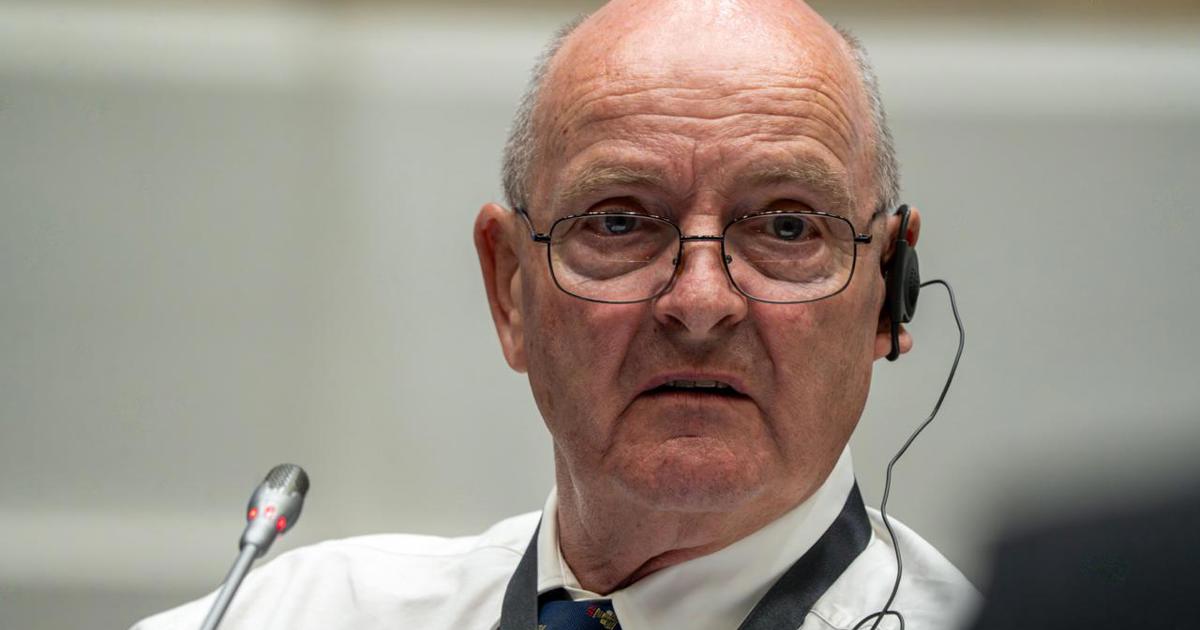
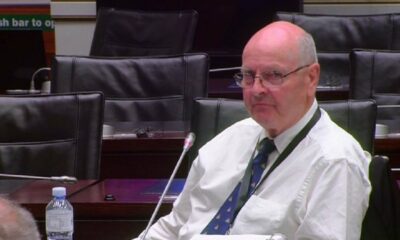
South Africa’s Parliament is preparing for another tense round of questioning involving forensic investigator Paul O’Sullivan as lawmakers continue probing claims about the level of influence he may hold within the country’s law enforcement structures.
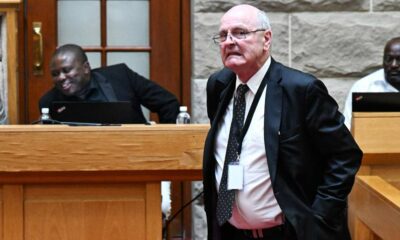
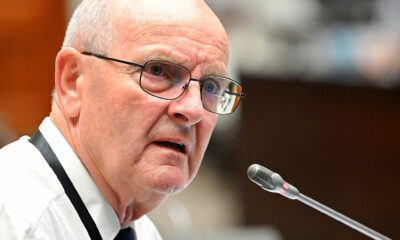
The upcoming appearance will mark O’Sullivan’s third time before Parliament’s ad hoc committee, which is investigating allegations linked to SAPS KwaZulu-Natal Provincial Commissioner Lieutenant General Nhlanhla Mkhwanazi. The proceedings have already drawn significant attention, both inside political circles and across social media, where the debate around accountability in policing continues to grow louder.
Prosecutor testimony raises new questions
Ahead of O’Sullivan’s return, the committee heard evidence from Advocate Michael Mashuga, a former senior state advocate who prosecuted a case connected to the controversial Kameeldrift rhino poaching investigation.
Mashuga was authorised by the National Director of Public Prosecutions, Andy Mothibi, to testify about the matter. The case itself dates back to 2014, when authorities arrested members of a suspected rhino poaching syndicate accused of killing 22 rhinos and stealing 84 horns with an estimated value of R22 million.
At the time, the case involved several figures whose names have since resurfaced in the parliamentary inquiry, including former IPID head Robert McBride and former acting national commissioner Khomotso Phahlane.
Mashuga’s testimony provided the committee with a different account of events compared with earlier evidence from some witnesses.
Conflicting accounts of a controversial case
ANC MP Khusela Sangoni Diko said the timing of Mashuga’s testimony was important because it came before O’Sullivan’s next appearance and before his former personal assistant, Sarah Jane Trent, is expected to testify.
According to Sangoni Diko, Mashuga’s version of events contradicts claims previously presented to the committee.
One of the most disputed points involves the circumstances surrounding Trent’s arrest. While earlier descriptions suggested she had been kidnapped, Mashuga told the committee that the incident was, in fact, a lawful arrest.
The difference between those accounts, Sangoni Diko said, highlights why the committee intends to question O’Sullivan again using the information now on record.
The case involving O’Sullivan and Trent was eventually struck off the court roll nearly a decade ago and was never re-enrolled, despite expectations at the time that the matter might return to court.
Debate over influence and accountability
Beyond the details of the rhino poaching case, the inquiry has opened a broader discussion about the role individuals outside official policing structures may play in influencing investigations.
Sangoni Diko said the committee is examining allegations suggesting O’Sullivan may have attempted to infiltrate the Independent Police Investigative Directorate and may have exerted pressure on senior police officials.
She also raised concerns about what she described as the level of authority he appears to wield within parts of the law enforcement system.
For many observers, the issue touches on a much larger national conversation. South Africa has spent years rebuilding public trust in its criminal justice institutions after periods marked by corruption scandals and institutional instability. Any suggestion that private individuals may hold unusual influence within those systems inevitably sparks intense scrutiny.
A tense process in Parliament
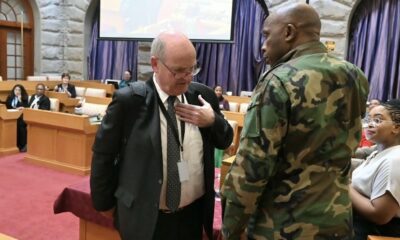
The committee’s investigation has not been without friction. O’Sullivan previously walked out of a parliamentary session, abruptly halting proceedings and forcing the committee to reconvene later.
Sangoni Diko acknowledged that emotions have sometimes run high during the hearings, both from committee members and witnesses. She stressed, however, that the focus must remain on establishing the facts.
According to her, the evidence presented so far gives the committee grounds to re-examine O’Sullivan more closely when he returns.
What happens next
With additional testimony now on record, lawmakers say the next phase of questioning will focus on clarifying contradictions between witnesses and determining whether any wrongdoing took place.
For the committee, the ultimate goal is not only to resolve the claims surrounding this particular case but also to understand whether systemic gaps allowed such allegations to arise in the first place.
As the hearings continue, the inquiry is likely to remain firmly in the national spotlight, especially as South Africans continue to watch how Parliament handles one of the more controversial law enforcement debates of recent years.
Follow Joburg ETC on Facebook, Twitter, TikT
For more News in Johannesburg, visit joburgetc.com
Source: IOL
Featured Image: EWN