Courts & Legal
Explosive Madlanga Commission testimony puts Senzo Mchunu on the defensive
A commission meant to uncover the truth takes a sharp turn
The Madlanga Commission was set up to probe claims of infiltration and corruption within South Africa’s police and intelligence structures. This week, however, the focus shifted dramatically. Instead of rogue officers operating in the shadows, attention landed squarely on the man who once oversaw the police ministry.
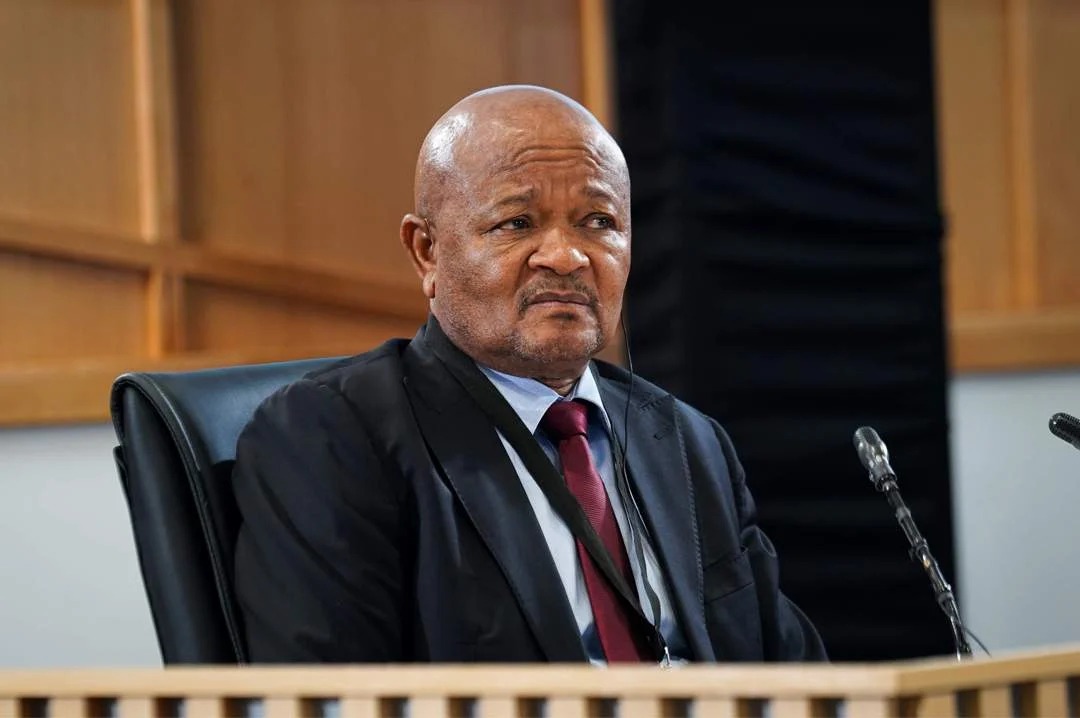
Suspended police minister Senzo Mchunu now finds himself at the centre of allegations that have sent shockwaves through the commission and the public alike. Testimony from a key figure known as Witness E has painted a picture not of a whistleblower under pressure, but of a senior politician allegedly working behind the scenes to rewrite the story in his favour.
What Witness E told the commission
In sworn testimony, Witness E alleged that Mchunu repeatedly contacted him with a clear agenda. According to the witness, these were not casual check-ins or clarifications. They were persistent calls urging him to stick to a version of events that Witness E says was simply not true.
The witness told the commission that he was informed a statement had already been prepared for him. His role, as he understood it, was to present that statement as his own evidence. Phone records handed to the commission reportedly support the claim that the contact was frequent and ongoing, directly contradicting earlier public denials from Mchunu about any improper engagement.
At the heart of the alleged fabrication was an attempt to redirect blame. Witness E said the false narrative was designed to implicate crime intelligence boss Lieutenant General Dumisani Khumalo, effectively turning him into a convenient scapegoat.
Allegations of lying under oath and witness manipulation
The claims go further than private phone calls. Witness E told the commission that the statements Mchunu later relied on under oath were built on information he knew to be false. The intention, according to the testimony, was to legitimise serious accusations of infiltration within the police and justice system while shielding Mchunu from scrutiny over his own conduct.
The commission also heard allegations that Mchunu advised Witness E on whom to implicate and which details to highlight. The motivation, the witness suggested, was political and personal survival rather than any genuine attempt to clean up corruption.
If these claims are proven, they would amount to interference in the justice system by a sitting cabinet minister, a line that many South Africans believe should never be crossed.
A stark contrast to Mchunu’s public stance
What has made the testimony land so heavily is how sharply it contrasts with Mchunu’s own public narrative. Since the allegations first surfaced, he has consistently portrayed himself as a defender of the rule of law. Under oath, he rejected claims of dishonesty and corruption, telling the commission that he had never before faced such accusations.
That defence now sits uneasily alongside the version presented by Witness E, who described a pattern of manipulation involving intelligence structures and internal police processes. In this account, corruption allegations were not exposed but weaponised to neutralise perceived threats.
Why this moment matters beyond the commission room
On social media and talk radio, the reaction has been swift and intense. Many South Africans have expressed frustration and anger, not only at the allegations themselves but also at what they suggest about power and accountability at the highest levels of government. Others have urged caution, stressing the importance of allowing the commission to complete its work before drawing conclusions.
There is also a deeper historical context at play. South Africa’s recent past has been marked by commissions that revealed how easily institutions can be hollowed out when political power goes unchecked. For many observers, the Madlanga Commission feels like another test of whether the country has truly learned from that era.
What happens next
The commission’s task is far from over. Mchunu’s testimony, Witness E’s evidence, and the supporting records will all be weighed before any findings are made. What is already clear, though, is that the credibility of key figures and the integrity of the justice system are under intense scrutiny.
For a country still rebuilding trust in its institutions, the outcome of this inquiry will matter long after the commission adjourns. Whether these allegations are upheld or dismantled, they have reopened a difficult but necessary conversation about truth, power, and accountability in South Africa.
Follow Joburg ETC on Facebook, Twitter, TikT
For more News in Johannesburg, visit joburgetc.com
Source: IOL
Featured Image: News24