Courts & Legal
‘Justice can’t wait’: Timol family plea reignites debate over stalled TRC cases
‘Justice can’t wait’: Timol family plea reignites debate over stalled TRC cases
There are some wounds in South Africa that time hasn’t healed, only quieted. This week, one of those wounds was reopened in a courtroom, not with anger, but with a plea.
A plea for justice that has taken more than three decades to be heard.
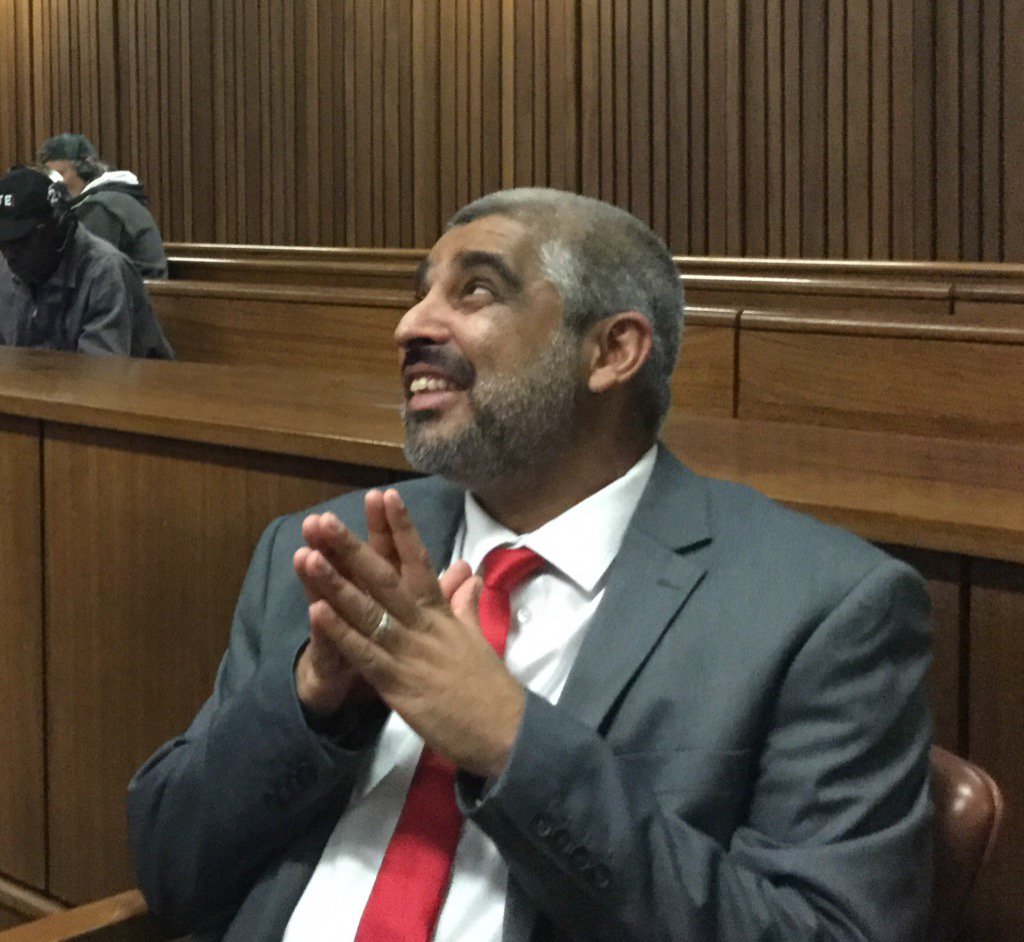
At the centre of it is Imtiaz Ahmed Cajee, nephew of slain anti-apartheid activist Ahmed Timol, who stood before a judicial commission and spoke not just for his family, but for many others still waiting for closure.
A courtroom filled with history and frustration
Cajee’s testimony wasn’t just legal it was deeply personal.
He described the emotional toll of watching case after case tied to apartheid-era crimes get tangled in what he called “legal sideshows” endless applications, procedural delays, and courtroom manoeuvres that seem to push justice further out of reach.
His message to Cyril Ramaphosa was careful but firm:
Don’t interfere with the law but find a way to break the deadlock.
For families who have waited decades, every delay feels like history repeating itself.
A new theory: Not politics, but internal resistance
While many South Africans have long suspected political interference in the slow pace of TRC-related prosecutions, Cajee offered a different and more unsettling perspective.
He suggested that the problem may lie within the system itself.
According to his testimony, individuals inside the National Prosecuting Authority may have played a role in quietly stalling progress over the years. He pointed to senior prosecutors, including Torie Pretorius and Chris MacAdam, raising questions about past allegiances and possible conflicts of interest.
It’s a claim that, if proven, could reshape how South Africa understands its post-apartheid justice journey.
The shadow of the past: A system that never fully answered
To understand the weight of Cajee’s words, you have to go back to 1971.
Ahmed Timol died in police custody at Johannesburg’s John Vorster Square a place that became synonymous with apartheid-era brutality. At the time, authorities ruled his death a suicide.
That version of events stood for 46 years.
It was only in 2017, after relentless effort by Cajee and others, that a reopened inquest found Timol had been murdered.
For many South Africans, that moment symbolised a breakthrough. But as Cajee’s testimony makes clear, it was only the beginning of a much longer fight.
The ‘Prime Evil’ question and who escaped accountability
In a striking part of his submission, Cajee revisited the legacy of Eugene de Kock, once dubbed “Prime Evil” for his role in apartheid crimes.
Cajee argued that focusing so heavily on De Kock may have allowed others including commanders and political figures to avoid accountability.
His question lingered in the room:
How did one man come to represent the crimes of an entire system?
It’s a perspective that challenges the narrative many South Africans grew up with that justice, while imperfect, had at least been partially served.
A generation still waiting
Perhaps the most haunting part of Cajee’s testimony was not about the past but the present.
He spoke of elderly family members who are still waiting for answers, some of whom may never see justice in their lifetime.
Even symbolic acts of remembrance haven’t been straightforward. In 2021, on the 50th anniversary of Timol’s death, access to the site where he died was reportedly denied to those wishing to commemorate him.
For Cajee, that raised a painful question:
Who really controls the narrative of South Africa’s past today?
Social media reaction: ‘We were promised closure’
Following the testimony, social media lit up with renewed frustration.
Many South Africans expressed disbelief that hundreds of TRC-related cases remain unresolved decades after democracy.
Some posts echoed a common sentiment:
“The TRC gave us truth, but where is the justice?”
Others called for urgent reform within the justice system, arguing that delays undermine the very foundation of reconciliation.
A system under pressure and time running out
There has been some movement.
Cajee acknowledged a shift in momentum since 2021, when these cases were moved to a dedicated TRC unit. But he warned that progress remains fragile and time is not on the side of victims’ families.
As years pass, witnesses age, memories fade, and the possibility of meaningful accountability narrows.
The unfinished business of freedom
South Africa’s transition to democracy is often celebrated as a miracle. But testimonies like Cajee’s are a reminder that the story didn’t end in 1994.
For many families, the struggle simply changed form from political resistance to legal endurance.
The question now is whether the country has the will to finish what it started.
Because as Cajee’s voice made clear in that courtroom:
justice delayed is not just justice denied, it’s justice disappearing.
{Source: IOL}
Follow Joburg ETC on Facebook, Twitter , TikTok and Instagram
For more News in Johannesburg, visit joburgetc.com