Courts & Legal
Court backs Wits as student loses bid to overturn academic exclusion
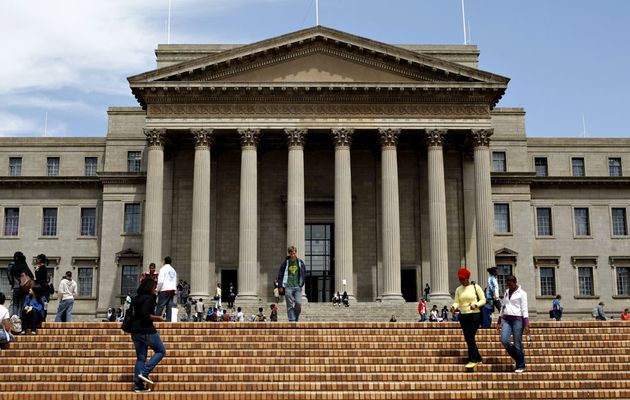
Court backs Wits as student loses bid to overturn academic exclusion
A long-running academic struggle at the University of the Witwatersrand has ended in the courtroom and not in the student’s favour.
The South Gauteng High Court has dismissed an urgent application by Catherine Mwila Mwaba, who wanted her academic exclusion overturned and permission to register for the 2026 academic year.
In a judgment delivered by Judge Shanaaz Mia, the court found no legal basis to interfere with the university’s decision to refuse her readmission to continue her Bachelor of Science degree.
For many students following the case online, it was a sobering reminder of how unforgiving academic rules can be especially at one of South Africa’s most competitive institutions.
Falling short of the numbers
Mwaba enrolled in 2022 in a three-year BSc programme in the Faculty of Science. Like many science degrees, it comes with strict progression requirements: 144 credits per year, adding up to 432 credits in total, with a maximum of five years to complete the qualification.
By the end of 2025, her fourth year, she had accumulated 264 credits. That left her 168 credits short of graduation.
More critically, she had not completed key second-year courses such as Linear Algebra II and/or Mathematical Statistics II. Those subjects are foundational for progressing to third-year Computer Science or Computational Applications.
At Wits, as at most South African universities, progression isn’t just about time spent it’s about mastering building blocks before moving forward. Without those prerequisites, third-year enrolment simply isn’t possible.
Appeals exhausted
The university’s Readmissions Committee (WRC1) refused her request to renew her registration in January 2026. She then appealed in person before a second committee (WRC2), but that appeal was also unsuccessful.
Arguing that the decision was unlawful, irrational and procedurally unfair, Mwaba turned to the High Court on an urgent basis. She sought interim relief that would allow her to register provisionally for 2026 while her case was reconsidered.
The court acknowledged that academic exclusion is serious. Missing a year of study can have lasting consequences, financially and emotionally. But urgency alone, the judge said, does not justify overturning an academic decision.
Courts and campus autonomy
Judge Mia stressed an important principle: courts are generally reluctant to interfere in academic decisions unless there is clear unlawfulness or irrationality.
Universities have autonomy in managing academic standards. Judicial intervention, she noted, is reserved for exceptional cases.
Mwaba argued that her exceptional circumstances including a psychologist’s report outlining health challenges were not properly considered. She contended that the university could have exercised discretion and allowed her to continue under a special curriculum arrangement.
But the court found that she had been informed of her risk of exclusion, given the opportunity to make written submissions, and later allowed to present oral arguments at her appeal hearing.
Procedural fairness, the judgment clarified, guarantees a fair process not a favourable outcome.
The court also observed that her academic shortfall was substantial, not marginal. It further questioned how any special arrangement would realistically enable her to complete the degree within the five-year limit set by university rules.
Granting provisional registration, the judge concluded, would amount to judicial intrusion into academic administration, something the court was not prepared to do.
“This is not such a case,” the judgment stated.
A wider debate about pressure and performance
The ruling has sparked mixed reactions among students and alumni. On social media, some sympathised with Mwaba, pointing to the mental health pressures facing science students and the lingering academic disruption caused by pandemic-era learning gaps.
Others argued that standards must be upheld to protect the integrity of degrees.
Wits, like many public universities, operates under increasing strain balancing widening access to higher education with the need to maintain rigorous academic benchmarks. South Africa’s higher education system has expanded significantly since 1994, but throughput rates remain a challenge, especially in demanding STEM fields.
The case highlights a difficult reality: universities can provide support and appeals, but they are bound by their own rules. And courts will not easily override those rules unless there is clear wrongdoing.
What the ruling means
The High Court’s decision means Mwaba will not be permitted to register for the 2026 academic year at Wits.
Beyond one student’s case, the judgment reinforces a broader message to students across the country: academic progression policies are not flexible guidelines, they are binding frameworks.
For many first- and second-year students watching this unfold, it may serve as a stark reminder to seek academic support early, understand credit requirements clearly, and take exclusion warnings seriously.
In the end, the courtroom did not rewrite the university rulebook. It upheld it.
{Source: IOL}
Follow Joburg ETC on Facebook, Twitter , TikTok and Instagram
For more News in Johannesburg, visit joburgetc.com