If you’ve been following the Nkabinde inquiry, you’d be forgiven for feeling a sense of déjà vu. The probe into suspended South Gauteng Director of Public Prosecutions, Advocate Andrew Chauke, has hit another wall. It’s a story less about bombshell revelations and more about the grinding, frustrating mechanics of justice itself, where progress is measured in procedural skirmishes and empty witness chairs.
This isn’t just legal pageantry. For many locals, it’s a test. A test of whether powerful institutions can be held accountable, or if they simply know how to work the system better than anyone else. On social media, the mood is a mix of cynicism and exhaustion. “Another month, another delay,” reads a typical comment. “When do we actually get to the truth?” The public’s patience, much like the inquiry’s timeline, is wearing thin.
A Central Conflict That’s More Than Just Paperwork
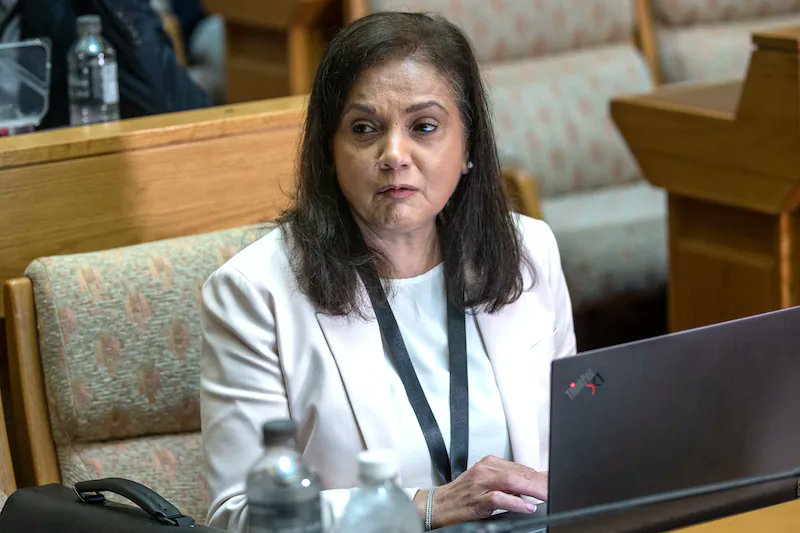
At the heart of this latest pause is a question that sounds like legal jargon but cuts to the core of fairness: can the same legal team play for two sides? The dispute revolves around Advocate Garth Hulley. He leads the National Prosecuting Authority’s (NPA) internal legal team. Yet, in this inquiry, he’s representing another key figure, National Director of Public Prosecutions Advocate Shamila Batohi.
Chauke’s legal team has raised the red flag on a potential conflict of interest. Think of it like this: how can one legal advisor fairly represent the head of the NPA while also being part of the NPA’s own internal machinery that might be under scrutiny? It’s a tangled web that Justice Bess Nkabinde, presiding with clear impatience, must now unravel. She pointedly asked if this conflict also touched on the thorny issue of who is footing Batohi’s legal bills, a question that remains in the air.
The Echo of Empty Chairs: Where Are the Witnesses?
If the legal representation issue is one roadblock, the witness list is another, more daunting one. The evidence leaders, the lawyers tasked with presenting the case, delivered a blunt assessment to the inquiry panel. They are, in essence, stuck.
They cited “difficulties” with every single witness related to a critical part of the case. Two names stood out: the controversial Cato Manor Unit and Major General Johan Booysen. For those who’ve followed South Africa’s turbulent policing history, these names carry heavy weight. They are threads connected to older, darker stories of alleged police brutality and internal wars within the justice system. Their absence from the witness box isn’t just a delay; it feels like a missing chapter.
Justice Nkabinde’s frustration was palpable. “We’ve spent almost a month on one witness,” she noted, urging the team to find someone, anyone, who could testify. The response was a hard no. The evidence leaders confirmed that for this phase, every chair might as well remain empty. They promised details in a future affidavit, but for now, it’s a silent standoff.
The Bigger Picture: A System on Trial?
This inquiry was meant to be a straightforward examination of a senior official’s fitness to hold office. Instead, it has become a mirror reflecting broader systemic issues. The delays speak to a justice ecosystem where complex internal politics, historical baggage from units like Cato Manor, and legal technicalities can freeze the search for answers.
When witnesses linked to major, unresolved cases can’t be brought to testify, it erodes public trust. It feeds a narrative that some truths are too inconvenient, or some networks too powerful, to be fully confronted. Justice Nkabinde’s plea for progress is a sentiment shared by a watching nation: “The time lost is significant, and we cannot afford to go on indefinitely like this.”
The inquiry is set to resume, but the real question isn’t about the next hearing date. It’s about whether the machinery of accountability can overcome the forces of inertia and obfuscation. For now, the people are left watching a courtroom drama where the most active players are the lawyers, and the climax keeps getting postponed.