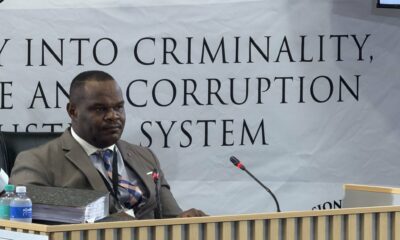
After weeks of testimony, thousands of pages of documents, and more than 30 witnesses, Parliament’s Ad Hoc Committee has finally reached the end of its oral hearings. The committee, established to investigate allegations made by SAPS KwaZulu-Natal Police Commissioner Nhlanhla Mkhwanazi, saw the provincial commissioner return on Wednesday to answer questions arising from the proceedings.
Now comes the hard part: making sense of it all.
“We’re going to have to deal with the issue of conflicting evidence,” said ANC MP Khusela Sangoni-Diko. “We’re going to have to deal with the issue of contrasting views on a number of issues. But I suppose that’s the work that goes into the report now.”
The committee’s task was always ambitious. Mkhwanazi’s allegationsof political interference, capture of the criminal justice system, and infiltration by drug cartelscut to the heart of South Africa’s law enforcement institutions. The hearings drew national attention, with witness after witness offering testimony that painted a troubling picture of a system under siege.
The Final Witness
Mkhwanazi returned on Wednesday as the final witness, determined, in Sangoni-Diko’s words, “to respond to every single thing that has ever been said against him.”
“He was the one who propagated and instigated these hearings to look into these allegations,” she noted. “It’s good to see that he’s been following the proceedings quite closely and stands ready, as always, to give responses to the issues.”
For Mkhwanazi, the hearings were an opportunity to substantiate claims he had made publicly, to name names, and to push for systemic reform. Whether he succeeded is now for the committee to determine.
The Volume of Evidence
The scale of the committee’s work is difficult to overstate. Sangoni-Diko estimated that members have reviewed “thousands of documents of evidence.” More than 30 witnesses have appeared. The testimony has ranged from detailed allegations of misconduct to sweeping indictments of institutional failure.
“All in all, the process has really been enlightening,” she said. “I think it’s done a lot to uncover a lot of what we believe is rot within the SAPS in particular.”
The word “rot” is carefully chosen. It suggests not isolated incidents of misconduct, but systemic decaystructures and cultures that enable wrongdoing rather than preventing it.
The Conflicting Evidence Problem
With multiple witnesses offering different versions of events, the committee now faces the challenge of determining what actually happened. Whose testimony is credible? Whose account aligns with documentary evidence? Where there are contradictions, which witnesses should be believed?
These are not academic questions. The committee’s recommendations could lead to disciplinary action, criminal charges, or fundamental reforms. Getting the facts right matters.
Sangoni-Diko acknowledged the difficulty but expressed confidence in the process. “We’re going to have to deal with the issue of conflicting evidence… But I suppose that’s the work that goes into the report now.”
The Reform Agenda
Beyond the specific allegations, Mkhwanazi used his testimony to push for broader changes. “General Mkhwanazi, who is the last witness today, is obviously speaking a lot and seeking to push a particular reform agenda that we’re going to have to craft across the criminal justice system,” Sangoni-Diko said.
The scope of that agenda is wide. “Just the tensions within SAPS, IPID, and IDAC are a problem,” she noted. She added that the committee wished those issues could have been addressed more thoroughly, “including the judiciary as well as the National Prosecuting Authority.”
The mention of the judiciary and NPA is significant. Mkhwanazi’s allegations have never been confined to the police. He has spoken of systemic capturean entire criminal justice system compromised by criminal networks.
The Presidential Response
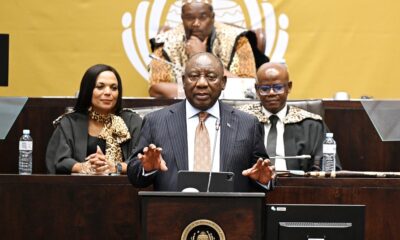
Adding to the committee’s material, President Cyril Ramaphosa formally submitted written responses to questions on Tuesday. According to presidency spokesperson Vincent Magwenya, Ramaphosa’s submission “demonstrates his support for the parliamentary process and ensures the committee receives all necessary information to carry out its mandate effectively.”
“The president is committed to transparency and welcomes parliamentary oversight of the executive, as part of the democratic processes that govern the country,” Magwenya added.
Sangoni-Diko confirmed receipt of the responses, which run to a number of pages. Ramaphosa had received about 100 questions from the committee.
“They are a couple of days late,” she acknowledged. “But I think given the number of things that he had to respond to, it’s quite understandable on our side.”
The committee will now incorporate the presidential responses into its deliberations. “There may be a to-and-fro again, where there are follow-up issues on what his responses are,” Sangoni-Diko said.
The MK Party Perspective
UMkhonto weSizwe Party MP Thulani Shongwe offered a different perspective on the hearings. He expressed appreciation for Mkhwanazi’s courage in coming forward with “such explosive and dangerous effects.”
“As MPs ourselves, we are not immune to the danger of such information,” Shongwe noted. “But it takes strength and, should I say, ability to think through whether you go all in or you go half in or what, but for the creator of the country, the change that we need, we appreciate this opportunity.”
Shongwe acknowledged that the recommendation phase could become contentious. “It might be a robust debate between political parties, where some are perceived to be protecting others and criminality, and so on.”
He urged South Africans to “watch this space very, very closely” and to use the information revealed in making electoral decisions.
“If it’s possible that we as parties can align together in one space, then we deserve to work together. But if we don’t, then this is the time, South Africans will directly observe us, and determine whether we mean what we say and we do what we promise.”
What Comes Next
With oral hearings concluded, the committee’s work now shifts to drafting its report. Members must review the evidence, reconcile conflicting testimony, assess credibility, and formulate recommendations.
Those recommendations could include:
-
Referrals for further investigation by law enforcement
-
Disciplinary action against identified individuals
-
Legislative or policy changes
-
Structural reforms to SAPS and related institutions
The report will be debated in Parliament before being made public. Its findings will shape public discourse and potentially influence political outcomes.
For Mkhwanazi, the coming months will determine whether his decision to go public leads to the reforms he seeks, or whether his allegations become another chapter in South Africa’s long history of unanswered questions about state capture.
For the committee, the challenge is to produce a report that commands credibility, withstands scrutiny, and translates evidence into action.
As Sangoni-Diko put it: “What is most important for us is what we do with everything that we’ve heard.” The hearings have ended. The real work is just beginning.