News
Parole Gone Wrong: Brutal Murder Sparks National Outcry Over South Africa’s Parole System
Parole Gone Wrong: Brutal Murder Sparks National Outcry
The haunting image of a young woman’s lifeless body in the mountains of the Eastern Cape has reignited South Africa’s fraught debate over parole and bail. In May 2024, a shepherd stumbled upon the severed body of a 22-year-old woman in the Tsengiwe Administrative Area, sparking horror across social media and the nation.
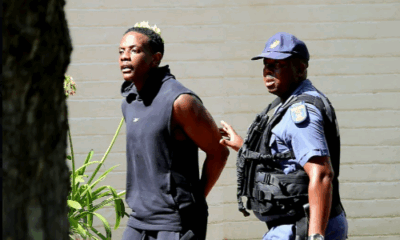
The perpetrator, 35-year-old parolee Mabhuti Mabra Mbili, was later sentenced to life in prison for the murder of his girlfriend. Authorities described the crime as exceptionally violent: the woman had been decapitated, with her head discovered in a separate location by police following Mbili’s arrest.
Investigation Leads from Social Media
In a chilling demonstration of how digital traces can aid justice, investigators traced the accused through a photograph circulating online showing the victim with two men. This clue helped narrow down the suspects, ultimately leading to Mbili’s arrest.
According to NPA spokesperson Luxolo Tyali, after his arrest, Mbili guided police to where he had hidden the severed head. The gruesome details shocked the nation and added fuel to the ongoing conversation about violent recidivism in South Africa.
A Troubling Pattern: Parole Statistics
South Africa’s parole system has long been under scrutiny. Recent parliamentary records show that for every 10 parolees released over the last three years, nearly four return to prison. From 46,627 parolees, 18,052 were rearrested including 493 for murder, 624 for sexual assault, and over 3,100 for robbery and theft.
Cases like Mbili’s highlight a growing public concern: are current parole procedures adequately protecting communities, or are they inadvertently putting citizens at risk?
Bheki Cele: “The Animal Called Parole”
Former police minister Bheki Cele has repeatedly called for a hard look at parole and bail laws. Speaking before parliament, Cele described parole as a system that often works against the very purpose of policing.
“There is another big animal called parole, where people, I am told, are released on good behaviour in prison,” Cele said. “Good behaviour in prison is expected, that’s what prison is for. But we are seeing repeat offenders returning to commit the worst crimes.”
Cele also raised concerns about revenge attacks, noting that some parolees target witnesses or people involved in their previous convictions. “It’s a national issue,” he said, urging lawmakers to strengthen oversight and tighten laws to prevent violent recidivism.
The Human Toll and National Outcry
Social media and news outlets across South Africa have been abuzz with reactions, many expressing outrage over the brutality of the crime and frustration with the justice system. Gender-based violence remains a critical national concern, and Mbili’s crime underscores the risks posed when violent offenders are released prematurely.
State prosecutor Odwa Mmeli described the murder as “one of the most shocking incidents of femicide in the country,” emphasizing that the victim suffered a horrific and brutal death at the hands of a previously convicted offender.
Moving Forward: A Call for Reform
The case has intensified calls for reform of South Africa’s parole system, with advocates arguing for:
-
Stricter screening and monitoring of parolees
-
Enhanced coordination between correctional services and police
-
Tougher consequences for repeat offenders
-
Greater transparency to restore public trust
As the nation grapples with the ongoing crisis of gender-based violence and violent recidivism, Mbili’s sentencing may be a grim reminder of the system’s weaknesses. For many South Africans, it is a call to action: parole and bail must balance rehabilitation with public safety or the consequences can be deadly.
{Source: The Citizen}
Follow Joburg ETC on Facebook, Twitter , TikTok and Instagram
For more News in Johannesburg, visit joburgetc.com