Inside Paul O’Sullivan’s explosive two days before Parliament
It was the kind of parliamentary hearing that had MPs leaning forward and social media lighting up in real time.
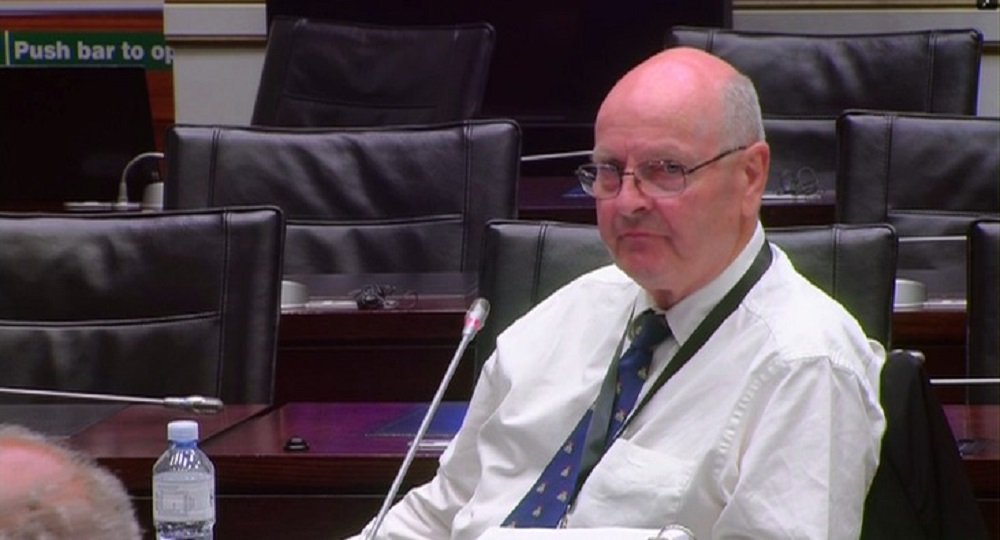
For two days, forensic investigator Paul O’Sullivan delivered sweeping and at times deeply controversial testimony before Parliament’s ad hoc committee. He named names, revisited old political battles and questioned the integrity of senior police leadership.
Then, just after 7pm on Wednesday, proceedings were abruptly halted when O’Sullivan complained of severe spinal pain linked to previous surgery. The session was adjourned, with his testimony set to resume later.
But by then, the damage or impact, depending on where you stand had already been done.
Day one: “Rogue” generals and old political ghosts
O’Sullivan opened with direct criticism of senior SAPS figures, describing certain generals including KwaZulu-Natal commissioner Lieutenant-General Nhlanhla Mkhwanazi and national commissioner General Fannie Masemola as “rogue”.
The choice of language was deliberate and sharp.
He also revisited his long-running campaign against former national police commissioner Jackie Selebi, reminding the committee how his investigations contributed to Selebi’s 2010 conviction and 15-year prison sentence after evidence linked him to convicted drug trafficker Glen Agliotti.
For O’Sullivan, it was a moment to underline his track record.
But the hearing didn’t stay in the present. He pulled Parliament back into the political turbulence of the mid-2000s the bitter rivalry between former presidents Thabo Mbeki and Jacob Zuma, particularly ahead of the ANC’s watershed 2007 Polokwane conference.
He referenced the controversial “spy tapes”, later cited when fraud and corruption charges against Zuma were withdrawn in 2009. For many South Africans, that episode remains one of the most debated chapters in the country’s prosecutorial history.
O’Sullivan also addressed long-standing accusations that he operates as a foreign agent, stating that although he holds Irish, British and South African citizenship, his loyalty lies with South Africa.
Day two: AfriForum, Phala Phala and the Presidency
If day one was about police leadership and historical battles, day two turned the spotlight onto O’Sullivan himself.
MPs questioned his affiliations, including his membership of AfriForum. He confirmed his association and defended his 2017 arrest, saying he had been visiting his attorney at the time.
Under questioning, he rejected claims that he investigated or assisted President Cyril Ramaphosa regarding the Phala Phala matter. He said he only became aware of the issue through media coverage and later opened a perjury case against former intelligence chief Arthur Fraser.
One of the more politically sensitive disclosures came during questioning by ANC MP Khusela Diko.
O’Sullivan revealed that then-presidential adviser Bejani Chauke sought his informal advice during the 2022 process to appoint a permanent national police commissioner after General Khehla Sitole’s removal.
According to O’Sullivan, his organisation Forensics for Justice conducted lifestyle audits on eight shortlisted candidates and recommended that six were unsuitable. Ultimately, General Fannie Masemola was appointed on 31 March 2022.
That claim alone is likely to fuel further debate about the intersection between civil society investigators and executive decision-making.
Intelligence funds and internal tensions
O’Sullivan also raised concerns about the Crime Intelligence Secret Services Account, an area historically shrouded in controversy.
He questioned Lieutenant-General Mkhwanazi’s handling of alleged corruption linked to the Political Killings Task Team (PKTT) and went further, claiming that a statement presented by Mkhwanazi in July last year had been prepared on a computer in Pretoria suggesting coordination beyond KwaZulu-Natal.
These are serious assertions, and as with all parliamentary testimony, they remain allegations unless formally tested and proven.
A surprising Ramaphosa anecdote
In one of the more unexpected moments, O’Sullivan revisited a little-known chapter of President Ramaphosa’s past.
He told MPs that in 1997, while lecturing at a SAPS training centre, he trained Ramaphosa as a volunteer police reservist.
At the time, Ramaphosa was a businessman and senior ANC figure not yet president.
O’Sullivan said he taught criminal law, investigation techniques and constitutional principles, including the Bill of Rights. He described it as ironic that Ramaphosa, who had played a central role in negotiating and drafting South Africa’s 1996 Constitution, attended sessions covering constitutional foundations.
According to O’Sullivan, Ramaphosa agreed that the training was correct.
The anecdote offered a rare, almost humanising pause in an otherwise combative session a reminder of how tightly interwoven South Africa’s political and institutional histories can be.
A polarising figure
O’Sullivan has long described himself as a former British Army intelligence officer who later became a South African police reservist and founded Forensics for Justice to expose alleged corruption in law enforcement.
Supporters see him as a relentless anti-corruption crusader. Critics argue he is politically entangled and selective in his targets.
On social media, reaction to his testimony has been predictably divided. Some users praised his willingness to “name names”. Others questioned his credibility and motives, especially given his AfriForum affiliation.
In a country where trust in institutions is fragile, figures like O’Sullivan tend to amplify existing divides.
What happens next?
With proceedings paused due to his health, the committee will reconvene at a later date to continue hearing his evidence.
For now, Parliament has been left with a thick cloud of allegations touching on police leadership, intelligence funding and presidential advisory processes.
Whether those claims translate into formal investigations or remain part of South Africa’s ongoing political theatre remains to be seen.
One thing is certain: for two days, Paul O’Sullivan ensured that the spotlight was firmly fixed on the fault lines within South Africa’s law enforcement and executive structures.
And in a country still wrestling with questions of accountability, that spotlight is unlikely to dim anytime soon.