City Updates
R7 million SONA bill raises tough questions before Ramaphosa takes the stage
Every February, South Africans brace themselves for two things: the President’s promises and the price tag attached to them.
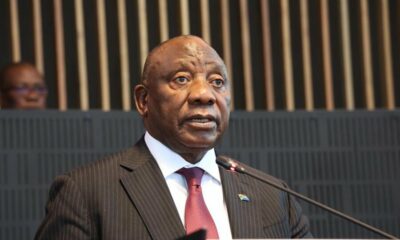
This year, Parliament has confirmed that more than R7 million has been budgeted for President Cyril Ramaphosa’s upcoming State of the Nation Address. The speech will be delivered at the Cape Town City Hall on Thursday, 12 February, marking the official opening of the parliamentary year.
For some, it is a necessary constitutional moment. For others, it feels like déjà vu with a hefty invoice attached.
Why over R7 million?
Broadcasting is the single biggest cost driver. Last year, equipment alone came to R9.1 million. This year’s overall allocation is lower than the roughly R15 million budgeted for the same event in 2025, of which R12.3 million was ultimately spent.
So why the drop?
In 2025, Parliament had to rent the Cape Town International Convention Centre to accommodate additional guests. This year, a marquee will be set up outside City Hall. That cost falls under public works, which has reduced Parliament’s direct expenses. Parliament will still pay the City of Cape Town a fee to use the historic City Hall, which has hosted SONA since the parliamentary buildings were damaged by fire in 2022.
In short, the lights, cameras, and connectivity remain expensive, but logistics have been streamlined.
Who will be in the room?
Former heads of state have also received invitations. Kgalema Motlanthe and Jacob Zuma have indicated they will attend. Thabo Mbeki has apologised and will not be present.
The official broadcast will be handled by Parliament TV, which will provide an uninterrupted feed to other television and radio stations. The aim, according to Didiza, is to ensure the entire country can follow proceedings live across multiple platforms.
A ceremony or a turning point?
On paper, SONA is more than a speech. It formally opens the parliamentary year and sets out government priorities. It is also a constitutional ritual, bringing together the executive, legislature, and judiciary under one roof.
Didiza has described this year’s address as a reaffirmation of Parliament’s role: holding the executive to account, legislating in the public interest, facilitating public participation, and setting the tone for oversight and delivery.
Yet public reaction, particularly on social media, tells a more complicated story. Many South Africans recognise the symbolic importance of the event. At the same time, there is a growing sense of fatigue. Unemployment, economic stagnation, and service delivery challenges have dominated successive addresses for over a decade.
Political analyst Theo Neethling from the University of the Free State has pointed out that recurring themes reflect recurring problems. South Africa’s core socio-economic challenges have not shifted dramatically, and neither have the key talking points in recent SONAs.
That reality shapes perception. For some, SONA feels like a familiar script. For others, it remains a crucial moment of accountability in a constitutional democracy that is still relatively young.
The bigger question
The R7 million budget is not just about staging an event. It reflects the cost of democratic theatre in the digital age. Live feeds, uninterrupted broadcasts, and national access are no longer optional extras. They are expected.
Still, at a time when households are counting every rand, scrutiny over public spending is inevitable.
As President Ramaphosa steps up to the podium at City Hall, the real test will not be the lighting rig or the broadcast quality. It will be whether this year’s address convinces a sceptical public that the script can finally change.
Follow Joburg ETC on Facebook, Twitter, TikT
For more News in Johannesburg, visit joburgetc.com
Source: The Citizen
Featured Image: Custom Contested