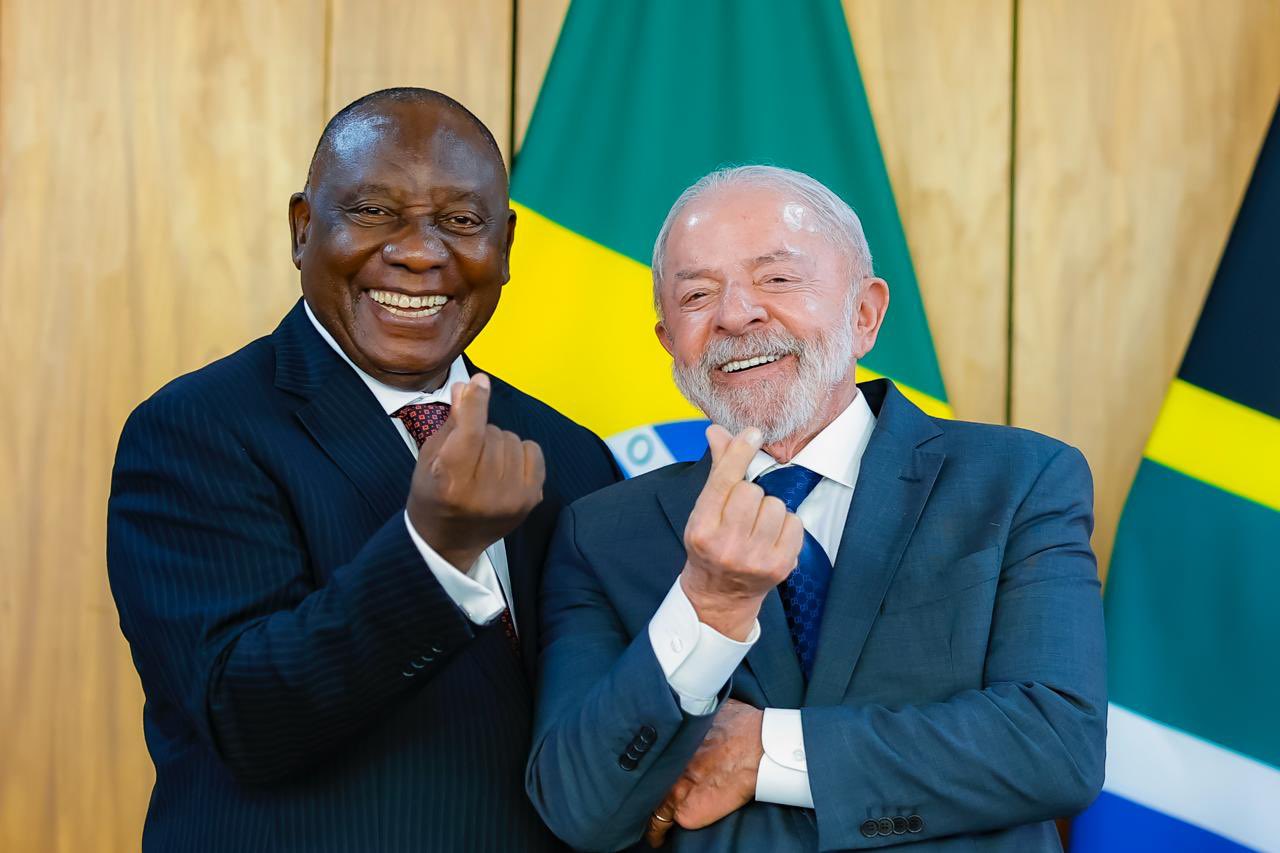
Ramaphosa courts Brazilian investors in push to strengthen South Africa–Brazil trade ties
South Africa is looking west across the Atlantic for fresh economic momentum and President Cyril Ramaphosa believes Brazil could be a key partner.
During a visit to Brasília, Ramaphosa urged Brazilian businesses to deepen trade and investment with South Africa, saying the two nations share similar challenges and similar ambitions.
Speaking at the Brazil–South Africa Business Forum during his state visit hosted by Luiz Inácio Lula da Silva, the South African president said the relationship between the two countries should move beyond diplomacy and into stronger economic collaboration.
For Ramaphosa, the message was simple: South Africa and Brazil have more to gain by working together than apart.
Two emerging powers with shared challenges
In his address, Ramaphosa described South Africa and Brazil as nations with a lot in common.
Both are large democracies with diverse populations, significant natural resources and vibrant economies. But both also face deep inequality a challenge that continues to shape economic policy and development.
These shared realities, he said, create space for meaningful cooperation.
The two countries already work together in global forums such as BRICS, the IBSA Dialogue Forum, the Group of Twenty, and the World Trade Organization, often pushing for a more inclusive global economic system that better represents developing nations.
Strengthening trade ties between them, Ramaphosa argued, is the next logical step.
A push to rebalance trade
While economic links already exist, South Africa wants to grow its exports to Brazil and create a more balanced trading relationship.
Ramaphosa said Pretoria is keen to expand market access using the MERCOSUR–SACU Preferential Trade Agreement, which connects Southern Africa’s customs union with South America’s major trading bloc.
In practical terms, that could open doors for South African industries ranging from agriculture to manufacturing.
The president highlighted several sectors where cooperation could grow, including:
-
Biofuels
-
Aerospace
-
Agro-processing
-
Defence
-
Pharmaceuticals
-
Energy
-
Automotive manufacturing
-
Advanced manufacturing
Beyond trade, Ramaphosa said partnerships should also focus on technology sharing and skills development areas that could help boost industrial growth in both countries.
South Africa pitching itself as Africa’s gateway
One of the key selling points in Ramaphosa’s pitch was South Africa’s strategic position in Africa’s fast-growing economic landscape.
He told Brazilian investors that South Africa should be seen not only as a domestic market of about 63 million people but as an entry point to the broader African economy.
Through the African Continental Free Trade Area, African countries are gradually integrating their markets into a single trading bloc covering roughly 1.4 billion people with a combined GDP approaching $4 trillion.
For global investors, that scale matters.
If South Africa positions itself effectively within that system, it could become a launching pad for companies looking to expand across the continent.
Business links already exist
Economic ties between the two countries are not starting from scratch.
Several major South African companies already operate in Brazil, including:
-
Sasol
-
MTN Group
-
Naspers
-
First National Bank
-
Aspen Pharmacare
-
Standard Bank
-
AngloGold Ashanti
Brazilian firms have also established a footprint in South Africa. Companies such as Petrobras, Embraer, and Marcopolo already operate locally.
One example Ramaphosa pointed to was Embraer’s aviation training academy at O. R. Tambo International Airport, which is expected to help develop aviation skills and strengthen South Africa’s position in the global aerospace supply chain.
Social media reaction: optimism mixed with scepticism
As with many government investment drives, reactions online have been mixed.
Some commentators welcomed the effort to diversify trade relationships beyond traditional Western partners.
Others, however, questioned whether investment pledges translate into real economic change at home particularly given South Africa’s ongoing challenges with energy reliability, logistics bottlenecks and unemployment.
Still, economists often point out that deeper ties with fellow emerging economies could be a strategic move.
Brazil is Latin America’s largest economy and a major agricultural and industrial powerhouse making it a natural partner for South Africa within the Global South.
A bigger diplomatic message
Beyond the economic pitch, Ramaphosa framed the partnership as part of a broader geopolitical project.
He said South Africa and Brazil are not just trading partners but collaborators working toward a more balanced global economic order one where developing countries have a stronger voice.
The president also used the forum to invite Brazilian investors to attend the South Africa Investment Conference, scheduled for 31 March 2026 in Johannesburg.
His message to potential investors was clear: South Africa is open for business.
“The door to South Africa is open,” Ramaphosa said. “And the time to invest and grow together is now.”