Ramaphosa digs in on BEE as GNU fault lines widen
“Now is not the time to abandon BEE”
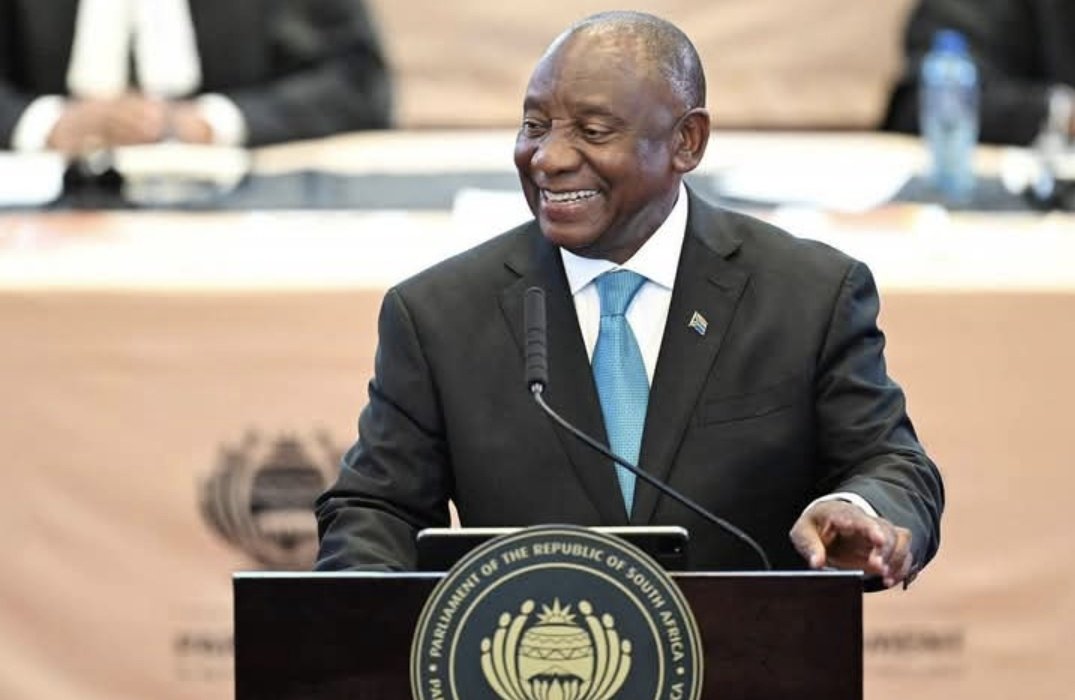
When President Cyril Ramaphosa rose to reply to the State of the Nation Address debate on Thursday, he wasn’t just defending policy. He was defending a principle that has defined post-apartheid South Africa for three decades: economic redress.
And he made it clear that calls to scrap Broad-Based Black Economic Empowerment (B-BBEE) “touch a raw nerve”.
In a thinly veiled swipe at some of his partners in the Government of National Unity, Ramaphosa rejected arguments that BEE benefits only a connected few, stifles growth, or fuels corruption.
“There are people in this House who tell us to get rid of the measures we have put in place to correct this gross historical injustice,” he said. “They falsely claim it benefits only a few.”
For Ramaphosa, redressing the past and transforming the economy are inseparable.
A coalition under strain
The tension isn’t new. Since the formation of the GNU after the African National Congress lost its outright majority in 2024, ideological differences have simmered beneath the surface.
The Democratic Alliance and the Freedom Front Plus have repeatedly argued that race-based empowerment policies should be replaced with a poverty-based alternative.
DA leader John Steenhuisen, who also serves as Agriculture Minister, reiterated this stance, saying BEE has protected politically connected elites while millions remain unemployed and locked out of opportunity. The DA has tabled its Economic Inclusion for All Bill as an alternative, focused on poverty rather than race.
It’s a philosophical divide that cuts to the heart of South Africa’s democratic project: how do you fix inequality that was designed along racial lines without acknowledging race?
Redress as investment, not expense
Ramaphosa’s argument was straightforward: empowerment is not a drag on the economy, it is an investment in sustainable growth.
He pointed to tangible shifts in ownership patterns, management control, enterprise and skills development since BEE’s introduction. While inequality remains painfully visible, in suburbs divided by highways and townships still battling unemployment, he insisted progress is “undeniable”.
Importantly, he did not suggest the framework is perfect. Instead, he confirmed that government will review the B-BBEE model to make it more effective and inclusive.
That nuance matters. For many South Africans, the frustration is not with the principle of redress, but with how it has sometimes been implemented.
On social media, reactions were sharply divided. Some applauded the President for standing firm against what they see as attempts to dilute transformation. Others argued that BEE has failed to meaningfully uplift the poorest and needs fundamental redesign.
In WhatsApp groups and radio call-ins, the same question keeps surfacing: who has truly benefited?
No party trophies in Cabinet
Ramaphosa didn’t stop at policy defence. He also cautioned GNU ministers against claiming Cabinet achievements as party victories.
“There are no parties in the Cabinet,” he reminded them. Every minister and deputy minister, he said, is part of a collective executive.
In a coalition government where party branding remains strong, the warning was pointed. The President noted that many achievements were built on groundwork laid before current office-bearers arrived and that projects will outlive them too.
It was a subtle rebuke to those eager to turn governance into campaign material.
Thirty years of democracy, progress and pain
Earlier in his address, Ramaphosa zoomed out to reflect on three decades of democracy. He defended the government’s record, saying lives have fundamentally improved since 1994, even as challenges persist.
He referenced the stabilisation of institutions weakened by state capture, the rebuilding of accountability, and the country’s recovery from a global pandemic that shrank GDP by 6%. He reminded Parliament of the attempted insurrection that threatened democratic stability.
“We are turning the corner,” he insisted, acknowledging that progress is modest but gaining momentum.
Whether the public agrees depends on who you ask. For some, there are clear signs of recovery in 2025. For others, daily realities, crime, unemployment, struggling municipalities paint a harsher picture.
Crime, municipalities and reform
Ramaphosa acknowledged that crime and insecurity remain significant barriers to growth. He confirmed the deployment of the SANDF to the Eastern Cape to combat gang violence, a move likely to draw both support and concern.
He also identified dysfunction in many municipalities as an immediate brake on economic expansion. Government plans to overhaul the local government system through a review of the White Paper and direct interventions in failing councils.
On logistics and state-owned enterprises, he signalled a pivotal year ahead. Private rail operators will begin using the freight network, and private electricity producers will contribute to supply, while government insists public ownership of strategic assets will remain intact.
Entities like Eskom and Transnet, he said, are being strengthened, not privatised.
The deeper question
Beyond party politics, this debate exposes something deeper about South Africa’s crossroads moment.
Is empowerment best measured by race, poverty, or a hybrid of both?
Can coalition partners with fundamentally different economic philosophies truly co-govern without constant friction?
And most importantly: will ordinary South Africans feel the impact of these policies in their daily lives?
Ramaphosa’s stance is clear. BEE stays, but it must evolve.
For a country still shaped by the long shadow of apartheid economics, the fight over empowerment is not just legislative. It is emotional. It is historical. And inside a fragile coalition, it is political.
As the GNU navigates its next chapter, one thing is certain: the debate over transformation is far from over.