News
Ramaphosa distances himself from decision to shut down political killings unit
Ramaphosa distances himself from decision to shut down political killings unit
A decision that raised more questions than answers
When news first broke that a specialised police unit tasked with investigating political killings had been disbanded, it immediately raised eyebrows especially in a country where such crimes are not just headlines, but a lived reality in some regions.
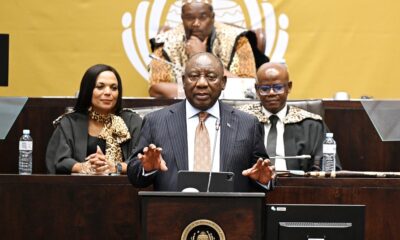
Now, President Cyril Ramaphosa has stepped in to clarify his position, making it clear: the decision was not his.
“I was not consulted”
In written responses to Parliament’s ad hoc committee, Ramaphosa revealed that he was dissatisfied with how the situation unfolded, particularly the lack of consultation before the move was made.
The unit in question, the Political Killings Task Team (PKTT), has long been central to investigating politically motivated violence, especially in hotspots like KwaZulu-Natal.
According to the president, the authority to disband such a unit does not lie with the police minister, but with the national police commissioner.
Who made the call?
The controversy centres around Police Minister Senzo Mchunu, who reportedly instructed that the unit be shut down.
Ramaphosa said he was only informed of the decision around early February 2025 by National Police Commissioner Fannie Masemola and even then, it appeared there was disagreement within the police leadership itself.
Masemola, according to Ramaphosa’s account, did not support the decision and took steps to ensure that the work of the task team continued.
No approval, no interference
The president was also firm on another point: he did not approve the disbandment.
He further rejected claims that the move was part of a broader effort to interfere with investigations or shield individuals from scrutiny.
For many South Africans, this detail matters. Political killings, particularly at local government level, have long been linked to power struggles, tender disputes, and internal party conflicts.
Why the PKTT matters
The PKTT was established to tackle exactly that, a pattern of politically linked violence that has, over the years, threatened democratic processes.
In provinces like KwaZulu-Natal, councillors, activists and whistleblowers have often found themselves at risk.
Ramaphosa acknowledged this history in his submission, noting that such killings undermine not just individuals, but the broader principles of democracy, including freedom of association and participation in elections.
Parliament steps in
The issue has now landed firmly in the hands of Parliament, where an ad hoc committee is probing allegations of criminal infiltration, corruption, and political interference in the justice system.
Interestingly, Ramaphosa was not required to appear in person and instead submitted written answers, a decision that has drawn mixed reactions.
Some argue it was a practical move, while others believe the gravity of the issue warranted direct engagement.
The committee had sent nearly 100 questions to the president, highlighting just how complex and politically sensitive the matter has become.
Public reaction: scepticism and fatigue
On social media, the response has been cautious at best.
While some welcomed the president’s clarification, others questioned how such a significant decision could be made without clear alignment at the top levels of government.
There’s also a broader sense of fatigue. South Africans have seen similar controversies unfold before where accountability becomes blurred between departments, ministries, and leadership structures.
The bigger concern: trust in institutions
Beyond the immediate political fallout, the situation raises deeper questions about governance.
Who has the final say on critical policing decisions?
How are specialised units protected from political influence?
And perhaps most importantly can the public trust that investigations into politically sensitive crimes will continue without interference?
What happens next
The parliamentary inquiry is expected to continue digging into the circumstances surrounding the attempted disbandment of the PKTT.
Another key figure in the unfolding story is suspended Inspector-General of Intelligence Imtiaz Fazel, whose potential testimony may depend on presidential approval.
For now, Ramaphosa’s message is clear: he did not authorise the move and believes the unit’s work should continue.
But in a country where political violence remains a real threat, the bigger issue isn’t just who made the decision it’s whether the system meant to investigate these crimes is strong enough to withstand it.
{Source: The Citizen}
Follow Joburg ETC on Facebook, Twitter , TikTok and Instagram
For more News in Johannesburg, visit joburgetc.com