Crime
“Enemy Number One”: Ramaphosa Deploys Army to Break Grip of Mafia Networks in SA

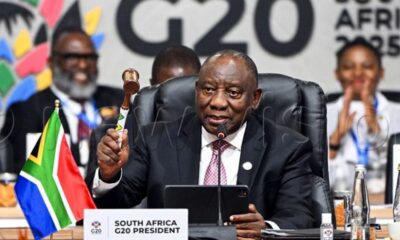
President Cyril Ramaphosa has declared war on organised crime, announcing the deployment of the South African National Defence Force (SANDF) to support police in dismantling powerful criminal syndicates he described as the nation’s “most immediate threat to democracy.”
Delivering the 2026 State of the Nation Address, Ramaphosa framed the crackdown as an urgent national priority. “Building sites are shut down by criminals. This must and will change,” he said. “Organised crime is now the most immediate threat to our democracy, our society and our economic development.”
The Economic Toll: R155 Billion a Year
The scale of the threat is staggering. According to opposition party the DA, which consolidated data from think tanks and government sources, organised crime syndicates bleed the South African economy of R155 billion annuallya figure the party calls “conservative,” as it excludes knock-on effects.
The World Bank has estimated that crime’s total cost to South Africa reaches 9.6% of GDP, encompassing direct losses, security expenditure, and opportunity costs. These resources, if productively invested, could elevate the country’s growth rate by at least one percentage point.
The syndicates operate across multiple sectors: the “Eskom mafia” targeting the power utility, illegal mining networks, wildlife trafficking rings, public infrastructure stripping crews, and the notorious construction mafia that extorts and shuts down building sites.
The Strategy: Intelligence, Integration, and Infantry
Ramaphosa outlined a multi-pronged approach centred on “technology, intelligence, and integrated law enforcement.” Key elements include:
-
Consolidating intelligence at national level
-
Identifying priority syndicates for targeted dismantling
-
Deploying handpicked, multidisciplinary intervention teams
The President confirmed that SANDF soldiers will be deployed to support the South African Police Service, replicating a model used “to great effect” in combating illegal mining. Initial operations will focus on Gauteng and the Western Cape, targeting construction mafias, gang violence, and illicit mining networks.
Ramaphosa has directed the Minister of Police and the SANDF to produce a technical deployment plan “within the next few days.” As constitutionally required, he will formally notify Parliament of the timing, location, and cost of the deployment.
A Line in the Sand
The President’s language was notably combative. His description of organised crime as “enemy number one” signals a shift in framingfrom a policing challenge to a national security crisis warranting military intervention. It also reflects growing public frustration with extortion rackets, illegal mining, and the paralysis of construction projects, particularly in Gauteng and the Cape.
Yet challenges remain. Previous SANDF deployments have been constrained by budget cuts and concerns over the military’s role in domestic law enforcement. Sustained success will depend on whether intelligence-led targeting can replace the “security blanket” approach of mass patrols.
For now, Ramaphosa has drawn a clear line. The mafias that have operated with impunity, shutting down building sites and looting state infrastructure, have been officially designated as adversaries of the state. Whether the army’s boots on the ground translate into syndicates behind bars is the test that now follows the tough talk.
{Source: BusinessTech}
Follow Joburg ETC on Facebook, Twitter , TikTok and Instagram
For more News in Johannesburg, visit joburgetc.com