Ramaphosa calls for unity and urgent mediation as South Sudan prepares for crucial 2026 elections
As South Sudan edges closer to elections scheduled for December 2026, President Cyril Ramaphosa has warned that ballots alone will not secure peace in the world’s youngest democracy.
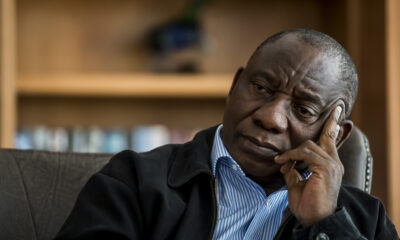
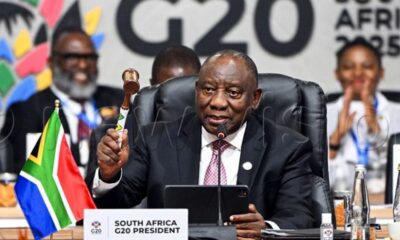
Speaking at the African Union Ad-hoc Committee Summit on South Sudan, Ramaphosa described the coming year as pivotal, a turning point that could either anchor lasting stability or drag the country back into turmoil.
A fragile democracy under pressure
South Sudan gained independence in 2011 amid global celebration and hope. But that optimism faded quickly.
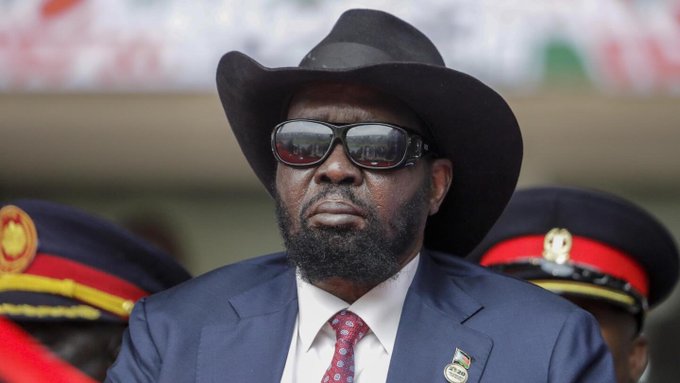
Barely two years after becoming the world’s newest nation, it descended into a devastating civil war between President Salva Kiir and his rival, Vice President Riek Machar. The conflict claimed nearly 400,000 lives before a peace deal was signed in 2018.
Since then, progress has been fragile. Poverty remains widespread, corruption allegations persist, and the peace process has often moved at a cautious, uneven pace.
Against that backdrop, elections scheduled for December 2026 carry enormous weight.
“Elections alone will not guarantee peace”
Ramaphosa addressed the summit on its second and final day, urging enhanced mediation to resolve outstanding political and security issues before voters head to the polls.
The gathering, convened jointly by the African Union, the United Nations, the Intergovernmental Authority on Development and the East African Community, focused on supporting South Sudan’s fragile peace process.
Ramaphosa welcomed the South Sudanese government’s stated intention to hold elections and initiate a national dialogue. But he stressed that credible polls require more than just a date on the calendar.
A stable political and security environment, he argued, is essential. Any resurgence of violence could erode public trust and derail progress before it even begins.
He also emphasised inclusivity urging that national dialogue and legal processes involve all signatories and stakeholders to the revitalised peace agreement to ensure legitimacy and broad ownership.
Why South Africa is paying attention
For South Africa, this is not distant diplomacy.
Pretoria has long positioned itself as a champion of mediation and post-conflict reconstruction on the continent. Ramaphosa’s call reflects that tradition and the understanding that instability in one part of Africa reverberates beyond its borders.
There’s also a sobering lesson closer to home. South Africans know that political transitions are rarely smooth, and that reconciliation requires deliberate effort. The emphasis on dialogue and inclusion echoes South Africa’s own negotiated settlement in the early 1990s.
The “forgotten” conflict
While global headlines often focus on wars in the Middle East or Ukraine, Sudan and South Sudan’s crises frequently fade from international attention.
Yet the humanitarian cost has been staggering. Years of violence have displaced millions, strained infrastructure and deepened poverty. Many observers warn that without careful preparation and genuine political will, elections could inflame tensions rather than ease them.
Ramaphosa acknowledged the stakes plainly: the choices made in the coming months will determine whether South Sudan moves toward durable peace or slips back into cycles of instability.
A call for urgency and courage
South Africa, Ramaphosa said, stands ready to support mediation, monitor implementation and coordinate efforts to strengthen the peace process.
His message was ultimately one of urgency and unity.
As South Sudan prepares for what could be its most consequential vote yet, the challenge is not just to hold elections, but to ensure they are free, fair, inclusive and backed by a secure environment.
For a country born in hope but shaped by hardship, 2026 could either mark a new chapter of stability or reopen old wounds.
The world may not always be watching. But for South Sudan, the moment is historic.