News
“No, the US Isn’t Invading SA”: Ramaphosa Calms Fears After Trump’s Venezuela Action
A viral worry and a presidential reassurance
When a video of President Cyril Ramaphosa speaking at a crowded ANC event in Gauteng began circulating on social media this week, it wasn’t for policy or party politics, it was for a question that sounded like it was plucked from the headlines of a late-night satire show.
“Is the United States going to invade South Africa?” people asked one another online, spurred by intense global reactions to US military action in Venezuela. In that clip, Ramaphosa made his answer clear: South Africa is not worried about an invasion, and there’s no reason to be.
For many people here, that message landed like a grounding note in an otherwise jittery week.
President Cyril Ramaphosa says he is not worried about speculation that the United States might invade South Africa. pic.twitter.com/kbN7OQ2ruJ
MDN NEWS (@MDNnewss) January 7, 2026
Why people were talking about invasion in the first place
Just days earlier, global attention turned to Venezuela after the United States launched a military operation in Caracas that resulted in the capture of President Nicolás Maduro and his wife. Washington said the action was linked to allegations of drug trafficking, but critics, including South African diplomats, condemned it as an illegal violation of Venezuela’s sovereignty and international law.
That kind of dramatic action, involving helicopters, fighter jets, and the forcible removal of a sitting head of state quickly became fuel for wild speculation online. Some Twitter and X threads in South Africa wondered aloud whether Trump’s bold moves in South America could ever translate into threats closer to home.
But seasoned political watchers here see that line of thinking as unlikely at best. South Africa is a sovereign nation with its own standing armies, deep diplomatic roots, and no obvious strategic resource that would draw a conventional invasion and Ramaphosa made those realities part of his reassurance.
Ramaphosa’s message: calm, confident and rooted in diplomacy
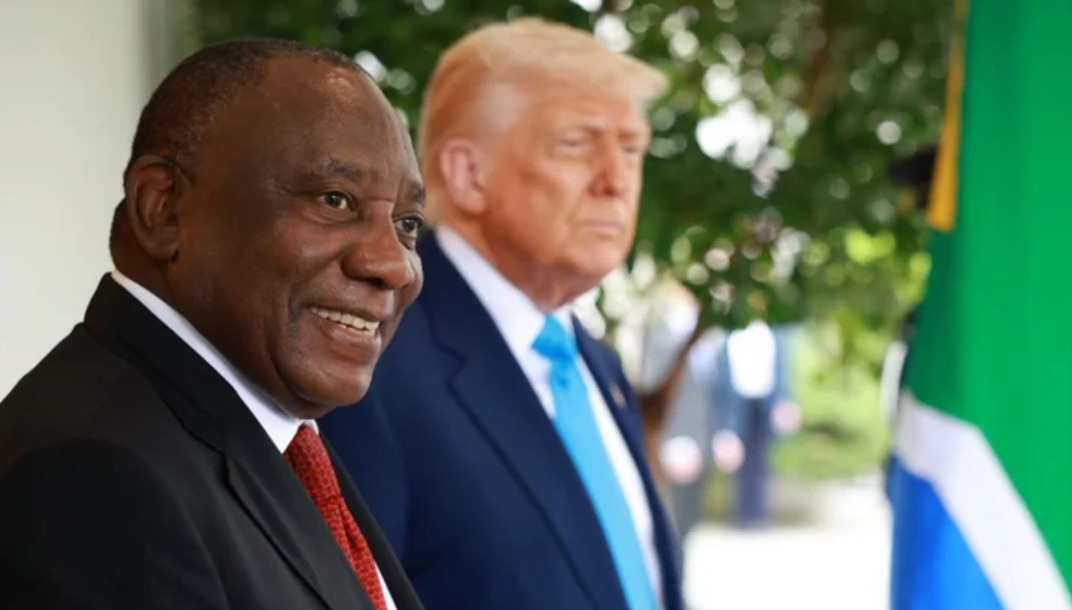
Addressing journalists on the sidelines of the Joe Slovo commemoration in Soweto, the President didn’t mince words, he dismissed invasion speculation as far-fetched while condemning the US action in Venezuela for what it was: a troubling blow to global norms.
“We are not worried about an invasion of South Africa, not at all,” Ramaphosa said, emphasising that Pretoria prefers dialogue over confrontation. “We follow the Madiba doctrine…” he added, referring to Nelson Mandela’s legacy of negotiation and peaceful conflict resolution.
Ramaphosa’s reference to Mandela’s approach wasn’t accidental. In South Africa, where the long shadow of colonial and apartheid conflicts still shapes national consciousness, any talk of foreign powers crossing borders can trigger deep historical anxieties. By invoking the country’s own story of peaceful transformation, Ramaphosa reminded citizens and perhaps the world, that South Africa believes in diplomacy, not dominance.
South Africans weigh in, from unity to criticism
Reaction to the President’s comments has been strikingly South African in flavour, frank, humorous, and deeply reflective of national sentiment.
On platforms like X, users were quick to back Ramaphosa, with posts like: “South Africa is not Venezuela. Let him try to invade us, it will be the end of America.” Others pointed out the realities of geography and economics, noting that South Africa’s vast distance from the US and its lack of oil reserves make any invasion strategy highly implausible.
But not all reactions were supportive. A viral video showed a South African man mockingly begging Trump to “take Ramaphosa” instead of Maduro, a tongue-in-cheek expression of frustration with local leadership that sparked both laughs and debate online.
A backdrop of bigger geopolitical tensions
The drama in Venezuela has underscored something bigger: South Africa and the United States are navigating a complex relationship right now. Pretoria condemned Washington’s military operation at the United Nations, arguing it undermines international law and sets a dangerous precedent.
At the same time, diplomatic tensions over trade, refugee policy, and political rhetoric, including claims about “white genocide” that South African leaders have consistently rejected, make engagement between the two capitals delicate and public-facing.
What this means for South Africans
In the end, the fears of an American invasion aren’t rooted in current policy or strategic interest, they’re a reflection of how quickly global events can ripple through social media and public imagination.
Ramaphosa’s firm and composed response appears to have calmed many of those fears, reminding South Africans that even amid global unrest, the country’s sovereignty remains intact and its diplomatic channels open.
“In the end, the United States is an important country,” he said, not a threat.
And as online reactions showed, most South Africans seem to agree: the only thing likely to cross oceans is diplomacy, not armies.
{Source: Briefly}
Follow Joburg ETC on Facebook, Twitter , TikTok and Instagram
For more News in Johannesburg, visit joburgetc.com