Ramaphosa opts for written answers as pressure mounts for in-person accountability
A paper trail instead of a public appearance
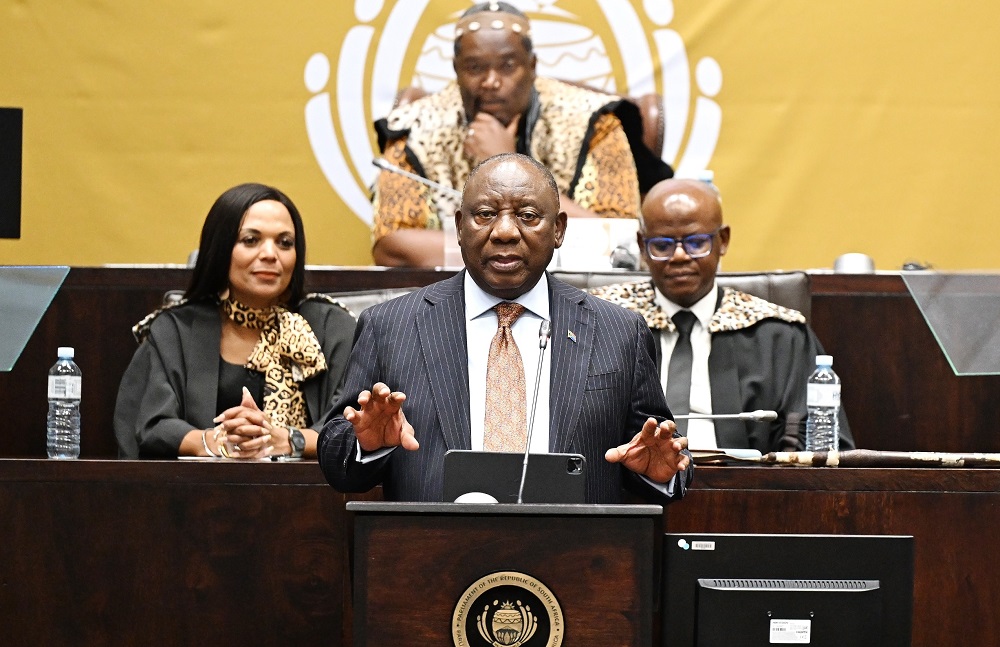
In a political climate already thick with suspicion and unanswered questions, President Cyril Ramaphosa has chosen to respond to Parliament’s ad hoc committee, but not in the way many had hoped.
Instead of appearing before MPs, Ramaphosa submitted a written response to more than 100 questions tied to explosive allegations shaking the country’s policing structures.
For some, it’s a procedural move. For others, it feels like a missed moment for direct accountability.
Why the committee matters
The committee at the centre of it all wasn’t formed in a vacuum.
It emerged after KwaZulu-Natal police commissioner Nhlanhla Mkhwanazi dropped a political bombshell last year alleging interference, corruption and the shielding of criminal networks within the justice system.
Those claims struck a nerve in a country where trust in law enforcement has long been fragile.
Now, the committee is tasked with untangling a web that stretches across senior police leadership, politicians and controversial business interests.
Presidency: this is cooperation, not avoidance
According to the Presidency, the written submission should not be seen as dodging scrutiny.
Spokesperson Vincent Magwenya framed it as full cooperation, saying the president is committed to transparency and respects Parliament’s oversight role.
In their view, providing detailed written answers ensures the committee has everything it needs to continue its work effectively.
But on the ground and online, that explanation hasn’t landed cleanly.
Public mood: “Why not show up?”
On social media, the reaction has been mixed but pointed.
Many South Africans have questioned why the president didn’t appear in person, especially after committee members themselves argued that no one should receive special treatment.
In a country shaped by hard-won democratic accountability, the symbolism of showing up matters.
Even those who accept the legality of a written response say it lacks the immediacy and pressure of a live appearance.
The PKTT controversy deepens
At the heart of the committee’s work is the controversial disbandment of the Political Killings Task Team (PKTT).
Suspended police minister Senzo Mchunu previously told MPs he acted without consulting the president when dissolving the unit.
That claim alone raised eyebrows, suggesting a major decision was taken without top-level alignment.
Now, National Police Commissioner Fannie Masemola has added to the confusion, saying he too was left out of the loop.
He described a disconnect between himself and Mchunu, with disagreements over how or whether, the unit should be phased out.
A timeline that doesn’t quite add up
What makes the situation more puzzling is the timing.
Senior officials were reportedly working side by side in the days leading up to the disbandment, attending safety campaigns and even a police funeral.
Yet, according to testimony, the decision to shut down the task team was never raised in those interactions.
Masemola has gone further, suggesting the move may have been linked to halting investigations into businessman Vusimuzi “Cat” Matlala, who is alleged to have ties to a powerful criminal network.
It’s a claim that, if proven, could shift the entire narrative from miscommunication to something far more serious.
Behind the scenes: contracts and controversies
Another layer to the story involves a multimillion-rand police healthcare contract awarded to a company linked to Matlala.
Concerns over service delivery eventually led to the contract being scrapped, but not before it became part of the broader questions facing the committee.
For many observers, the overlap between procurement issues and investigative decisions raises uncomfortable questions about influence and priorities within the system.
A democratic test in real time
South Africa’s parliamentary processes are designed to hold power to account, not just in theory, but in practice.
This moment feels like one of those tests.
Ramaphosa’s written submission may tick the procedural boxes, but the political conversation it has sparked goes deeper:
-
What does accountability look like in 2026?
-
Is written transparency enough in a crisis of public trust?
-
And who ultimately answers when institutions appear to contradict one another?
What happens next
The committee’s work is far from over.
Nhlanhla Mkhwanazi is expected to return to address further questions, particularly around his earlier allegations and the fallout that followed.
As more testimony unfolds, Ramaphosa’s written answers will likely be scrutinised line by line, not just for what they say, but for what they might leave out.
For now, the president has put his response on record.
Whether that will satisfy a sceptical public is another question entirely.