News
Rustenburg youth push back against ‘lazy’ label in unemployment row
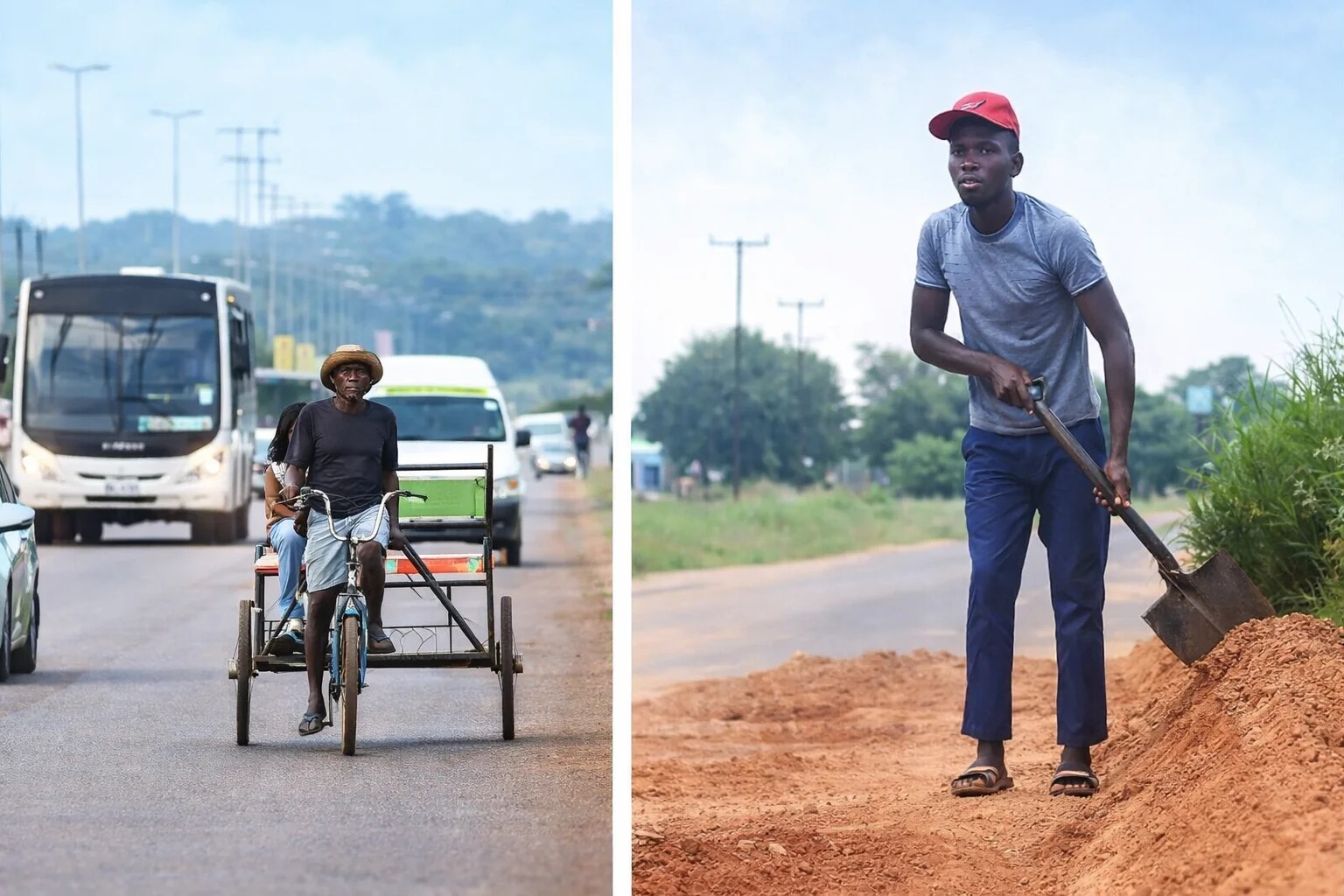
When Gwede Mantashe suggested that South Africa’s youth are too lazy to look for work, the reaction in Rustenburg was immediate and raw. In townships across the North West, young people say the comment landed like a slap in the face. Not because it was controversial, but because it ignored what daily survival actually looks like when jobs have dried up.
For many in Rustenburg, unemployment is not an abstract statistic. It is something you wake up to, walk with, and try to outsmart every single day.
Hustling is not a choice. It is survival
One 25-year-old has turned a rented bicycle into a community transport service, ferrying people to clinics and helping carry groceries for those who cannot afford taxis. On a good day, the work brings in around R650. It is not a business dream. It is a lifeline.
Another young man, working alone on a broken stretch of road near Mogwase, earns about R100 a day filling potholes by hand. He says the small income keeps him away from crime and drugs. It also gives him dignity, something that unemployment has steadily eroded.
These are not stories of idleness. They are stories of improvisation in a town where mines have closed, investment has slowed, and opportunity feels increasingly locked behind political connections.
‘There are no jobs to look for’
What angered many young people was not just the wording of Mantashe’s statement but the implication that effort is the problem. Several unemployed residents say they have spent years walking long distances, knocking on doors, and applying for work that never materialises.
Some describe relying on piece jobs that barely cover food, while others speak about the strain unemployment places on families, especially parents who feel they can no longer provide or command respect in their own homes. The R350 social relief grant, they argue, is not a solution. It is a stopgap that does not stretch far enough to support children or restore stability.
There is also frustration about closed mines around Rustenburg, which once absorbed large numbers of young workers. Their shutdown has left a vacuum that informal hustles cannot fully replace.
Not all youth agree, and that matters
Amid the anger, there are also voices that complicate the picture. One 21-year-old retail worker in Moruleng says he partly agrees with Mantashe. He believes some young people lack initiative and waste time instead of actively seeking opportunities.
His journey to employment, however, included months of walking between shops and eventually securing a learnership. It is a reminder that even when success comes, it often arrives after sustained effort and luck, not laziness.
This split reaction has played out on social media too, where some users echoed the frustration of unemployed youth, while others argued that personal responsibility still plays a role. What both sides seem to agree on is that the system itself is failing too many people.
Politics, accountability, and a widening trust gap
During his Moruleng address, President Ramaphosa acknowledged the ANC’s failures in service delivery, governance, and economic growth. He admitted that these shortcomings have demoralised and alienated many South Africans, particularly the youth.
Mantashe later accused critics and political analysts of distorting his comments during his interview with the South African Broadcasting Corporation. He insisted that his remarks were balanced and taken out of context.
For young people in Rustenburg, however, the damage was already done. The episode has deepened a sense that political leaders are disconnected from the lived reality of unemployment on the ground.
More than a soundbite
The Rustenburg response shows that youth unemployment is not about attitude alone. It is about access, opportunity, safety, and an economy that no longer absorbs young workers the way it once did.
Calling the youth lazy may make for a sharp headline, but it ignores the bicycles turned into taxis, the potholes patched by hand, and the long walks taken in search of work that often does not exist. What young people are asking for is not sympathy, but recognition that effort without opportunity still leaves you standing still.
Follow Joburg ETC on Facebook, Twitter, TikT
For more News in Johannesburg, visit joburgetc.com
Source: IOL
Featured Image: Grobank