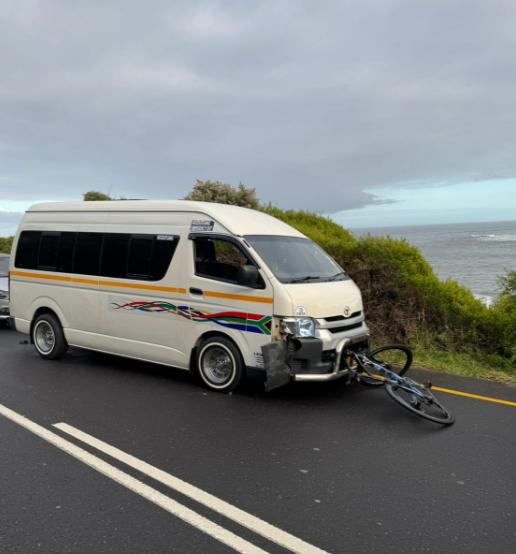
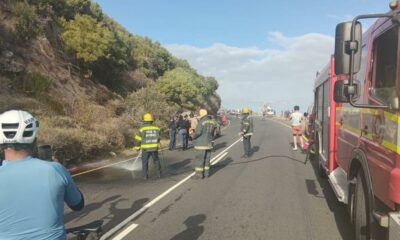
It was meant to be a peaceful Easter Monday ride along one of Cape Town’s most scenic coastal stretches. Instead, it ended in heartbreak.
Veteran cyclist Landon La Grange has died after being struck by a minibus taxi while cycling along Victoria Road, an incident that has shaken South Africa’s tight-knit cycling community and reignited urgent conversations around road safety.
Among those paying tribute is former professional cyclist Malcolm Lange, who shared an emotional farewell to his friend, describing him as someone who lived life fully and left a lasting mark on those around him.
A Ride That Turned Tragic
La Grange was part of a group of around 20 cyclists when the crash happened. According to witness accounts, a taxi driver attempted to overtake several vehicles on a bend, colliding with the group heading in the opposite direction.
The impact was devastating.
La Grange suffered severe injuries, including the loss of a leg, multiple fractures and internal damage. He was rushed for emergency medical treatment and initially remained in critical condition. By Tuesday, however, the worst fears were confirmed. He had passed away at the age of 61.
For many local riders, Victoria Road is more than just a route. It is a ritual. Early morning pelotons, weekend social rides, and training sessions all unfold against the backdrop of the Atlantic. That sense of familiarity has made this incident hit even harder.
Malcolm Lange’s Emotional Goodbye
Taking to Instagram, Lange shared a message that captured the raw grief felt across the cycling fraternity.
He described La Grange as someone who held a special place in their lives and whose positivity defined his presence both on and off the bike.
The post quickly drew responses from fellow cyclists, friends and fans, many expressing disbelief and heartbreak. Comments poured in, with riders calling La Grange a “legend of the road” and “one of the good guys”.
A Community In Shock
News of the crash spread quickly across Cape Town’s cycling circles and beyond. Social media platforms were flooded with tributes, while WhatsApp cycling groups buzzed with messages of support and frustration.
For many, this was not just another accident. It was a painful reminder of how vulnerable cyclists remain on South African roads.
Cyclists in the Mother City often share routes with heavy traffic, especially along popular stretches like Victoria Road, Chapman’s Peak and the Atlantic Seaboard. Despite growing awareness, tensions between motorists and cyclists continue to surface.
Renewed Calls For Road Safety
In the wake of La Grange’s death, road safety advocates are once again calling for stricter enforcement and better awareness from drivers.
The issue is not new. South Africa has long struggled with road safety challenges, and cyclists frequently find themselves at risk due to reckless driving, poor visibility and limited dedicated cycling infrastructure.
Local cycling groups have already begun urging authorities to revisit safety measures along high-risk routes. Some are calling for clearer cycling lanes, while others are pushing for tougher penalties for dangerous overtaking.
Who Is Malcolm Lange
To understand the weight of Lange’s tribute, it helps to know the man behind the message.
Lange is one of South Africa’s most decorated cyclists, with a career spanning more than two decades. Born in Johannesburg, he rose to prominence in the 1990s and went on to represent the country at the 1992 Olympics in Barcelona.
He claimed multiple national titles and became a dominant force in local races, including several victories at the iconic Amashova Durban Classic. Internationally, he secured podium finishes and stage wins across Africa and beyond.
Even after retiring from professional racing, Lange remained deeply involved in the sport, mentoring younger riders and contributing to team development.
Today, his legacy continues through his son, Tyler, who recently claimed victory at the Cape Town Cycle Tour, a race his father himself once mastered.
More Than Just A Statistic
La Grange’s passing is not just another headline. It is a reminder of the human cost behind road accidents.
For the cycling community, it is personal.
For everyday South Africans, it is a wake-up call.
As tributes continue to pour in, one message is becoming clear. Sharing the road is not optional. It is a responsibility.
And for many riders who will clip in again this weekend, the hope is simple. That every journey ends safely.