News
Alliance Tension Rises as SACP Rejects ANC Push to End Dual Membership
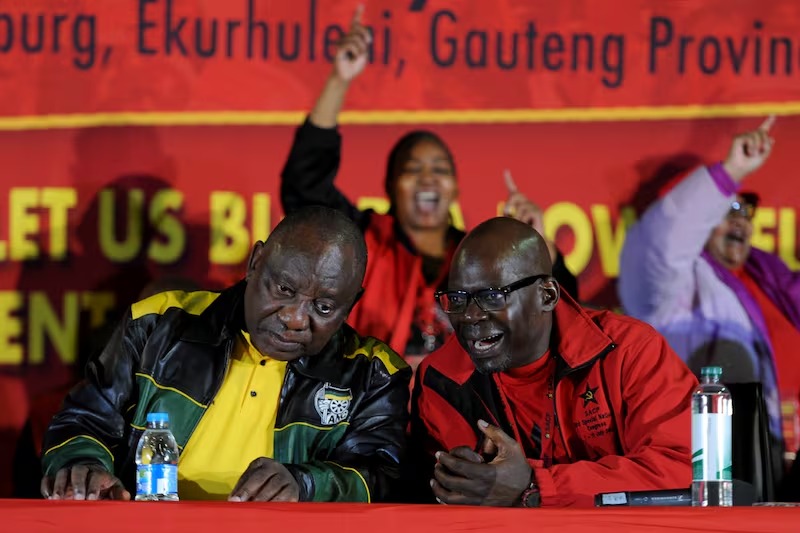
A Rift Over Shared Ranks: SACP Speaks Out
In what many see as a turning point in South African political alliances, the South African Communist Party (SACP) has publicly declared that it will reject any attempt by the ANC to abolish dual membership. The call comes amid growing tension at the ongoing gathering of the African National Congress National General Council (ANC NGC), where the debate over dual affiliation has taken centre stage.
SACP spokesperson Mbulelo Mandlana emphasised that ending dual membership would break “a long-standing tradition” linking the SACP, trade unions, and the ANC, a tradition he warned, “communities will reject.”
Why This Matters for Ordinary People
For decades, many South Africans have known the SACP and ANC as part of the same political ecosystem, often operating side by side through shared membership. That union reflected deeper alliances not just among parties but also with trade unions and social movements. With the SACP now standing alone for the 2026 elections, the risk is real that a split could echo through communities that have long relied on that unity.
Mandlana argued that removing dual membership could alienate voters who see themselves more as part of a broader liberation-era coalition rather than discrete political brands. For many, this is not just a technical rule change; it’s a redefinition of identity and political belonging.
What’s Driving the Push to End Dual Membership
At the heart of the push from parts of the ANC, particularly from branches like those in KwaZulu-Natal, is anger over the SACP’s decision to contest elections independently in 2026. With the SACP no longer campaigning under the ANC banner, some argue that dual membership gives rise to “sleepers” within the party.
The pressure is coming with an ultimatum: SACP members must choose which party they belong to if they want to remain in good standing. That demand threatens to unravel the longstanding alliance at the core of South Africa’s post-apartheid politics.
A Historic Alliance at Risk
To understand what’s at stake, one must recall the roots of the alliance: the SACP, the Congress of South African Trade Unions (COSATU), and the ANC have for decades formed what’s known as the Tripartite Alliance. This coalition played a key role in the anti-apartheid struggle and has shaped much of the democratic South Africa that emerged.
The proposed abolition of dual membership does more than change a legal technicality. It potentially severs those deep ideological and organisational ties, a move that could transform the political landscape for years to come.
What This Could Mean for the 2026 Elections
With the 2026 municipal elections looming, the decision on dual membership could reshape voter alignment across the country. With the SACP contesting independently, some voters may feel torn, especially those long aligned with the ideals of the Tripartite Alliance.
Should the ANC push through the ban, it may alienate cadres and supporters who have operated under the shared-membership model for decades. For the SACP, it could mean rethinking how it mobilises communities on its own. For the ANC, it risks weakening a once-strong alliance that helped it dominate South African politics.
The Verdict from the Ground
There is early pushback. Some within communities, especially those active in trade unions or with political histories tied to both parties, are uneasy. They see the move as more than political manoeuvring.
Mandlana’s warning seems aimed not just at the ANC leadership but at the public conscience: breaking this tradition could leave a lasting wound on trust and solidarity. As South Africa approaches one of its most unpredictable election cycles yet, a simple rule change may well echo through the choices of voters at the grassroots level.
Also read: Silence broken: testimony reveals chilling final hours of Emmanuel Mbense
Follow Joburg ETC on Facebook, Twitter, TikT
For more News in Johannesburg, visit joburgetc.com
Source: IOL
Featured Image: GALLO IMAGES