News
“We Couldn’t Defend Ourselves”: Why Experts Say South Africa’s Military Is No Match for Major Powers

“We Couldn’t Defend Ourselves”: Why Experts Say South Africa’s Military Is No Match for Major Powers
South Africa may not be facing an imminent invasion, but if one were to happen, the country would struggle to defend itself.
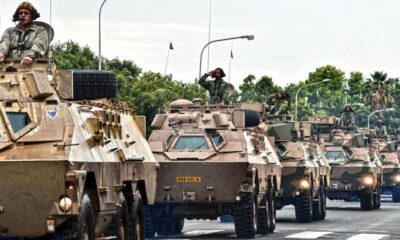
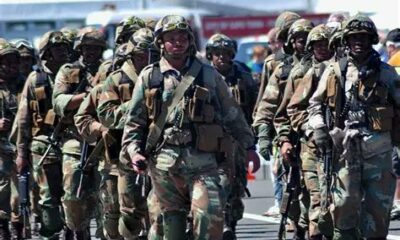
That is the sobering assessment from defence analysts who say years of budget cuts, skills losses and declining operational readiness have left the South African National Defence Force (SANDF) unable to mount a credible defence against any major global military power.
The warning comes at a time of heightened global tension, with recent US military action in Venezuela reminding many countries just how quickly force can be projected across borders.
“We Are Not in a Position to Fend Off an Attack”
Defence analyst Dean Wingrin is blunt in his assessment.
Even if the SANDF had avoided decades of financial and capability erosion, he says, it would still be unrealistic to compare South Africa’s military strength to that of the United States, which operates in an entirely different league.
“With the current state of the SANDF, we are not in a position to fend off any attack,” Wingrin said.
He noted that while South Africa’s geographic location at the southern tip of Africa creates logistical challenges for foreign forces, it would not stop a modern superpower. Aircraft carriers, long-range missiles and strategic bombers, capable of operating from the continental US or bases like Ascension Island, render distance far less relevant.
Lessons From Recent Wars
Wingrin pointed to recent international conflicts as cautionary examples.
Even Iran, equipped with modern air defence systems and forewarning of strikes, suffered heavy damage during a limited military engagement. Expecting South Africa, with far fewer resources and degraded systems, to fare better would be unrealistic, he said.
“If America were to engage in regime change outside its current focus on the western hemisphere, South Africa would not be able to resist it,” Wingrin added.
A Call for Realism, Not Posturing
Rather than pretending to be a military heavyweight, Wingrin believes South Africa needs to rethink its defence priorities.
The SANDF, he argues, should be funded and equipped to match African peers, not global superpowers. At minimum, the country cannot afford to lose any more military capability than it already has.
“The best defence for South Africa and its economy in the new world order is to re-evaluate past practices,” he said, adding that non-alignment should be more than just rhetoric, it should guide foreign policy decisions and economic positioning.
Submarines: Small Force, Big Message
Defence expert Helmoed-Römer Heitman offered a more nuanced view, particularly when it comes to the SA Navy.
South Africa’s modest submarine fleet, he said, would never stop a major power determined to act. But it could still serve as a credible deterrent, forcing stronger militaries to calculate risk before operating in South African waters.
A fleet of around six functional submarines, supported by upgraded systems, modern torpedoes, mines and ideally missiles, could make intervention costly enough to give pause.
“It wouldn’t stop a superpower from acting on something vital to its interests,” Heitman said, “but it would force a serious cost-benefit analysis.”
Too Far, Too Small, Until We’re Not
Heitman also delivered a stark reality check: South Africa is currently too distant and too strategically minor to worry major powers like the US, China or India.
Russia, he added bluntly, is no longer the force it once was, aside from its nuclear arsenal.
However, geography could quickly become relevant in one scenario: a conflict between China and Western powers.
In such a case, the sea route around the Cape would become strategically vital. Western nations would need access, while China might seek to disrupt it. That would drag South Africa into a situation it would rather avoid.
The Risk of Being Pulled In
In a prolonged “cold war” scenario between China and the West, Heitman warned that proxy forces could be deployed elsewhere in Africa something South Africa would not want near its borders.
The ability to make such deployments risky or unattractive, he said, would again hinge on naval deterrence, particularly submarines.
He recalled that former defence minister Joe Modise once described South Africa’s old Daphné-class submarines as a key factor limiting Soviet involvement in the region a lesson that still resonates today.
A Wake-Up Call, Not a War Cry
On South African social media, the analysts’ comments have sparked uneasy debate. Some dismissed the warnings as alarmist, while others said they confirm what many already suspected: that the SANDF has been hollowed out by neglect.
The consensus among experts is not that South Africa needs to prepare for war but that it needs to stop pretending it is better protected than it is.
Defence, they argue, is not about projecting power. It’s about credibility, deterrence and ensuring that, if the world shifts suddenly, South Africa isn’t left completely exposed.
{Source: The Citizen}
Follow Joburg ETC on Facebook, Twitter , TikTok and Instagram
For more News in Johannesburg, visit joburgetc.com