Questions raised over legality of army deployment on Johannesburg streets
The sudden appearance of soldiers on the streets of Johannesburg has sparked an intense debate about law, oversight and the growing role of the military in domestic policing.
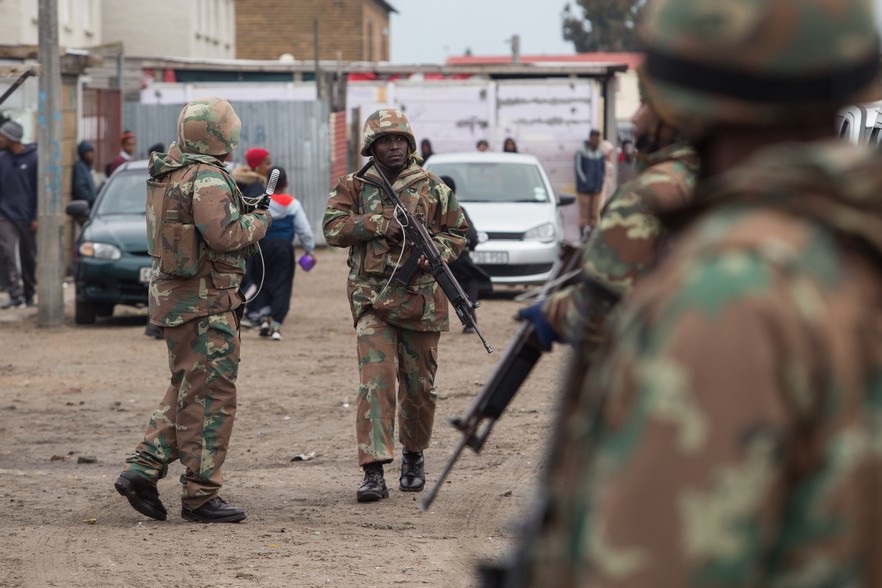
Earlier this week, members of the South African National Defence Force (SANDF) were deployed in parts of the city as part of a broader government effort to combat organised crime, gang activity and illegal mining.
But the move has raised eyebrows in political and security circles, with questions emerging about whether the deployment followed proper legal procedures.
Parliament demands answers
Concerns intensified after Ian Cameron, chairperson of Parliament’s Portfolio Committee on Police, sent an urgent letter to Fannie Masemola, the South African Police Service national commissioner.
In the letter, Cameron requested a detailed explanation outlining the legal authority behind the military’s deployment.
Among the key questions raised were:
-
Under whose command the soldiers are operating
-
How their roles are coordinated with the police
-
What rules of engagement apply when soldiers operate in civilian areas
Cameron also questioned why some deployments appeared to take place without visible police presence, something that could complicate command structures on the ground.
Masemola was given 24 hours to respond.
Soldiers arrive in Eldorado Park
The debate comes just weeks after Cyril Ramaphosa announced plans to deploy the military to assist police during his State of the Nation Address 2026.
The mission, known as Operation Prosper, targets organised crime networks, gang violence and illegal mining across Gauteng, the Western Cape, and the Eastern Cape.
On Wednesday, soldiers were seen patrolling Eldorado Park, a working-class suburb south of Johannesburg that has long struggled with gang activity and violent crime.
For some residents, the presence of the army brought a sense of reassurance. For others, it triggered unease.
A history of military deployments in crime hotspots
South Africa has used military deployments in crime-affected communities before.
One notable example occurred in 2019, when soldiers were sent into gang-ravaged neighbourhoods in parts of the Western Cape.
Security analysts say those operations produced mixed results.
While they sometimes helped stabilise volatile areas, critics argued they raised serious questions about oversight and the balance between security and civil liberties.
Security experts warn of trust issues
Security analyst Andy Mashaile believes the controversy surrounding the current deployment suggests a breakdown in communication between authorities.
He argues that the letter from Cameron indicates that key stakeholders may not have been fully consulted before soldiers appeared on the streets.
According to Mashaile, that lack of clarity could undermine the operation.
Communities may struggle to trust the mission if its purpose and structure are not clearly explained, he said.
The expert also warned that failing to learn from previous deployments could lead to the same mistakes being repeated.
Legal framework behind the deployment
In response to questions, police spokesperson Athlenda Mathe shared a letter from Ramaphosa to Thoko Didiza, the Speaker of the National Assembly.
The letter confirmed that soldiers were deployed under Operation Prosper – Illegal Mining, in accordance with Section 201(2)(a) of the Constitution.
The deployment is expected to run from March 2026 until March 31, 2027, with an estimated cost of R80 million.
Why oversight matters
A recent study by Stellenbosch University warned that military deployments inside civilian spaces require strong parliamentary oversight.
The report, titled Security and Rights: The Changing Security Landscape, found that early involvement by Parliament helps ensure deployments remain accountable and do not overstep legal boundaries.
It also emphasised the importance of regular monitoring, transparency and cooperation between political leaders and military commanders.
Without those safeguards, analysts warn that operations meant to protect communities could risk eroding public trust.
Public reaction: relief mixed with concern
Online reactions to the deployment have been sharply divided.
Some residents in high-crime areas welcomed the presence of soldiers, saying stronger action is needed against gangs and illegal mining syndicates.
Others, however, worry about the growing militarisation of public safety.
Questions about command structures, legal authority and accountability have quickly become part of the national conversation.
A delicate balance between security and democracy
South Africa’s crime crisis continues to place enormous pressure on law enforcement agencies.
But the controversy around Operation Prosper highlights a difficult balancing act.
While communities want safer streets, many also insist that security operations must remain transparent, lawful and subject to democratic oversight.
As Parliament waits for answers from police leadership, the bigger question remains: how far should the military go in policing South Africa’s cities?