News
SANDF leadership caught in the crossfire of Iran naval drill fallout
SANDF leadership caught in the crossfire of Iran naval drill fallout
Was the South African National Defence Force set up to take the blame for a political miscalculation years in the making? That’s the question defence analysts and political observers are now asking as scrutiny intensifies over Iran’s participation in the Will for Peace 2026 naval exercise off the Cape Town coast.
At the centre of the storm is SA Navy chief Vice-Admiral Monde Lobese, who is accused of allowing an Iranian naval contingent including vessels linked to the Islamic Revolutionary Guard, to take part in the drills, despite an alleged instruction from President Cyril Ramaphosa that Iran should not participate.
The controversy has sparked diplomatic unease, particularly with the United States, and has placed the SANDF’s top brass squarely in the firing line.
How the controversy unfolded
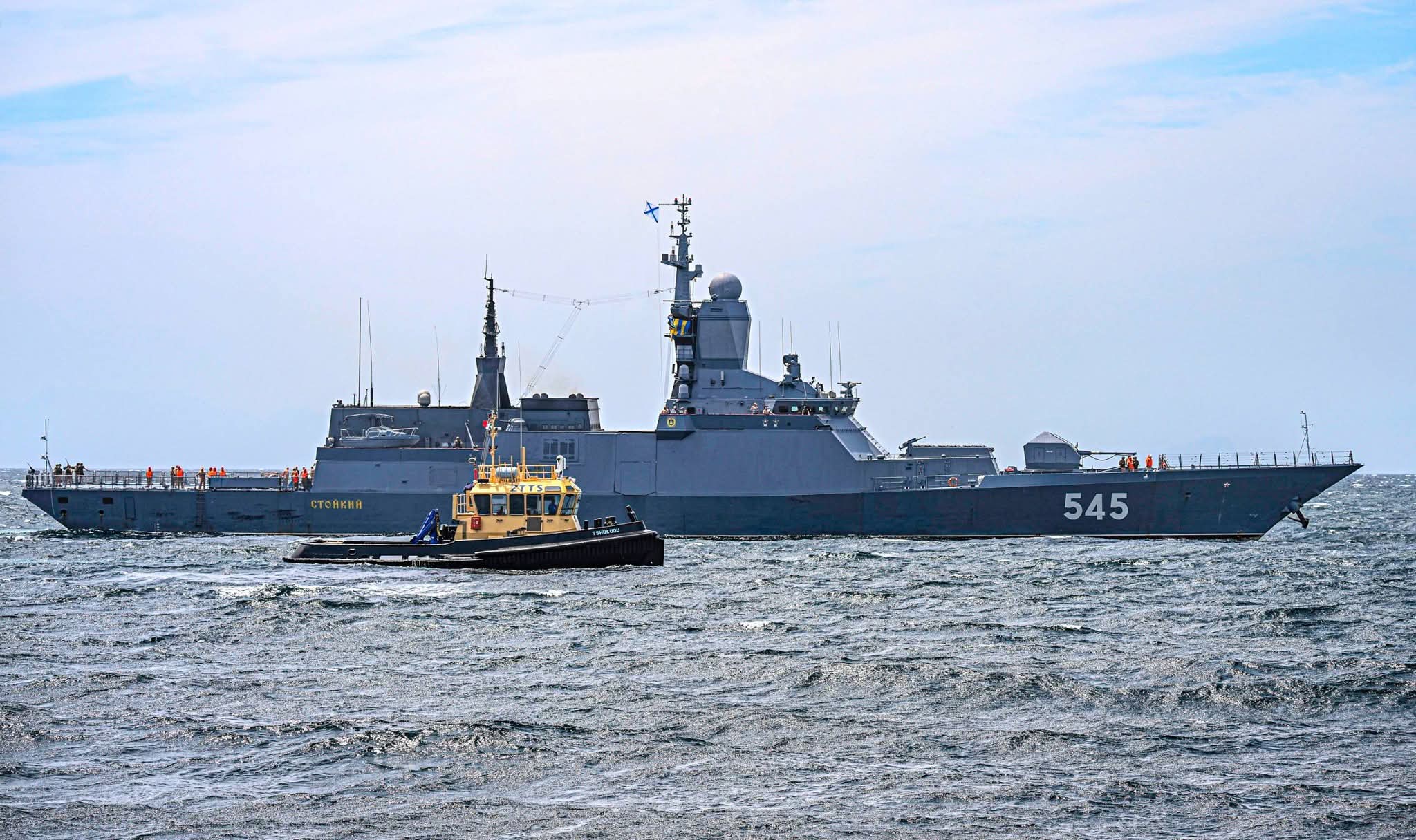
The Will for Peace 2026 exercise, involving Brics Plus partners, was meant to showcase maritime cooperation. Instead, it has become a flashpoint after Iran confirmed its naval presence, including the Shahid Naqdi destroyer, Makran helicopter carrier and Shahid Mahdavi frigate.
Iranian navy chief Nejad Moridi publicly confirmed the participation and said Iranian forces engaged with other delegations during the exercise. Reports also suggest that Lobese openly welcomed Iran’s involvement, further fuelling claims that the navy defied political instructions.
According to government sources, Ramaphosa’s directive was conveyed through Defence and Military Veterans Minister Angie Motshekga, raising the stakes around whether that instruction was ignored, misunderstood or arrived too late to change course.
‘The military is the fall guy’
Defence expert Helmoed-Römer Heitman believes the SANDF leadership is being positioned as a convenient scapegoat for what is, at heart, a political failure.
“South Africa has consistently shown support for Iran,” Heitman said. “Then suddenly there’s panic when the timing turns out to be disastrous, and the military becomes the fall guy.”
He questioned whether a clear presidential instruction was ever issued and if so, what it actually entailed. Was Iran meant to withdraw completely, observe quietly, or simply lower its profile?
By the time the ships docked, Heitman argues, the damage was already done.
Why timing matters
The fallout comes at a sensitive moment for South Africa’s foreign relations. Iran remains strategically and economically insignificant to South Africa, analysts say, compared to the US, Europe and Gulf states, which are major trade and investment partners.
The timing has raised particular concern in Washington, where South Africa hopes to secure renewed inclusion in the African Growth and Opportunity Act (Agoa) a trade deal offering tariff-free access to US markets.
On social media, South Africans have voiced frustration that the country may have jeopardised economic interests for the sake of symbolic alliances that offer little tangible benefit.
Inquiry launched, pressure mounts
Motshekga has announced a board of inquiry, tasked with determining whether Ramaphosa’s instruction was misrepresented or deliberately ignored. The board has just seven days to report back a tight deadline that underscores the urgency of the situation.
The investigation is expected to focus closely on Lobese’s role in authorising Iran’s participation. This comes against the backdrop of his earlier public criticism of government, when he accused National Treasury of effectively crippling the navy through underfunding.
That history, analysts say, may now count against him.
A sacrifice to calm the storm?
Independent political analyst Goodenough Mashego believes Lobese could be sacrificed to ease international and domestic pressure.
“He fell into a trap by Iran,” Mashego said, referring to the presence of a vessel sanctioned by both the US and European Union. “The government may find a reason to get rid of him to appease those who believe South Africa crossed a line.”
For Mashego, the bigger issue is that South Africa was drawn into a geopolitical fight that was never its own.
A wider reckoning ahead
Beyond individual accountability, the saga has reopened debate about South Africa’s foreign policy direction, its role within Brics, and the line between political decision-making and military execution.
As the inquiry unfolds, one thing is clear: the SANDF’s leadership is facing intense scrutiny, not just for what happened at sea, but for what it reveals about the country’s place in an increasingly divided global order.
{Source: The Citizen}
Follow Joburg ETC on Facebook, Twitter , TikTok and Instagram
For more News in Johannesburg, visit joburgetc.com