The Institute for Security Studies (ISS) has issued a stark warning: the Madlanga Commission has exposed widespread corruption within the SAPSand it’s up to police leaders to fix it.
The Report
The ISS argues that the Independent Police Investigative Directorate (IPID) was not created to address police corruption. Its main focus is on crimes of violence committed by police officers.
A range of agencies are tasked with investigating police corruption, but no agency has overall responsibility, and coordination between them is limited.
“Corrupt police officers are typically serial offenders who collude with other officers and shield each other from accountability. They also work with gangs or organised crime groups, and investigating these networks requires organised crime-focused techniques that currently fall outside IPID’s repertoire.”
The Commission
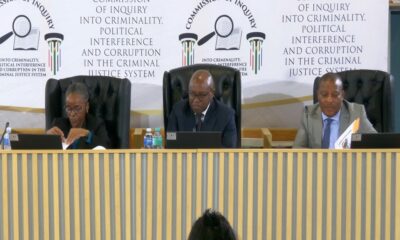
The Madlanga Commission, chaired by retired Constitutional Court Justice Mbuyiseli Madlanga, was established in July 2025 to investigate systemic corruption, criminal infiltration, and political interference within SAPS and the broader justice system.
It was a direct response to explosive allegations made by Lieutenant-General Nhlanhla Mkhwanazi, the KwaZulu-Natal Provincial Police Commissioner, who claimed a sophisticated criminal syndicateinvolving high-ranking politicians and law enforcement officialshad infiltrated the criminal justice system.
What Witnesses Revealed
-
Vusimusi ‘Cat’ Matlala effectively acted as a “deputy national commissioner,” allegedly directing police operations and “pampering” senior officers with money and gifts.
-
Suspended National Head of Organised Crime Richard Shibiri was grilled over a R70,000 “loan” from Matlala. Bank records showed he had over R100,000 available and spent thousands at Gucci and Louis Vuitton shortly after receiving the payment.
-
A Hawks helicopter was allegedly deployed to stop the arrest of murder suspect and cartel leader Katiso Molefe.
-
Senior officers allegedly shared sensitive case information and arrest warrants with suspects. Suspended Deputy Commissioner Shadrack Sibiya allegedly instructed an officer to share an arrest warrant for blogger Musa Khawula with Matlala.
The IPID Problem
Thuso Keefelakae, IPID’s acting national head, testified that the directorate faces severe shortages in manpower and expertise, often relying on SAPS to collect evidence for its own investigations.
Commissioners indicated they would likely recommend increased resources for IPID.
The Recommendations
The ISS report recommends that dedicated disciplinary units, with requisite expertise and resources, should be established to deal fairly and effectively with serious misconduct cases.
Analyst Views
Sandile Swana said SAPS must have a proper risk management unit that empowers unit heads and station commanders to manage risk.
“People should know that they are being watched and monitored independently for all the things they are doing and whistleblowers have a chance to trigger investigations that could get police officers fired.”
He also stressed the importance of anonymous whistleblower facilities for the public and police officers.
Professor Andre Duvenhage said the testimonies justify claims of widespread corruption, but noted that police heads are also implicated, making it difficult to deal with the problem. He suggested the entire police service should be overhauled and cleaned up.
The Reporting Gap
The report noted that where corruption is reported, it comes mostly from the public. Officers responsible for rooting out corruption are not getting the information they need from their own colleagueseven in units where corruption is known to be common.
“Low levels of reporting of police corruption, linked to a police culture that discourages internal reporting, highlight the fact that police corruption cannot be addressed only by responding to reported cases.”
“A more proactive investigative response to tackling police corruption is required, which relies on information and intelligence gathering.”
The Bottom Line
The Madlanga Commission has laid bare the rot. The ISS says it’s time for police leaders to step up.
Corrupt officers collude, shield each other, and work with gangs. Investigators lack resources. Whistleblowers stay silent.
The question is whether the top brass will clean houseor whether the rot runs too deep.