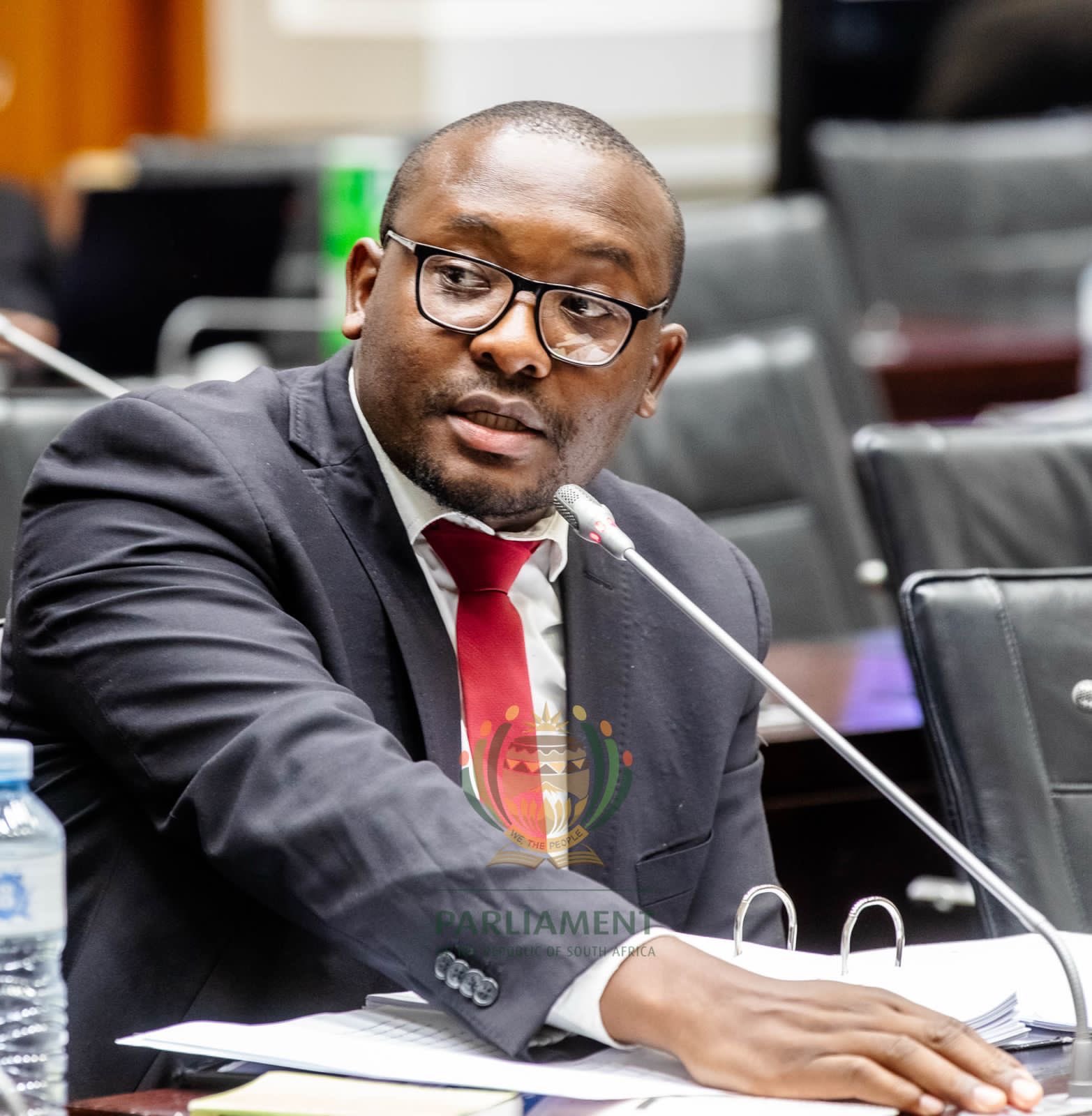
In a hushed parliamentary committee room, a former senior police accountant has painted a disturbing picture of a corrupted system, where the very funds meant for state secrecy were allegedly weaponised for fraud and political ends. Tiyani Hlungwani, the former Section Head of Finance and Administration Services for the South African Police Service (SAPS), delivered explosive testimony on Wednesday, detailing how he refused to process a fraudulent R45 million payment from the Secret Service Accountthe so-called “slush fund”and faced severe career consequences for his integrity.
His account before Parliament’s Ad Hoc Committee, which is probing allegations by Lieutenant General Nhlanhla Mkhwanazi, peeled back the layers on what he described as systemic rot within SAPS Crime Intelligence.
A Meeting at the Courtyard Hotel and a Refusal to Comply
The crux of Hlungwani’s testimony centred on a 2017 meeting at the Courtyard Hotel in Pretoria. There, he said, he was instructed by then National Commissioner Khehla Sithole, along with Generals Ngcobo and Dumisani Khumalo, to facilitate a payment for a wildly overpriced “grabber machine.” The timing and nature of the transaction, he believed, linked it to the ANC’s elective conference at Nasrec that year.
“I was asked to process the payment… but it was grossly overpriced, and the transaction seemed fraudulent,” Hlungwani stated. “Despite my objections, General Sithole insisted the payment be made. I could not allow that to happen.”
He and a colleague, Brigadier Dennis Chili, agreed they could not sign off. “The pressure was too much… we both agreed we had to report this to IPID. We could not be part of this unlawful transaction.”
A Whistleblower’s Fall from Grace
Their report to the Independent Police Investigative Directorate (IPID), then under Robert McBride, swiftly halted the payment. But for Hlungwani, it was the beginning of the end of his SAPS career. He testified that he was soon transferred to a “non-existent position” and later dismissed for being absent from worka move he directly attributes to his refusal to engage in corruption. “My removal had everything to do with my refusal,” he told the committee.
Adding another layer of concern, Hlungwani revealed he had performed his sensitive role without ever being formally granted a security clearance, a mandatory requirement for anyone handling the Secret Service Account. This critical oversight, he suggested, was symptomatic of a system where rules were optional for those in favour.
A Systemic Problem, Not Just “Bad Apples”
Hlungwani was careful to frame the issue as one of structure, not just individual greed. He pointed to “cronyism, political interference, and financial mismanagement” as features of the system, implicating senior officers like Lieutenant General Khumalo and General Ngcobo. He even made passing allegations of “judicial corruption” surrounding the 2017 conference but stressed the broader point: “It’s about how people are appointed to these positions of power.”
His plea to the committee was for deep, systemic reform of Crime Intelligence, particularly in recruitment and financial oversight. “The political interference in these processes has been detrimental to the integrity of the South African Police Service,” he argued.
As the committee continues its hearings, Hlungwani’s testimony stands as a stark ledger entry: a R45 million fraud was stopped by two principled officials, but the cost of their integrity was their careers. His story is a powerful testament to the whistleblower’s peril and a direct challenge to the committee: will it recommend the systemic change needed to protect those who stand in the way of corruption?