News
Thirty Years of Unbroken Will: The South Durban Fight for Clean Air and Life

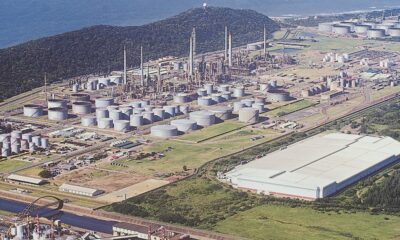
If you stand in the shadows of the massive refineries in South Durban, the air often carries a metallic tang. For the people living here, that smell isn’t just industrial background noise; it’s a daily reminder of a battle for breath itself. For thirty years, that battle has been led not by politicians or large NGOs, but by a community alliance born in a living room, armed with plastic buckets and an unshakeable resolve.
This is the story of the South Durban Community Environmental Alliance (SDCEA). It’s a chronicle not just of protests, but of a profound shift: from being victims of pollution to becoming the scientists, lawyers, and global advocates of their own survival.
The Refusal That Defined a Movement
In 1995, fueled by the choking reality of the Engen and Sapref refineries, community organizer Desmond D’Sa and his neighbours formed the SDCEA. Their first defining act wasn’t a march, but a refusal. When Engen offered community funding in what was seen as an attempt to buy silence, they publicly said no. That moment set a non-negotiable tone: they would be watchdogs, not pets.
This principle guided their early wins. By 1997, relentless pressure forced the closure of the toxic Waste-tech landfill. They took up the cause of workers poisoned at chemical plants, proving their fight was for both people and place.
The Bucket Brigade: Evidence in Their Own Hands
Their most revolutionary tool arrived in 1999, deceptively simple: a plastic bucket. Partnering with GroundWork, SDCEA introduced South Africa to the “Bucket Brigade.” This community-led air monitoring allowed residents to capture their own air samples during gas leaks and flares. Suddenly, the vague complaint of “bad air” became a courtroom-ready data point. It democratized evidence and stripped polluters of their favourite rebuttal: “Prove it.”
This evidence fueled a fight that went global. In 2002, D’Sa confronted Shell’s CEOs at their London AGM, bringing the reality of South Durban’s “Cancer Alley”where rates were 24 times the national averageto the heart of corporate power. Back home, they exposed the “Chrome-6 Scandal,” revealing four decades of carcinogenic contamination by a chemical giant.
A Legacy Written in Courtrooms and Coastlines
The SDCEA story is a timeline of resilient advocacy. They protested the 2010 World Cup, arguing it stole funds from water and sanitation. They marched 18,000 strong during the COP17 climate talks. D’Sa’s 2014 Goldman Environmental Prize victory was a global salute to local grit, celebrating the shutdown of a dump and a delayed port expansion.
Even crisis has been met with structured response. From the catastrophic Engen explosions to the UPL warehouse fire during the 2021 unrest, SDCEA has been the community’s first responder and legal mobilizer. Their fight expanded to the coast, leading the massive #ShellHell protests against seismic testing and celebrating the rejection of Karpowerships.
The Unfinished Fight, The Unbroken Chain
Today, at the thirty-year mark, SDCEA’s work is as urgent as ever. They’re linking the electricity crisis to environmental justice, protesting Eskom tariffs while pushing for a real Just Transition. Their 2025 Oil and Gas Conference unified disparate coastal struggles, and they stood in the Constitutional Court to argue against Shell on the Wild Coast.
What began as a fight for clean air has matured into a holistic vision for justiceencompassing health, food security (defending subsistence fishing rights), and economic dignity. They’ve built a model that moves from the “bucket” to the boardroom to the bench, training a new generation to continue the watch.
The air in South Durban is not yet clean. But the community is no longer just breathing it helplessly. They are measuring it, challenging it, and transforming their right to a safe environment from a plea into an enforceable demand. For thirty years, SDCEA has proven that the most powerful refinery isn’t made of steel; it’s the resilience of people who decide that enough is enough. Their story is a masterclass in how to build power, one bucket, one march, one courtroom victory at a time.
Follow Joburg ETC on Facebook, Twitter , TikTok and Instagram
For more News in Johannesburg, visit joburgetc.com