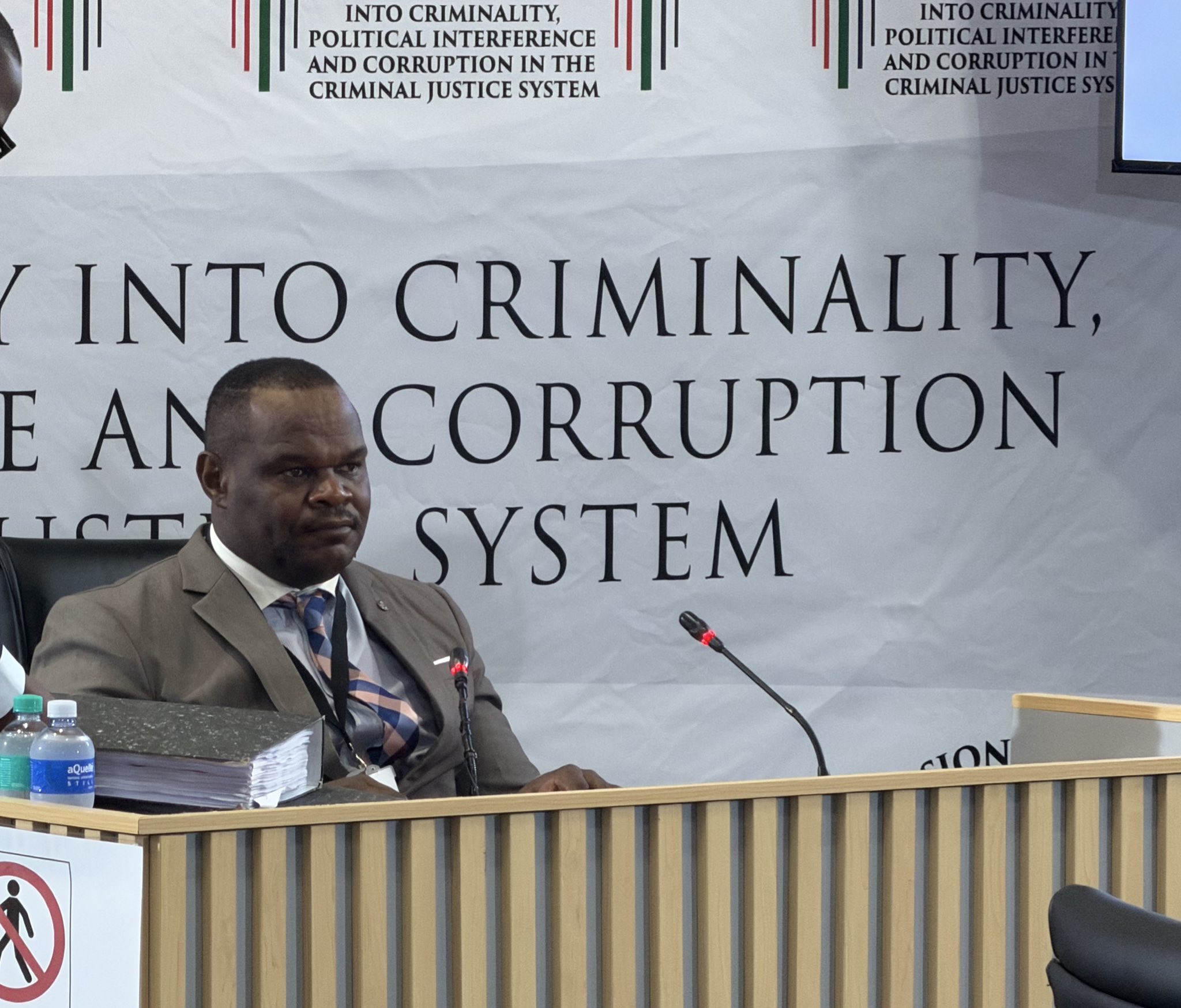
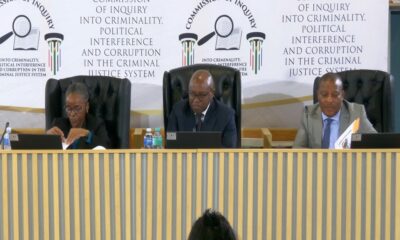
The Madlanga Commission of Inquiry has heard many things since it began its work. Allegations of corruption, claims of political interference, accusations of misconduct at the highest levels of policing. But on Tuesday, Sergeant Fannie Nkosi offered something different: a window into the personal animosities, the whispered gossip, and the strange alliances that define relationships among South Africa’s top police commanders.
Nkosi, an officer with the Gauteng Organised Crime Unit, found himself in an unusual position last year. Suspended Deputy Police Commissioner Shadrack Sibiya summoned him to his office and asked for a favour. Would Nkosi help mend his strained relationship with KwaZulu-Natal SAPS Commissioner Nhlanhla Mkhwanazi?
“I was asked to mediate a peace deal,” Nkosi told the commission. The request came from Sibiya himself, who wanted Nkosi to approach Mkhwanazi and ask a simple question: “General wants to know why we are fighting.”
The fact that a senior officer needed a subordinate to broker peace between two of the country’s most powerful police officials speaks volumes about the state of relationships at the top of SAPS. These are not minor disagreements. These are fractures deep enough to require third-party intervention.
The Backstory: A Relationship Strained
Sibiya’s own testimony last month painted a picture of a man trying to build bridges that kept collapsing. “There was not really a conflict,” he told the commission. “I tried several times to make a relationship work… to build a relationship. I even sent Sergeant Nkosi to KZN to go, sit down with Mkhwanazi and say to him, ‘General wants to know why we are fighting.'”
But Mkhwanazi’s perspective, offered in previous testimony, suggested the gap was unbridgeable. He claimed Police Minister Senzo Mchunu had called a meeting to broker peace between the two. He also made a striking statement: there was no way to make peace between himself as a police officer and a criminala clear reference to how he views Sibiya.
When asked by evidence leader Advocate Matthew Chaskalson SC whether the two had mended fences by 2025, Nkosi offered a careful answer. “According to me, they are getting along.” But he added that he wasn’t sure about Sibiya’s relationship with National Commissioner Fannie Masemola. Police gossip, he said, suggested it “was not good.”
The WhatsApp Trail
Nkosi’s testimony revealed a pattern of communication that raised questions about the flow of information within SAPS. His WhatsApp chats with businessman and taxi boss Steve Motsumi showed he shared news articles and confidential police information, including articles about Mkhwanazi and Political Killings Task Team head Dumisani Khumalo.
One article highlighted allegations of problems within SAPS KwaZulu-Natal affecting Mkhwanazi and Khumalo, specifically claiming Mkhwanazi tried to influence witnesses in a disciplinary case against SAPS counter-intelligence head Major-General Feroz Khan to secure Khan’s dismissal.
Nkosi sent the same article to Sibiya, prompting Chaskalson to ask if Sibiya was also a fan of Mkhwanazi. This followed Nkosi’s claim that he and Motsumi were both fans of Mkhwanazi and would often share information about him if they thought it would concern him.
The implication was clear: information about senior officers was circulating among a network of contacts, blurring the lines between professional intelligence and personal gossip.
The Arrest and the Tupac Message
Nkosi’s testimony took a surreal turn when discussing the arrest of Khumalo in June last year at OR Tambo International Airport. Khumalo was detained alongside six high-ranking police officials in what Mkhwanazi later described as a calculated move to shut down investigations into powerful drug cartels and organised crime.
Nkosi shared an article about the arrest with Motsumi. He also sent a picture of a Crime Intelligence officer in custody. When Chaskalson asked about the value of the picture, Nkosi admitted: “To be honest, Motsumi was not interested in that picture.”
But the most unusual exchange came when Nkosi discussed his conversation with Mkhwanazi about Khumalo’s arrest. Mkhwanazi’s response? A YouTube link to Tupac Shakur’s song “Last Mother F*** Breathing.”
Nkosi explained that he shared the Tupac lyrics screenshot with Motsumi because they had been playing Tupac songs while biking the previous weekend, and Motsumi had been annoyed. He sent the link to show him that even Mkhwanazi was into Tupac.
Chaskalson was unconvinced. “That’s a great story, Sergeant, but I want to put it to you that it is not a true story.”
The evidence leader suggested a different interpretation: that Nkosi sent the lyrics to Motsumi because he wanted him to know that Mkhwanazi would fight to the bitter end, just as Tupac’s lyrics suggested.
“What did Tupac say about Last Mother F*** breathing?” Chaskalson asked.
Nkosi responded: “He is saying I am the last man standing.”
Chaskalson pressed further: “I am going to fight until I am the last man standing. Is it not what Mkhwanazi is saying that Khumalo may be arrested, but I am going to fight until the bitter end?”
Nkosi offered a careful defence: “I don’t want you to put words into his mouth, but that time he was cruising and sent me this thing (Tupac lyrics) and this is how I understood him.”
The Larger Picture
Chaskalson laid out his interpretation of the evidence: “What it seems to be is that for several months now, you have been sharing with Motsumi stories of factions in SAPS, General Khumalo, General Masemola, General Mkhwanazi. And on that day, the position of that grouping in the SAPS probably looks weakest because General Khumalo has just been arrested. You speak to Mkhwanazi, and his response is to come back to you with Tupac songs, essentially saying I am going to fight to the bitter end. And you were sending that to Mr Motsumi because Motsumi wanted to know if Mkhwanazi would fight to the bitter end.”
This interpretation suggests that the Tupac lyrics were not a casual musical recommendation but a coded message of defiance. At a moment when one of his allies had been arrested, Mkhwanazi was signalling that he would not back down. And Nkosi, whether consciously or not, was the conduit for that message to reach a wider audience.
The Factions Beneath the Surface
Nkosi’s testimony, which will resume on Wednesday, has pulled back a curtain on a reality that many in policing circles acknowledge but few discuss publicly: SAPS is riven by factions. Personal loyalties, regional affiliations, and career ambitions create alliances that cut across formal structures.
The request for Nkosi to broker peace between Sibiya and Mkhwanazi is remarkable not just because it happened, but because it failed. Two of the country’s most senior police officers could not resolve their differences directly. They needed intermediaries. And even then, the peace remained fragile at best.
The sharing of articles, the circulation of information, the Tupac lyricsall of it points to a police service where information is power, where alliances are fluid, and where the lines between professional communication and personal messaging blur constantly.
What It Means
For the commission, Nkosi’s testimony offers evidence of the factionalism that Sibiya himself acknowledged last month. It provides concrete examples of how information moves, how alliances function, and how senior officers communicate in code.
For the public, it offers a troubling glimpse into the upper echelons of the institution meant to protect them. If those at the top are consumed by personal rivalries, if they need intermediaries to communicate, if they send coded messages through subordinates, what does that mean for the thousands of ordinary officers doing their jobs every day?
And for Mkhwanazi and Sibiya, the testimony adds another layer to their already complicated public profiles. One is fighting allegations of witness interference. The other is suspended, awaiting the outcome of proceedings. Both are at the centre of a web of relationships, rivalries, and rumours that the Madlanga Commission is slowly untangling.
The inquiry continues on Wednesday. More testimony, more revelations, more glimpses into the hidden workings of South Africa’s police service. And somewhere, Tupac’s lyrics echo across the years: “I am the last man standing.” In the factional world of SAPS, that might be exactly what some are fighting to prove.