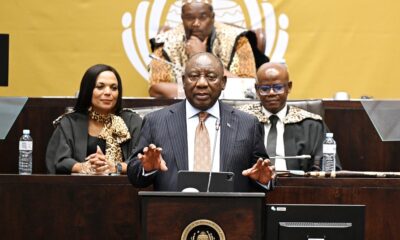
South Africa is heading into the 2026 State of the Nation Address with a rare thing on the table: a bit of breathing room.
After years of crisis piled on crisis, from load shedding to collapsing rail lines and shrinking public finances there are signs of modest improvement. Growth picked up slightly in 2025. Power cuts eased. Ports and freight rail moved a little faster. Treasury is talking about stabilisation rather than survival.
But here’s the uncomfortable truth many South Africans already feel in their wallets and kitchens: the “turnaround” hasn’t reached them yet.
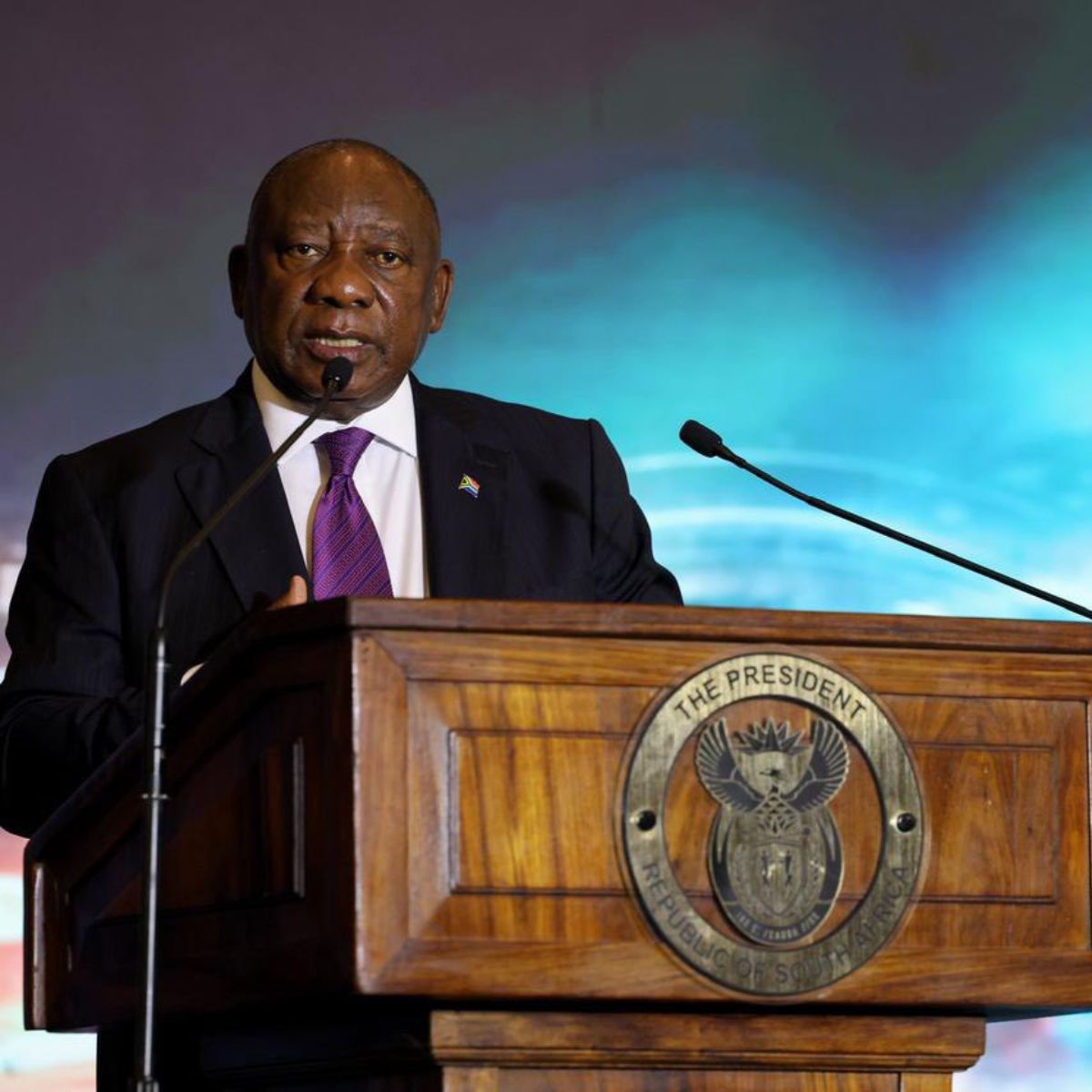
SONA 2026 is shaping up to be a moment of choice for President Cyril Ramaphosa, use this opening to push deep structural change, or risk squandering yet another narrow window while inequality, unemployment and hunger harden further.
A recovery that looks better on paper than in people’s lives
Government leaders, including Treasury director-general Duncan Pieterse, have pointed to improved public finances and better-performing state-owned enterprises as evidence that the economy is on firmer ground.
On paper, they’re not wrong. GDP growth in 2025 edged up to around 1.2%. Agriculture, mining, trade and finance held up surprisingly well, even as global uncertainty grew and the US threatened tougher trade measures.
Mining benefitted from higher prices and stronger production. Agriculture gained from improved port logistics and favourable weather. Banks extended more loans and posted higher revenues.
Yet none of this has meaningfully shifted daily life for most households.
South Africa’s population has grown faster than its economy for more than a decade. GDP per person is now lower than it was in 2010, when the National Development Plan was adopted. In simple terms: the country is bigger, but poorer.
Network industries stabilise, but at a cost
One of the real gains of 2025 was the relative stabilisation of key network industries.
Load shedding largely disappeared for much of the year, thanks to better maintenance and additional generation. Freight rail volumes improved, and ports moved more cargo as equipment availability improved. These changes allowed South Africa to finally benefit from a commodity boom that previously slipped through its fingers due to logistics failures.
But the relief came with strings attached. Electricity prices continued to rise, and many households faced “load reduction” instead. Freight rail remains vulnerable to theft and infrastructure decay. Commuter rail, while improving, is still inaccessible to millions.
This stabilisation matters, but it is a foundation, not a destination.
Jobs remain stubbornly out of reach
If growth were truly working, it would show up in employment. It hasn’t.
By September 2025, official unemployment had barely moved, sitting at 31.9%. Under the expanded definition, which includes discouraged jobseekers, unemployment was a staggering 42.4% 12.5 million people.
Young people are paying the highest price. Around 40–45% are not in employment, education or training. Every year this continues, skills are lost, families are stretched thinner, and the tax base weakens further.
This isn’t about people not wanting to work. It’s about an economy that simply doesn’t create enough jobs especially in sectors that absorb large numbers of workers.
Mining and finance can’t do that alone. South Africa needs jobs-intensive growth in construction, infrastructure, tourism, manufacturing and agro-processing. That requires investment and right now, investment is going backwards.
Investment is shrinking when it should be surging
In 2025, South Africa’s investment rate fell below 15% of GDP. For sustained growth, it should be closer to 20–25%.
Despite bold headlines about R1 trillion in infrastructure spending, the reality is sobering: the country needs closer to R800 billion a year to meet NDP targets. Austerity continues to choke public investment, even as private capital sits on the sidelines.
This is the contradiction SONA 2026 will need to confront head-on.
Women carry the economy, unpaid and unseen
Another gap in the “recovery” story is gender.
Women face a higher unemployment rate than men, and far greater barriers to entering the labour market. In 2025, women were eight times more likely to be out of the labour force because they were classified as homemakers.
That label hides enormous economic value.
Women shoulder unpaid care work that keeps households and the economy, functioning: caring for children and elders, fetching water, preparing food, supporting sick relatives and navigating failing public services.
As public services are cut back, that burden grows heavier. Yet caregivers receive little income support and limited access to social security.
Structural reform that ignores the care economy isn’t reform at all.
Poverty and hunger tell a harsher story
Official data may suggest some improvement in poverty levels over time, but revised measurements paint a grim picture.
By 2023, two-thirds of South Africans, 66.7% were living below the upper-bound poverty line. Food insecurity worsened sharply between 2019 and 2023, with 8 million people severely food insecure and nearly 18 million struggling to access enough food.
Social grants prevent an even deeper disaster, but they are not enough. The child support grant remains far below the cost of a basic nutritious diet, and the R370 SRD grant is now worth less than half the food poverty line.
The long-promised basic income support remains stuck in policy limbo.
Growth without change is meaningless
South Africa desperately needs growth, but growth alone won’t fix what’s broken.
If economic gains stay concentrated in capital-intensive sectors, if they are not reinvested into public services, infrastructure and social protection, and if they don’t create decent jobs, then growth becomes little more than a statistical illusion.
The Constitution demands progressive realisation of basic rights: food, water, housing, healthcare and social assistance. On employment, gender equity, poverty and hunger, South Africa is falling short.
SONA 2026 should not celebrate stabilisation as an achievement. It should treat it as an opportunity.
What SONA 2026 should commit to
This moment calls for ambition, not caution.
That means:
-
Driving jobs through manufacturing, infrastructure and value-added industries
-
Scaling up public investment in transport, water, energy and digital access
-
Expanding social services and income support, including basic income support
-
Using progressive taxation and stronger revenue collection to fund transformation
-
Measuring success beyond GDP, using indicators that track real living conditions
It also means rethinking the role of the state, not as a passive referee for markets, but as an active driver of development.
Use it, or lose it
South Africa has seen moments like this before, brief periods of stability that passed without structural change.
SONA 2026 can either repeat that pattern, or mark a turning point.
South Africans don’t need reassurance that things are “getting better.” They need a credible plan that turns fragile economic gains into jobs, dignity and security and a signal that this opportunity will not be squandered.