Zuma and Motlanthe to attend Ramaphosa’s ninth SONA as Parliament marks constitutional milestone
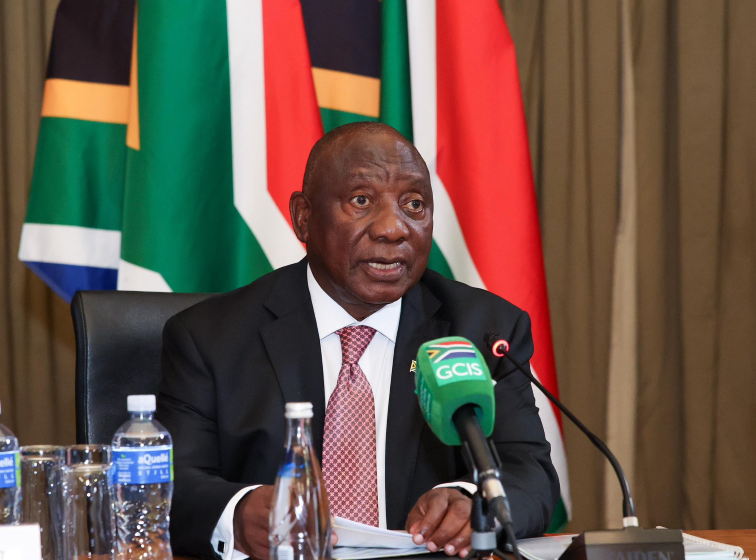
When President Cyril Ramaphosa steps up to deliver his ninth State of the Nation Address (SONA) on Thursday night, he won’t just be addressing MPs and the country, he’ll be speaking in front of two men who once held the same office.
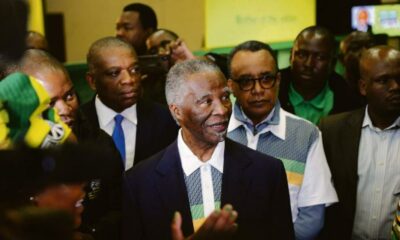
Former presidents Jacob Zuma and Kgalema Motlanthe have confirmed they will attend SONA 2026 in Cape Town. Thabo Mbeki, however, has sent his apologies.
The announcement, made by National Assembly Speaker Thoko Didiza on Wednesday, adds a layer of political symbolism to what is already a high-stakes moment in South Africa’s calendar.
A room filled with history
SONA is always a spectacle blue lights, red carpets, political fashion statements and tightly choreographed arrivals. But beyond the optics, this year’s guest list carries weight.
Zuma’s attendance is particularly noteworthy, given his complicated political relationship with Ramaphosa and the ANC’s evolving internal dynamics. Motlanthe’s presence signals continuity and institutional memory. Mbeki’s absence, though explained, will not go unnoticed in political circles.
Didiza cautioned that attendance confirmations can change at the last minute, adding that some aspects of SONA should retain an element of surprise.
Nearly 500 Members of Parliament, alongside representatives of local government and invited guests, are expected to fill the venue.
Parliament says it is ready
Parliament has assured South Africans that it is fully prepared for SONA 2026. Operational readiness, security planning and institutional focus have been emphasised ahead of the address.
Didiza confirmed that the event carries a budget of approximately R7 million. According to Secretary to Parliament Xolile George, much of that amount is allocated to ICT infrastructure the technical backbone required to broadcast and manage an event of this scale.
As in recent years, SONA will once again be hosted at Cape Town City Hall. Parliament hopes this will be the final time the address is held there, though Didiza acknowledged that hosting state functions always carries unpredictability.
The relocation from the National Assembly chamber followed the devastating 2022 fire that damaged parts of Parliament a reminder of how fragile even democratic institutions can be.
Thirty years of the Constitution
This year’s address carries added significance: 2026 marks 30 years since South Africa adopted its Constitution in 1996.
Didiza described the milestone as an opportunity for reflection on the country’s democratic journey and a renewed commitment to constitutional values dignity, equality, freedom and accountability.
For many South Africans, those ideals feel both foundational and, at times, under pressure. Public debate over governance, service delivery and accountability has intensified in recent years. SONA 2026 lands in a climate where citizens are not just listening politely they are measuring promises against lived reality.
More than ceremony
Didiza stressed that SONA is not merely a ceremonial occasion. It reinforces Parliament’s constitutional role: holding the executive to account, legislating in the public interest and facilitating public participation.
That accountability will come into sharper focus during the SONA debate scheduled for 16 and 17 February at the recently handed-over Nieuwmeester Dome.
Political parties are expected to dissect Ramaphosa’s address line by line applauding where they agree and challenging where they don’t. Ramaphosa will then reply, closing the formal chapter on the annual address.
A broader stage
Beyond SONA, Parliament also announced it will host the upcoming Commonwealth Parliamentary Conference a move that underscores South Africa’s ongoing engagement in global parliamentary diplomacy.
In a year marking three decades of constitutional democracy, the symbolism is deliberate: positioning South Africa not only as a nation reflecting inwardly, but also as a player in international democratic dialogue.
The bigger picture
For Ramaphosa, delivering a ninth SONA is both a record of endurance and a test of legacy. Few presidents reach that milestone without political scars.
For Zuma and Motlanthe, attending means witnessing how the office they once held continues to evolve. For Mbeki, absent but acknowledged, it is a reminder of the long arc of South Africa’s democratic leadership.
And for ordinary South Africans watching from their living rooms, taxis, restaurants and social media feeds, SONA remains what it has always been: a moment to ask whether the country’s democratic promises are being honoured.
The chamber or in this case, City Hall, may be filled with dignitaries. But beyond the applause and political theatre, the real audience is a nation 30 years into its constitutional journey, still demanding progress.