News
‘South Africa Is Our Enemy’: US Senator’s Outburst Sparks New AGOA Tensions
‘South Africa Is Our Enemy’: Senator Kennedy’s Remark Ignites AGOA Storm
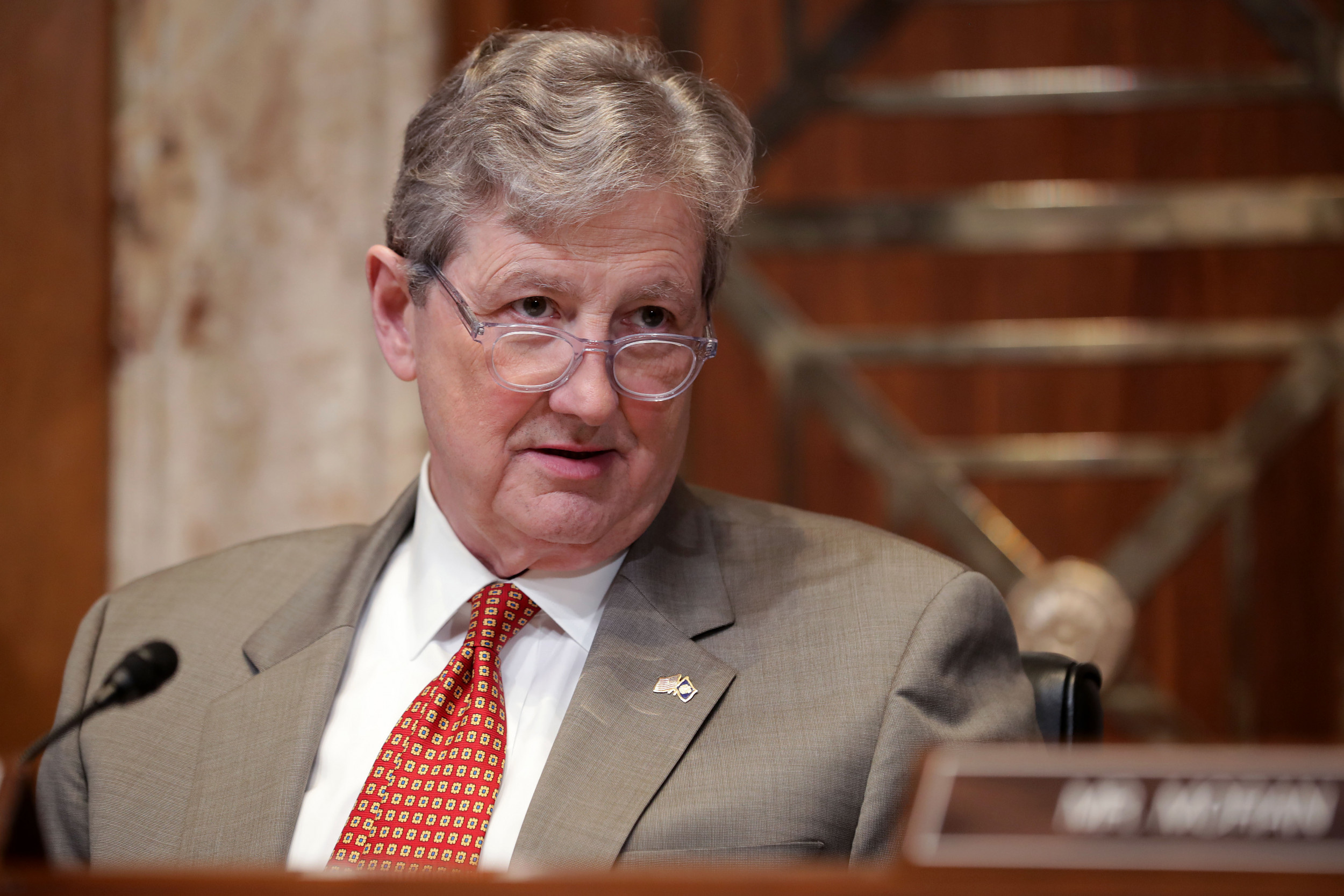
South Africa’s trade relationship with the United States has survived many political winters, but rarely has it been described in language as blunt and inflammatory, as it was this week in Washington. In a tense Senate Appropriations subcommittee hearing, Republican Senator John Kennedy openly questioned whether Pretoria still deserved its place in the African Growth and Opportunity Act (AGOA), going as far as calling South Africa “America’s enemy.”
It was a moment that immediately set South African social media ablaze, with users torn between anger, disbelief, and a collective eye-roll at the increasingly hostile rhetoric coming out of Washington.
A Heated Exchange in Washington
The confrontation unfolded as US Trade Representative Ambassador Jamieson Greer briefed lawmakers on the future of AGOA, which is currently up for renewal. South Africahistorically one of the largest AGOA beneficiarieswas placed under a sharper spotlight.
Kennedy opened with the question that has now echoed globally:
“What do you wanna do about South Africa as part of AGOA, given that South Africa is not America’s friend?”
Greer didn’t dispute the premise. Instead, he pointed to what the US sees as long-standing trade barriers:
-
Tariff issues
-
Non-tariff barriers
-
A lack of reciprocity despite South Africa’s “real, industrialised economy”
Greer reminded lawmakers that South Africa already attracts a 30% reciprocal tariff, far higher than the typical 10% applied to most other sub-Saharan African nations.
But Kennedy was not satisfied. He pressed further:
“Don’t you think we have to separate South Africa from AGOA?”
This time, Greer agreedan acknowledgement that South Africa may be heading for a different set of rules or potential exclusion if Congress takes a harder line.
Kennedy’s Accusation: ‘South Africa Is Our Enemy’
If the conversation had stayed technical, the fallout might have been contained.
But Kennedy escalated dramatically:
“They are our enemy right now. They are buddies with all of our enemies. And they have been very critical of the United States.”
For many South Africans, this comment crossed a line. Social media erupted:
-
“America picks fights then calls everyone an enemy? Laughable.”
-
“Imagine calling us your enemy while trading billions with us.”
-
“AGOA must be renewed, not used for political bullying.”
Others pointed out the elephant in the room:
South Africa’s non-alignment stance in global politics, especially regarding Russia and Palestinehas irritated Washington for over a year.
Kennedy’s comments may simply be the latest crack in an already strained façade.
The 30% Tariff: What Sparked It?
Many South Africans missed the earlier story that laid the groundwork for this tension:
This year, the US slapped a 30% tariff on certain imports from South Africa.
According to previous reports:
-
US officials had not responded to several trade proposals submitted by Pretoria.
-
Washington imposed the tariff unilaterally under its interpretation of the trade imbalance.
-
President Cyril Ramaphosa confirmed receiving notice of this move from former president Donald Trump.
The Presidency, through spokesperson Vincent Magwenya, pushed back stronglysaying South Africa’s data simply does not justify such a tariff:
-
SA’s average tariff on imported goods sits at 7.6%
-
56% of goods enter SA at zero duty
-
77% of US goods already enter South Africa duty-free
In short: Pretoria believes the US interpretation of trade numbers is “contested” and fundamentally inaccurate.
Despite the friction, the Presidency maintains that South Africa is still committed to nurturing stable trade relations with Washington.
Why South Africa Matters to AGOA
Here’s the missing piece in most conversations:
South Africa is not just another African participant in AGOA, it is the industrial backbone of the entire programme.
-
It is the most diversified economy in AGOA
-
It accounts for a massive share of manufactured exports
-
Many other African countries depend on SA for supply chains, logistics, and regional trade
If South Africa is carved out or penalised, AGOA’s structure itself shifts.
This is why Kennedy’s proposal is more than political theatre, it could reshape US–Africa trade for years to come.
A Fresh Angle: Is This Really About Trade?
While Kennedy framed South Africa as an “enemy,” many analysts see a different story:
This is less about tariffs and more about foreign policy discipline.
Washington has grown increasingly intolerant of countries that straddle the US-China-Russia divide.
South Africa’s non-alignment stances, BRICS expansion advocacy, and criticisms of Western positions on global conflicts have placed it in the crosshairs.
Kennedy’s comments may reflect a growing sentiment in Congress that economic tools, like AGOA, should force geopolitical loyalty.
But within South Africa, the reaction is markedly different:
Trade should not be held hostage to political alignment.
Where Does This Leave South Africa?
For now, South Africa remains in AGOA, but under a cloud of scrutiny. Greer admitted openly:
“If you think that we should give South Africa a different treatment, I am open to that.”
Different treatment can mean:
-
stricter compliance conditions
-
deeper trade reviews
-
selective exclusions
-
or, in the worst-case scenario, suspension from AGOA
Pretoria will now have to balance diplomacy with economic pragmatism, especially as AGOA renewal talks continue into 2026.
Whether Senator Kennedy’s remarks reflect broader bipartisan sentimentor just political grandstandingremains to be seen.
But one thing is clear:
South Africa’s place in AGOA is no longer guaranteed.
Not because of its economy, but because of the geopolitical storm swirling around it.
And for everyday South Africans, the risk isn’t political embarrassment.
It’s economic: jobs, exports, investment flows, and regional trade stability all depend on calm, not chaos.
‘No Filter Left’: Trump’s Rhetoric Takes a Darker Turn as He Targets Non-White Immigrants
{Source: IOL}
Follow Joburg ETC on Facebook, Twitter , TikTok and Instagram
For more News in Johannesburg, visit joburgetc.com