News
Government responds to BRICS naval drills, raising fresh South Africa-US tensions
Warships arrive, and nerves rise in Cape Town
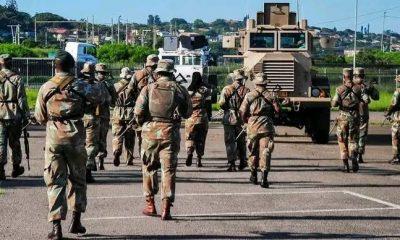
Early January has brought more than tourists to Cape Town’s harbour. Warships from BRICS-linked nations have slipped into local waters, setting the stage for the Will for Peace 2026 naval exercise. The drills run from 9 to 16 January and are being led by China, with the South African National Defence Force saying the operation focuses on protecting maritime trade routes and strengthening cooperation around peaceful maritime security.
A Chinese destroyer docked at Simon’s Town earlier this week. Social media users quickly spotted a Russian frigate and a supply vessel moving down Africa’s west coast, while the massive Iranian forward base ship IRIS Makran was later seen near the naval base. The Defence Force has not confirmed the full list of participating countries, but the imagery alone was enough to reignite a familiar diplomatic storm.
Why Washington is watching closely
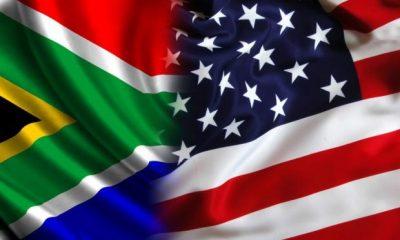
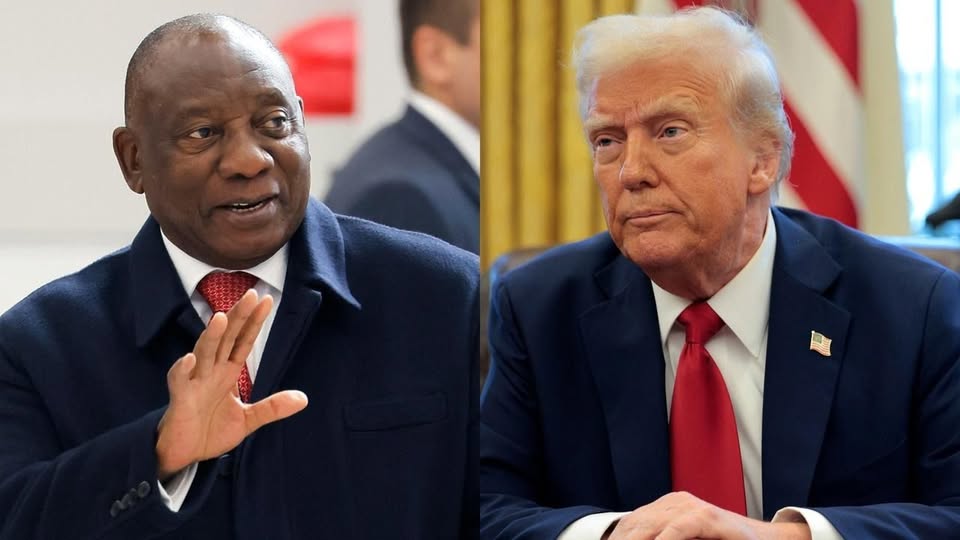
The timing could hardly be worse. South Africa’s relationship with the United States has been strained since Donald Trump returned to the White House nearly a year ago. Pretoria’s ties with Iran have already drawn criticism from Washington, and hosting naval exercises involving countries labelled by the US as adversaries has added fuel to the fire.
This is not new territory. In 2023, South Africa faced sharp backlash from the US and the European Union after hosting BRICS naval drills that coincided with the anniversary of Russia’s invasion of Ukraine. Once again, questions are being asked about whether the country can genuinely claim to be non-aligned while welcoming Russian and Iranian vessels into its harbours.
Opposition cries foul over neutrality
At home, the criticism has been just as pointed. The Democratic Alliance has argued that the inclusion of Russia and Iran undermines government claims of neutrality, especially after South Africa cancelled joint military exercises with the United States.
Defence spokesperson Chris Hattingh warned that foreign and defence policy should be transparent and principled, not quietly reshaped through drills that risk damaging South Africa’s global standing. For many observers, the concern is less about the exercise itself and more about what message it sends at a time of heightened geopolitical tension.
‘What’s the big deal?’ asks Holomisa
Deputy Defence Minister Bantu Holomisa has little patience for the outrage. Speaking candidly, he questioned why the drills had suddenly become controversial.
According to Holomisa, the SANDF conducts exercises with friendly countries all the time, and this one was planned long before the current US tensions flared up. As a BRICS member, South Africa has commitments within the bloc, and he insists the country has every right to act in its own interests.
He also framed the drills as a morale boost for local troops, calling it an honour to train alongside well-equipped militaries. In his view, the exercise serves the interests of the Global South, while countries in the Northern Hemisphere naturally pursue their own agendas.
Talking to everyone, siding with no one
On the question of non-alignment, Holomisa remained firm. He said South Africa is not troubled by US objections, pointing out that Washington itself engages diplomatically with China, Russia, and Iran. As members of the United Nations, dialogue between these countries is ongoing, so singling out South Africa makes little sense in his eyes.
He acknowledged that broader diplomatic discussions are being handled by President Cyril Ramaphosa and International Relations Minister Ronald Lamola, adding that communication with the US continues behind the scenes.
A familiar balancing act
For South Africans watching this unfold, the episode feels like another chapter in a long-running balancing act. Pretoria wants to maintain strong ties with BRICS partners while avoiding a full-blown fallout with the West. Social media reaction has been split, with some praising the government for standing its ground and others warning that the country risks economic and diplomatic consequences by antagonising a major trading partner.
Whether the Will for Peace drills pass quietly or deepen existing rifts remains to be seen. For now, the government’s message is clear. These exercises are routine, planned long ago, and not up for negotiation. As Holomisa puts it, in a world where everyone is talking to everyone else, South Africa is simply asking why it should be treated any differently.
Follow Joburg ETC on Facebook, Twitter, TikT
For more News in Johannesburg, visit joburgetc.com
Source: Business Tech
Featured Image: Facebook/Swaziland Democratic News