Business
South Africa defends BRICS naval drills as maritime tensions rise
South Africa’s coast becomes a global focal point
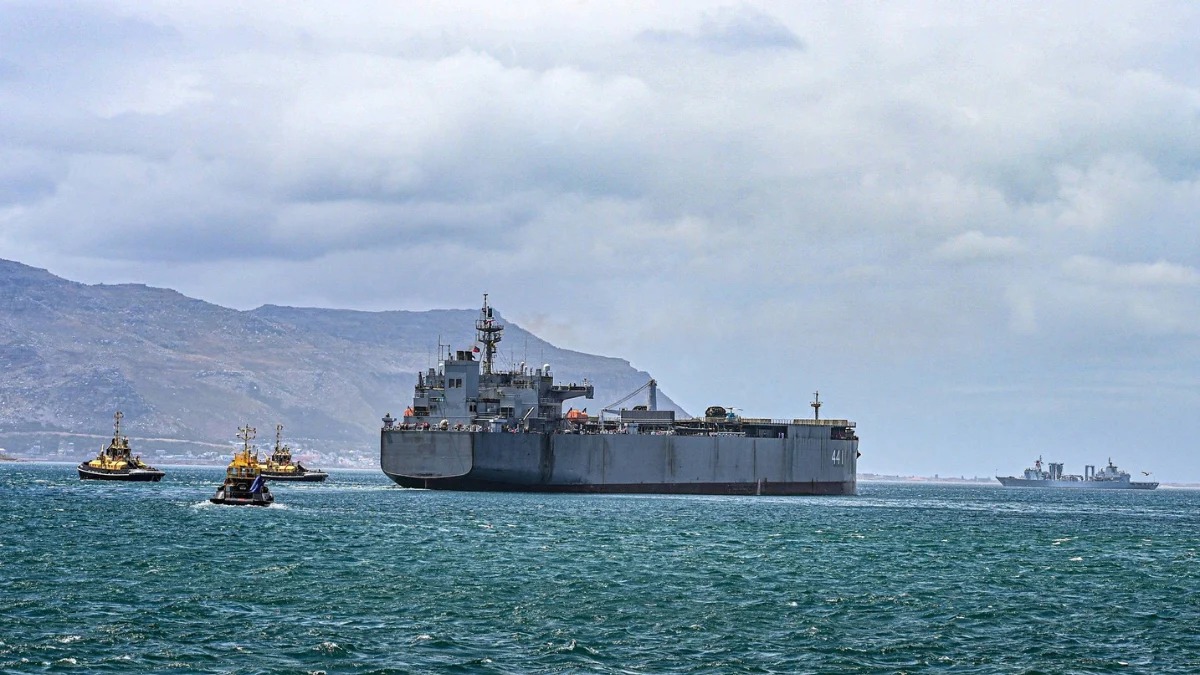
As the sun rose over Cape Town’s Atlantic seaboard this week, South Africa found itself at the centre of a global conversation far bigger than ships and uniforms. The country has gone public in its defence of “Will for Peace 2026,” a week-long naval exercise involving fellow BRICS partners Russia, China, and Iran, with the United Arab Emirates contributing vessels and Brazil, Indonesia, and Ethiopia observing.
The drills, taking place off the Cape coast, have drawn international scrutiny not because of their scale alone, but because of what they represent in a deeply divided world. A Russian naval vessel docking at Simon’s Town ahead of the exercises only amplified the symbolism.
For Pretoria, however, the message has been consistent. This is not a show of force aimed at the West. It is, officials say, a practical response to growing instability across global sea routes.
Why the Navy says this is not about provocation
South African defence leaders have been clear that these exercises were planned long before recent geopolitical flare-ups. Deputy Defence Minister Bantu Holomisa has pushed back strongly against suggestions that the drills are a reaction to United States foreign policy.
His message has resonated locally, especially among South Africans wary of being pulled into great power conflicts. On social media, many users echoed a familiar sentiment: South Africa must protect its own interests, especially trade routes that keep food, fuel, and goods moving.
Captain Nndwakhulu Thomas Thamaha, who commands South Africa’s joint task force for the exercises, framed the operation as far more than routine training. He stressed that the focus is on safeguarding shipping lanes across the Indian and Atlantic Oceans, routes that are essential not just to South Africa but to economies across the Global South.
Maritime security and the economics behind it
South Africa sits astride some of the world’s busiest sea lanes. Disruptions in these waters ripple quickly into local prices, from fuel to basic groceries. Defence officials argue that cooperation with other navies is no longer optional in a world where trade routes are increasingly exposed to geopolitical conflict, piracy, and sanctions disputes.
The timing of the drills has raised eyebrows. They come days after the United States seized a Venezuela-linked Russian oil tanker in the North Atlantic, part of Washington’s broader sanctions campaign. Pretoria has been firm that the coincidence should not be overinterpreted.
The exercises were originally scheduled for November but postponed to avoid clashing with the G20 summit in Johannesburg, an event the Trump administration chose to boycott. That delay, officials say, further undercuts claims of a rushed or reactionary decision.
BRICS, international law, and a growing divide
Beyond the ships themselves, the drills highlight a widening philosophical gap in global politics. BRICS leaders continue to frame their cooperation around respect for international law, UN processes, and multilateral decision-making.
At the recent Rio summit, BRICS countries condemned Israeli and US military strikes on Iran and criticised the politicisation of humanitarian aid in Gaza. They called for adherence to the UN Charter and international humanitarian law, positions that resonate strongly across much of the Global South.
Many countries in Africa, Asia, and Latin America increasingly view unilateral sanctions, asset seizures, and extraterritorial enforcement as destabilising. South Africa’s stance reflects this broader mood, one that prioritises collective security over alignment with any single power bloc.
A signal of where Pretoria sees the future
For South Africa, “Will for Peace 2026” is less about flexing military muscle and more about signalling where it believes global governance is heading. Cooperation with BRICS partners is presented as pragmatic, not ideological, rooted in trade security and a rules-based international order.
As global power continues to fragment, the sight of multinational warships off Cape Town may come to be seen as a marker of transition rather than confrontation. In that sense, South Africa is not drawing a battle line at sea, but a diplomatic one.
Follow Joburg ETC on Facebook, Twitter, TikT
For more News in Johannesburg, visit joburgetc.com
Source: IOL
Featured Image: Newsday