News
The Shadow Property Market: How Hijacked Buildings Became Big Business and Why DJ Warras’s Death Changed the Conversation

At street level, it’s easy to miss the danger. A peeling building. A locked gate. Curtains made from plastic bags. But behind many of Johannesburg’s inner-city façades sits one of South Africa’s most lucrative and least confronted, criminal economies.
Hijacked buildings are not just symbols of urban decay. They are revenue engines. And the killing of DJ Warras has dragged this hidden industry into the national spotlight.
@terroldsibiya
he’s prepared to continue with that fight should he be elected Joburg mayor.
♬ original sound – terroldsibiya
A Killing That Pulled the Curtain Back
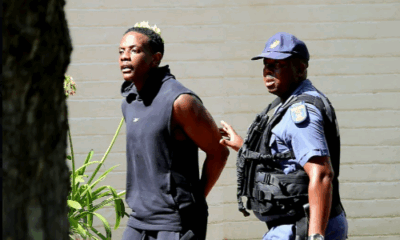
When Warrick “DJ Warras” Stock was shot dead outside the Carlton Hotel in Johannesburg, the brazen daylight attack sent shockwaves through the city. Almost immediately, his death was linked to the brutal turf wars surrounding hijacked buildings, a world insiders describe as organised, violent and deeply entrenched.
Gauteng transport MEC Kenny Kunene didn’t mince his words, declaring that the city was “at war” with building hijackers. His warning was stark: this is no longer a housing crisis or a municipal failure alone it is an organised crime battlefield costing Johannesburg billions in lost revenue.
On social media, reactions were swift and angry. Many residents said what happened to DJ Warras was an open secret finally spoken out loud: inner-city buildings are controlled by syndicates, not landlords or the state.
@southafricanpodcast All in tribute to DJ WARRAS. Here he was explaining how he dealt with an over populated building #djwarras #southafricanpodcast #trendingsouthafrica #southafricannews #podcastclips ♬ original sound – South African podcast
How Hijacked Buildings Really Work
Contrary to popular belief, most hijacked buildings are not taken over by desperate families acting alone. Property owners and investigators describe a repeatable, calculated playbook.
A building becomes vulnerable, abandoned during renovations, tied up in legal disputes, or neglected after threats force managing agents to leave. Then a group moves in, often posing as caretakers or security.
Within weeks, the owner is locked out.
Entrances are welded shut. Armed guards appear. Rent is demanded usually in cash, sometimes through untraceable mobile transfers. Refusal means eviction, intimidation or violence. Owners who push back are told plainly: return, and you risk your life.
“It’s a business model,” one owner explained. “They take everything and carry none of the costs.”
Billions in Cash, Zero Accountability
Estimates suggest around 5,000 hijacked buildings nationwide, with roughly 1,100 in Johannesburg’s CBD alone. Each building can generate hundreds of thousands of rand a month.
Multiply that across entire city blocks, and the numbers become staggering billions of rand a year, untaxed and unregulated.
DJ Warras himself had spoken publicly about the overcrowding inside these buildings, describing how spaces meant for one person are crammed with seven. Maintenance stops. Fire escapes vanish. Illegal electricity cables snake across walls. The money, however, never stops flowing.
Owners Trapped, Syndicates Protected
Ironically, the law often works in favour of hijackers. The Prevention of Illegal Eviction Act requires court orders and alternative accommodation for occupants, making evictions painfully slow.
Cases drag on for years. Municipalities cite housing shortages. Police are reluctant to intervene. Meanwhile, owners still pay rates and services for buildings they cannot enter.
Many eventually give up, exactly what syndicates want.
The Human Cost Nobody Escapes
Residents inside hijacked buildings live with constant danger: fires, disease, collapsing sanitation. Neighbouring communities face rising crime, shuttered businesses and falling property values.
Urban planners warn that these buildings don’t just rot physically they destroy trust, safety and governance.
A Crime Hidden in Plain Sight
Despite its scale, building hijacking is rarely treated as organised crime. Arrests, when they happen, target foot soldiers, not the masterminds.
DJ Warras’s death has changed the tone of the conversation. For the first time in years, officials are openly acknowledging what property owners and residents have long known.
In the shadows of Johannesburg’s skyline, rent is still collected. Power is still stolen. Fear still rules.
The only question now is whether this moment becomes a turning point or just another headline swallowed by silence.
{Source: IOL}
Follow Joburg ETC on Facebook, Twitter , TikTok and Instagram
For more News in Johannesburg, visit joburgetc.com