City Updates
South Africa’s slow climb to 3% growth as reforms test economic resilience
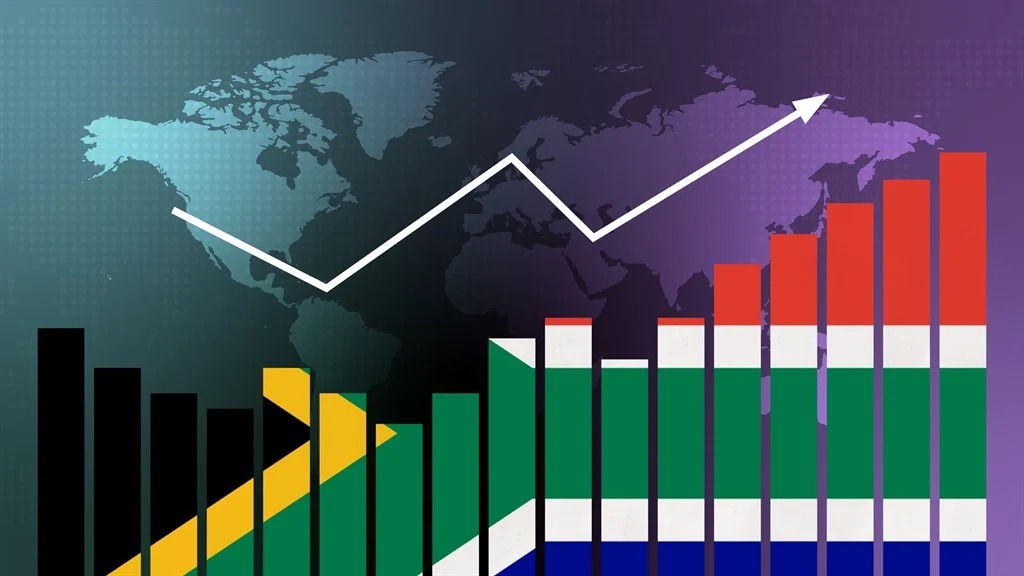
After the speeches, the glamour and the political theatre, one issue keeps surfacing in boardrooms, coffee shops, and Parliament alike: growth.
South Africa’s economy is moving, but not fast enough.
The number everyone keeps whispering about is 3%. Economists say that is the threshold where meaningful job creation begins. Right now, we are still some distance away.
The numbers tell a cautious story
The International Monetary Fund expects South Africa’s economy to grow between 1.3% and 1.4% in the 2025 to 2026 period. Beyond that, growth is projected to edge up gradually to around 1.8% in the medium term, supported by structural reforms already underway.
In local policy terms, “medium term” usually refers to the three-year cycle of the Medium Term Budget Policy Statement. So we are not talking about a quick bounce back. We are talking about incremental gains over several years.
Carpe Diem Research places growth at 1.6% in 2026, linking that improvement to progress on structural reforms and a moderate recovery in infrastructure spending.
For a country that managed just 0.5% growth in 2024, even 1.3% in 2025 represents a marked improvement. Independent economist Elize Kruger notes that expectations of around 1.3% growth in 2025 were widely anticipated, particularly given stronger transaction activity late in the year.
Still, it is clear that 3% remains a stretch target rather than an imminent reality.
Operation Vulindlela: phase two under the spotlight
Much of the optimism hinges on the second phase of Operation Vulindlela.
Phase one focused heavily on stabilising the electricity crisis and reforming key network industries. Eskom’s woes were tackled with urgency, and while challenges remain, the reform momentum has been widely acknowledged.
Phase two is expected to broaden the focus, potentially extending the same intensity to sectors such as industry and tourism. If reforms in these areas gather pace and infrastructure investment accelerates, growth prospects could strengthen materially.
Investec economist Annabel Bishop has pointed to a more upbeat longer-term outlook. She sees growth improving through to 2030, potentially nearing 3.5% year on year if infrastructure investment ramps up and private sector fixed investment gains traction. However, she cautions that the global environment remains highly uncertain.
In other words, reform at home is essential, but it must unfold in a world that is anything but predictable.
Resilience in a volatile world
The IMF has noted that South Africa’s economy has shown resilience despite heightened global policy uncertainty in 2025. That resilience, it says, stems from the country’s natural resource base, independent institutions, and strong monetary policy framework.
Closer to home, the PayInc Economic Index offers a near real-time snapshot of activity by tracking electronic transactions cleared through its systems. The index ended 2025 on a strong note, with both transaction values and volumes reaching record highs in December.
January 2026 saw some moderation, yet the index remains 3.4% higher than a year earlier. Shergeran Naidoo of PayInc says this reflects improved confidence levels heading into 2026.
Kruger adds that the data suggest economic activity has remained resilient despite persistent challenges.
That said, PayInc warns that 2026 could again be marked by volatility and uncertainty, driven by geopolitical tensions, trade dynamics, and political shifts. Interestingly, such global turbulence can sometimes lift commodity prices, which in turn boosts South Africa’s fiscus.
On the domestic front, moderate inflation, real wage increases, and interest rate cuts are expected to provide cyclical support to household spending.
Stability first, growth next
The National Treasury has reaffirmed its commitment to macroeconomic stability. Its priorities include strengthening the credibility of the fiscal framework, reducing debt to sustainable levels, safeguarding financial stability, and accelerating reforms to boost productivity.
These may sound like technical objectives, but for ordinary South Africans, they translate into something tangible: confidence. Confidence to invest, to hire, to spend, and to plan.
The broader message is clear. South Africa is not in crisis mode, but it is not yet in high gear either. The economy is holding its ground. It has weathered uncertainty. Yet without sustained reform, sharper governance, and a decisive push against corruption, confidence will struggle to ignite fully.
The long walk to 3% continues. The question now is whether phase two of reform can turn cautious optimism into genuine momentum.
Follow Joburg ETC on Facebook, Twitter, TikT
For more News in Johannesburg, visit joburgetc.com
Source: IOL
Featured Image: News24