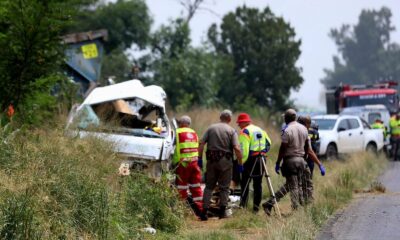
The numbers are staggering, yet they have become a grim, expected postscript to our summer holidays. This past festive season, 1,427 people lost their lives on South African roads. They died in 1,172 separate crashes, a tapestry of tragedy woven from moments of poor judgement, reckless impulse, and fatal error.
While Transport Minister Barbara Creecy presented this as a five percent decrease from the previous yearand part of a five-year low in annual fatalitiesthe underlying story remains brutally consistent. As Minister Creecy stated plainly, “the fundamental cause of road accidents is human behaviour, not infrastructure.”
The Unforgiving Clock: Weekends, Nights, and Peak Danger
The data paints a clear picture of when risk skyrockets. Most crashes clustered over weekends, with the deadliest hours falling between 7pm and 9pm, and again from midnight to 1am. These are the hours of homeward journeys after social gatherings, of fatigue, and, critically, of impaired judgement.
This periodparticularly from December 15 to 28, which accounted for 40% of crashestransforms our roads. It’s a time of festivity, but also of heightened danger, where the decision to have one more drink or to overtake on a narrow road can have irreversible consequences.
The Human Factor: By the Numbers
The enforcement statistics released are a mirror to our collective behaviour on the road:
-
1.8 million vehicles were stopped at roadblocks.
-
525 arrests were made for speeding.
-
8,561 drivers tested positive for alcohol out of 173,695 screened. That’s one in every 20 drivers tested, choosing to drive impaired.
-
Taxis, though involved in 7% of crashes, were often scenes of multiple fatalities.
These figures underscore Creecy’s point: about 80% of crashes are attributable to human factorsdrink-driving, speeding, distraction. Environmental factors like heavy rain or poor roads contributed to only 20%.
A Turning Point? The End of “Legal” Drink-Driving
Perhaps the most significant announcement was a promised legal shift. Minister Creecy declared the government will move to amend Section 65 of the National Road Traffic Act to introduce a total ban on drinking and driving.
“In today’s South Africa, it is totally unacceptable that there is a law that allows people to drink and drive,” she said, framing the change as a debt owed to those who have died. This move from a limited allowable alcohol level to a true zero-tolerance approach could be a watershed moment, aligning law with the unequivocal message that alcohol and driving are incompatible.
A Patchwork of Progress
The provincial breakdown reveals a uneven landscape. The Eastern Cape and Free State led notable declines in fatalities, while Gauteng, the Western Cape, Mpumalanga, and the Northern Cape saw increasesa reminder that local enforcement and education efforts yield different results.
The broader 2025 annual preliminary data offers a sliver of hope: at 11,418 fatalities, it’s the lowest in five years, with crashes and deaths down over 6%. This suggests sustained enforcement and awareness campaigns can move the needle.
Yet, the season’s final toll1,427 names, stories, and empty seats at family tablesis a sobering reminder. The road to halving fatalities by 2030 is paved not just with better laws and enforcement, but with millions of individual decisions. It requires every driver to internalise a simple truth: the most dangerous thing on our roads isn’t a pothole or a narrow shoulder. Too often, it’s the person behind the wheel.