Government steps in as fuel pressure builds across South Africa
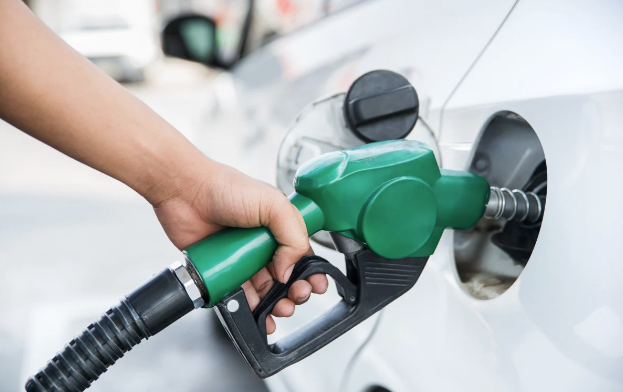
If you’ve filled up your tank recently, you’ve probably felt itthat quiet sting at the pump that lingers long after you drive off.
Now, government is stepping in, trying to ease the pressure as global tensions begin to creep into South Africa’s fuel bill.
In its latest update, Cabinet confirmed what many South Africans already suspected: while fuel is still flowing, the forces driving up prices are far bigger than anything happening locally.
A global problem hits close to home
At the centre of the issue is instability in the Middle East, a region South Africa depends on for much of its refined fuel.
As geopolitical tensions disrupt global energy markets, the knock-on effect is simplefuel becomes more expensive to source, and those costs eventually land on South African consumers.
According to Khumbudzo Ntshavheni, there’s no immediate shortage to worry about.
But the warning is clear: global shocks are starting to ripple through the economy.
No shortage, but plenty of anxiety
Despite growing concern, government insists the country is not running out of fuel.
In fact, South Africa continues to meet daily demandestimated at 60 to 70 million litres of petrol and dieselthrough a mix of import sources.
Still, reports of dry petrol stations have popped up in some areas. Officials say these are largely caused by panic buying and logistical hiccups, not an actual supply crisis.
Ntshavheni has urged South Africans to stay calm and avoid hoarding, emphasising that supply remains stable for now.
The reality of South Africa’s fuel reserves
Behind the scenes, the numbers tell a more complicated story.
The Strategic Fuel Fund holds about eight million barrels of fuel in reserveroughly 1.3 billion litres.
That translates to just over three weeks of supply if the country had to rely on reserves alone.
Here’s the catch:
South Africa is supposed to maintain at least 60 days’ worth of reserves by law.
That gap has reignited long-standing concerns about energy securityand how exposed the country is to global disruptions.
Relief at the pumps: what the fuel levy cut means
In a move aimed at giving consumers immediate breathing room, government has announced a temporary reduction in the fuel levy.
The change is significant:
- Petrol levy drops from about R4.10 to R1.10 per litre
- Diesel levy falls from roughly R3.93 to R0.93 per litre
For everyday motorists, that translates into noticeable savingsespecially for commuters, taxi operators, and delivery drivers who feel fuel hikes the most.
But officials are clear: this is a short-term cushion, not a permanent fix.
A coordinated response behind the scenes
To deal with the wider impact, government has set up a dedicated task team bringing together departments responsible for finance, energy, transport, and trade.
The idea is to tackle the issue holisticallybecause fuel doesn’t just affect transport.
It affects:
- Food prices (through transport and logistics)
- Business operating costs
- Inflation across the economy
In short, when fuel rises, everything else tends to follow.
Social media reaction: relief, but also scepticism
Online, the reaction has been mixed.
Some South Africans welcomed the levy cut, calling it a much-needed break in a tough economic climate.
Others weren’t convinced it goes far enough.
“It helps, but groceries are still going up,” one user posted.
“We need long-term solutions, not temporary relief,” another added.
There’s also growing awareness that global eventswars, trade tensions, supply chain disruptionsare increasingly shaping everyday life in South Africa.
The bigger question: are we too dependent on imports?
This moment has reopened a familiar debate.
South Africa’s reliance on imported refined fuel makes it vulnerable to exactly this kind of global volatility.
For years, experts have warned about the need to:
- Strengthen local refining capacity
- Diversify energy sources
- Invest in alternatives like renewables
Without those shifts, the country remains exposedno matter how strong short-term interventions may be.
A delicate balancing act ahead
For now, the message from government is steady:
There is enough fuel, and there are plans in place.
But beneath that reassurance lies a more complex reality.
South Africa is navigating a world where distant conflicts can quickly become local cost-of-living crises. And while a levy cut may soften the blow today, the long-term challenge is far bigger.
For millions of South Africans, the hope is simplethat relief at the pump today doesn’t turn into even higher costs tomorrow.