News
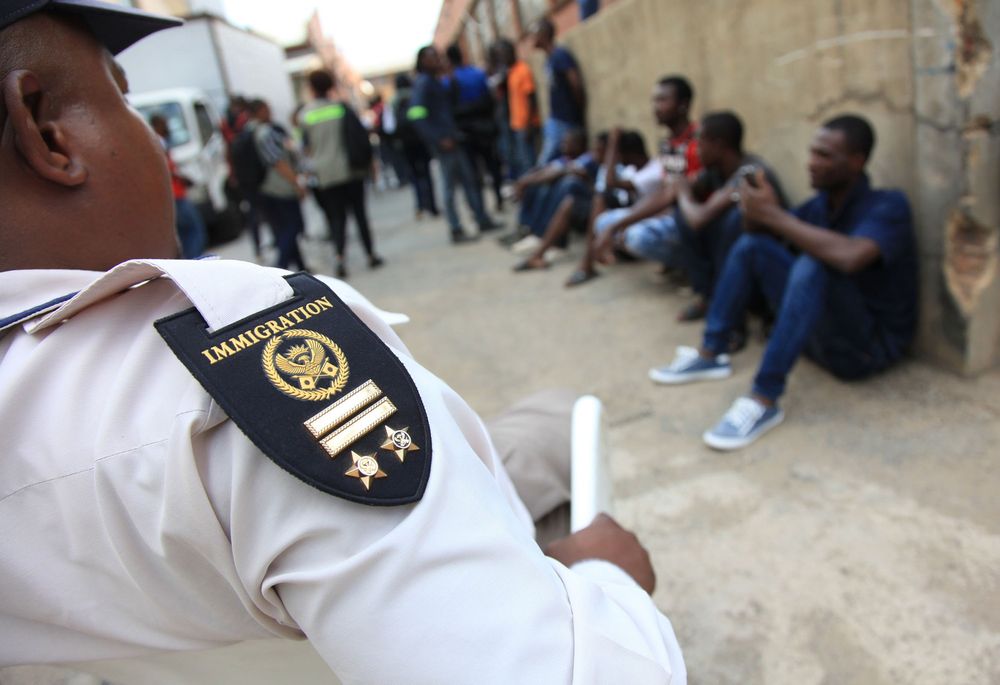
Just 832 officers stand between South Africa and a growing immigration crisis
Just 832 officers stand between South Africa and a growing immigration crisis
A system stretched thinner than most realise
On any given day, thousands of people move in and out of South Africa, through airports, land borders, and informal crossings. It’s a reality of a country that sits at the crossroads of the continent.
But here’s the catch: fewer than 1,000 officials are tasked with keeping track of it all.
That’s not a typo.
According to Home Affairs Minister Leon Schreiber, the entire country relies on just 832 immigration officers to monitor who is in the country legally and who isn’t.
It’s a number that has sparked concern in Parliament and beyond, raising uncomfortable questions about whether the system is built to cope.
The problem isn’t just numbers, it’s tools
If the staffing shortage wasn’t worrying enough, there’s another layer to the story.
Many of these officers are working without basic digital tools.
They cannot electronically verify passports or identity documents on the spot a gap that opens the door to fraud and makes enforcement far more difficult than it should be.
The issue came to light after the African Transformation Movement pressed the department for answers, with MP Mandisa Marawu highlighting the risks of operating in what some are calling an “analogue system in a digital age.”
Schreiber has since pointed to plans for biometric verification and broader digital upgrades but for now, the reality on the ground remains unchanged.
A tale of two provinces
The distribution of officers across provinces tells its own story.
In Gauteng the country’s economic engine, home to around 16 million people there are 230 immigration officials.
That might sound like a lot until you consider the scale of movement through Johannesburg’s airports and the province’s dense urban population.
Now compare that to KwaZulu-Natal, where more than 12 million residents rely on just 64 officers.
It’s a gap that’s hard to ignore and even harder to justify.
Meanwhile, smaller provinces such as Limpopo and Mpumalanga have relatively higher numbers of officials despite smaller populations, likely due to their proximity to key land borders.
The long shadow of a border debate
South Africa’s immigration challenges didn’t start overnight.
For years, the country has faced criticism for struggling to manage undocumented migration, with porous borders and limited enforcement capacity often cited as key issues.
The pressure has become so intense that the South African National Defence Force has been deployed to assist at border areas a move that underscores just how strained the system has become.
At the centre of it all is the Border Management Authority, which has been tasked with tightening control but continues to face resource and coordination challenges.
Public reaction: frustration and fatigue
On social media, the reaction has been swift and familiar.
Many South Africans say the numbers confirm what they’ve long suspected: that the system is overwhelmed.
Some voices have linked the shortage of officers to broader concerns about undocumented migration, job competition, and pressure on public services.
Others, however, warn against oversimplifying the issue, pointing out that migration is often driven by economic hardship and instability in neighbouring countries.
It’s a debate that quickly becomes emotional reflecting deeper anxieties about identity, opportunity, and fairness.
A digital fix or a deeper rethink?
The Department of Home Affairs is betting on technology to help close the gap.
Biometric systems and digital verification tools are expected to modernise how documents are checked and how people are tracked.
But technology alone won’t solve everything.
Without enough trained personnel on the ground, even the best systems can fall short.
More than just borders
At its core, this isn’t just a story about numbers or staffing.
It’s about capacity and whether the state can keep pace with the realities of movement in a globalised region.
South Africa remains a destination for many seeking work, safety, or opportunity. That’s unlikely to change anytime soon.
The question is whether the systems meant to manage that movement are evolving fast enough.
Right now, with just 832 officers and limited tools at their disposal, the answer feels uncertain.
{Source: The Citizen}
Follow Joburg ETC on Facebook, Twitter , TikTok and Instagram
For more News in Johannesburg, visit joburgetc.com