News
582 Passports, Cash in Plastic Bags: Inside South Africa’s Latest Passport Scandal
Buying Days in South Africa: How Passport Stamps Became a Commodity
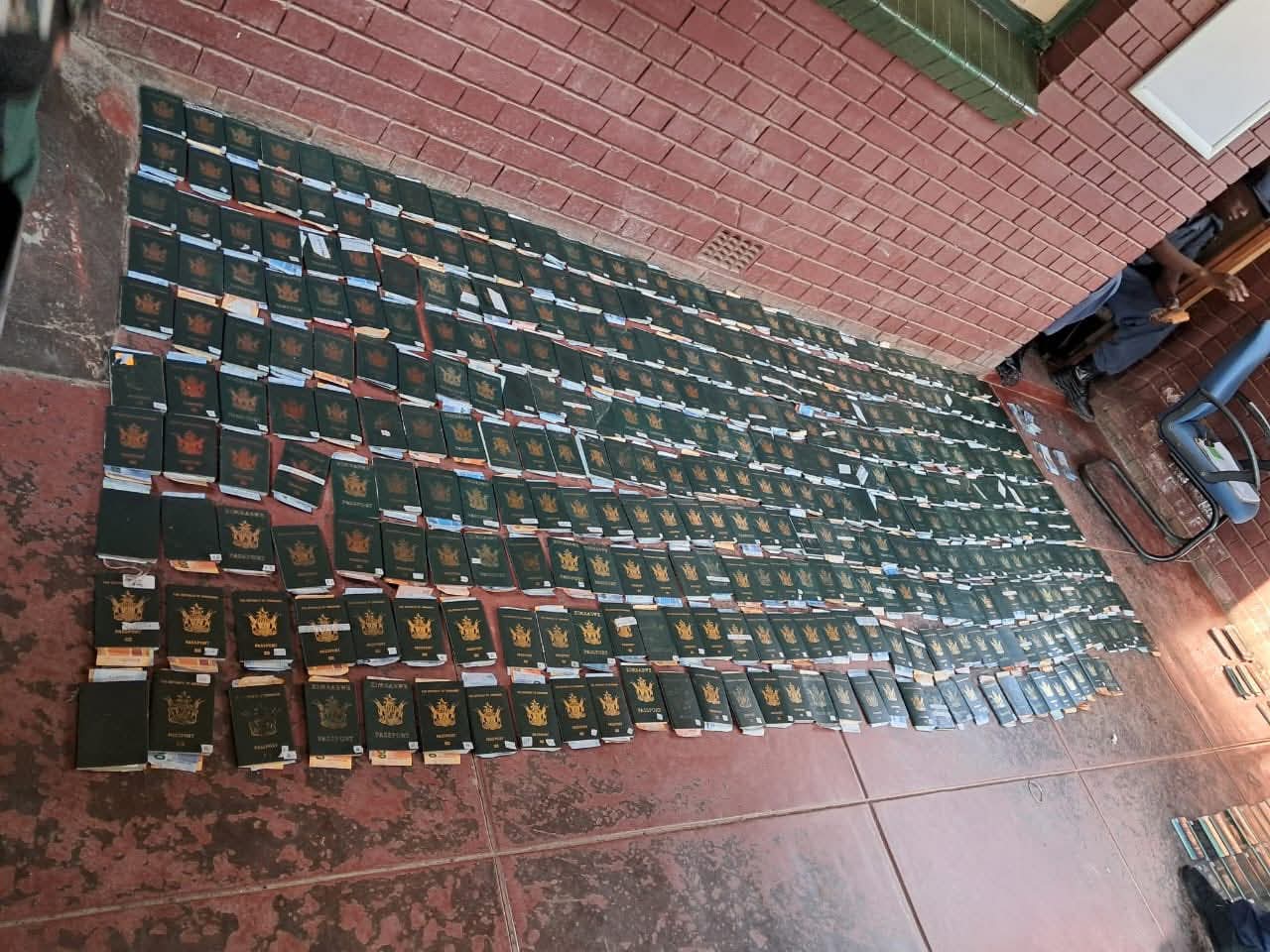
South Africa woke up this week to yet another reminder of how the borders are being chipped away not by foreign forces, but by greed. A 43-year-old Zimbabwean national was intercepted in Mpumalanga with 582 passports and over R147,000 in cash stuffed inside a hidden compartment of the bakkie he was driving. Not photocopies. Not blanks. Real passports, many of them laced with banknotes like envelopes waiting for a handshake.
Police believe the stash was destined for illegal stamping, a quiet, profitable system where days in South Africa can be “bought” if you know the right official or the right price.
NEWS: A Zimbabwean national was on Monday arrested in Middelburg in Mpumalanga province after he was found carrying 582 passports of Malawi, Zimbabwe and Mozambique.
Each passport had cash stuffed inside it, suggesting that the money was a bribe for an immigration official to… pic.twitter.com/GnHwXtO36iSihle Mavuso (@ZANewsFlash) December 10, 2025
A Bakkie, A Secret Compartment, and a Border Problem
The arrest came after a multi-disciplinary police team, including the Middelburg Flying Squad, Nkangala Anti-Hijacking Unit, and Waterval Boven SAPS, acted on a tip-off. Around 1pm on Monday, they stopped the white Chevrolet Utility registered in Gauteng. A search quickly turned into a discovery that reads like a script from Ozark, hundreds of passports hidden in a concealed compartment, plus R20,000 wrapped in black plastic, adding up to roughly R147,300.
Police say it looked like a deal mid-journey.
Someone was likely waiting. Someone else was planning to stamp.
The man is now facing charges of fraud, contravening the Immigration Act, and money laundering, and will appear in the Waterval Boven Periodical Court.
Not the First Time And Sadly, Not the Last
This case slots into a growing list of passport-related arrests in recent years. Just last year, IOL reported on a Mpumalanga immigration officer who allegedly stamped an expired Tanzanian passport for a R1,000 bribe. Other officers have been caught selling entry and exit stamps turning border control into a transactional marketplace.
Another incident saw a suspect caught with 34 passports near the Lebombo border to Mozambique. Of those, 32 were Mozambican and two Angolan, again accompanied by cash. Every case tells the same story: passports are circulating like currency, and someone is willing to pay.
Why It Matters Beyond Crime Headlines
To the average South African, border corruption feels like one more leak in the national bucket. But the effects run deeper:
-
It compromises national security
-
It fuels illegal migration networks
-
It enables identity fraud
-
It tarnishes legitimate cross-border movement and labour travel
For ordinary migrants trying to regularise their stay, these illegal operations make the system less trustworthy and more expensive. For citizens, it raises the question: How secure is our ID and passport system really?
Voices on the Ground: What People Are Saying
On social media, reactions ranged from frustration to dark humour:
“At this rate, Border Management needs cameras, bodycams and lie detector tests.”
“582 passports? That’s not side hustle that’s stock.”
Others pointed fingers at Home Affairs, arguing that corruption thrives where queues are long and desperation meets opportunity.
Police Promise More Arrests
Acting provincial commissioner Major General Zeph Mkhwanazi welcomed the arrest and said the investigation is widening.
“We will not leave any stone unturned. More arrests cannot be ruled out,”
he said.
If true, we may be looking at a network rather than a lone courier, a supply chain where passports move like contraband and stamping is the final step.
A Bigger Problem in Need of Bigger Answers
This arrest exposes a system cracking under pressure. As South Africa works toward digitising Home Affairs services, cases like this highlight why reform isn’t optional it’s urgent. Corruption at border gates isn’t just a legal issue; it’s a national security risk.
If 582 passports can travel in a bakkie, what else travels unnoticed?
In the end, it’s more than passports.
It’s trust. It’s identity. It’s the belief that borders are guarded, not auctioned.
And South Africans are watching closely to see whether this arrest becomes a turning point or just another headline in the archive.
{Source: IOL}
Follow Joburg ETC on Facebook, Twitter , TikTok and Instagram
For more News in Johannesburg, visit joburgetc.com