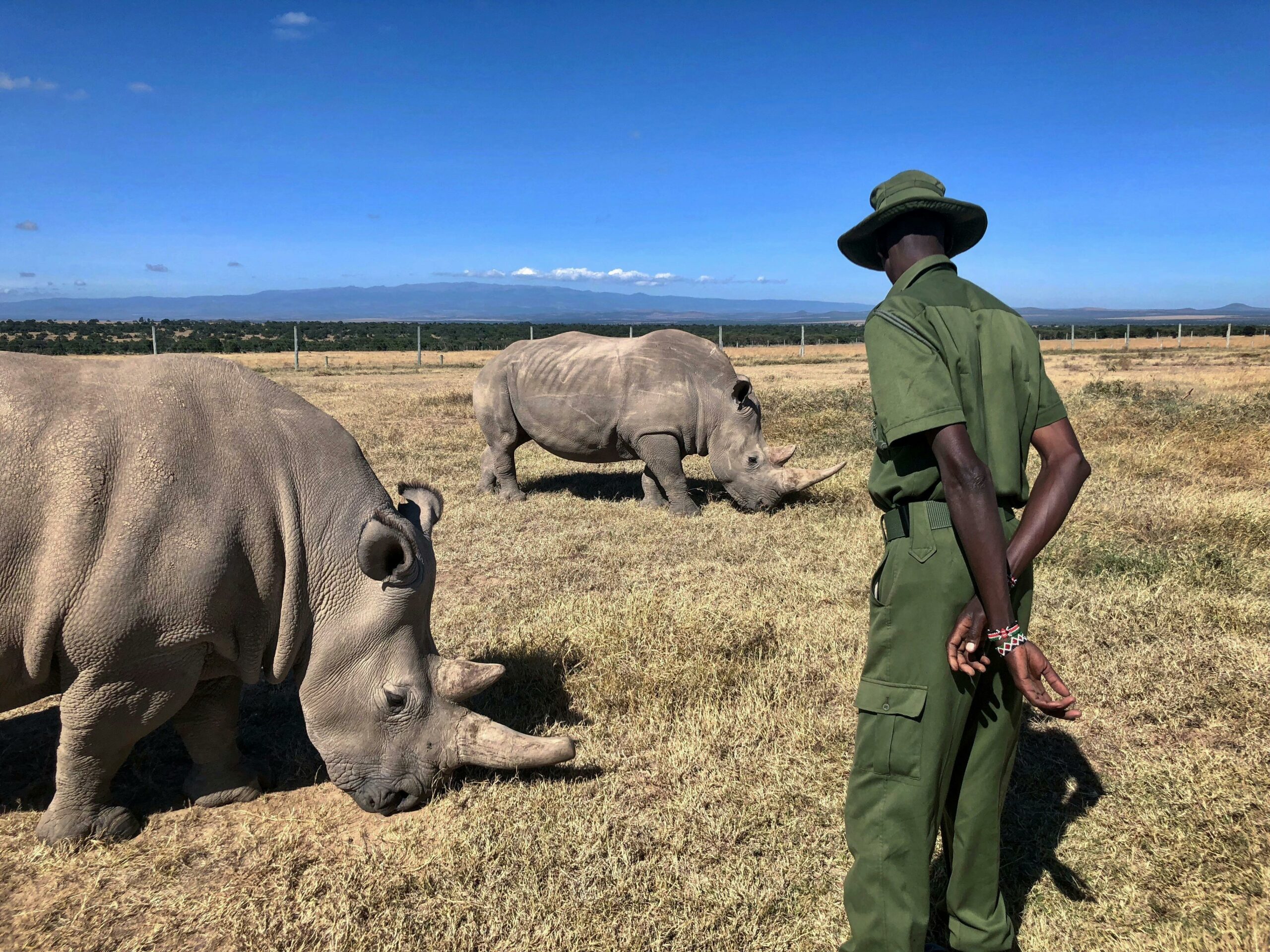
A Northern Cape rhino breeder’s plan to sell horns on the international market has thrust South Africa into a legal and ethical showdown that could reshape global wildlife conservation. Hendrick “Wicus” Diedericks, who owns a hunting lodge and a herd of over 400 captive white rhinos, has won two consecutive court battles arguing he has the right to export horns. But now, the case is headed to the Supreme Court of Appeal, leaving a 50-year international ban hanging in the balance.
Diedericks describes himself as a philanthropist and conservationist. His argument is narrowly legal but explosively consequential: because his rhinos are bred in captivity, they are not “wild” under the strict terms of the Convention on International Trade in Endangered Species (CITES). He points to a little-known clauseArticle VII(5)that allows for simpler export certificates for certain captive-bred specimens. In late 2025, the Kimberley High Court agreed with his interpretation, sending shockwaves through conservation circles.
A “Huge Win” or a Dangerous Loophole?
For private wildlife ranchers, the ruling was a cause for celebration. Wildlife Ranching South Africa hailed it as unlocking “potentially millions in revenue that can be reinvested into protection and community development.” Diedericks himself claimed the decision could “save the species, fund conservation and uplift rural communities.”
But the Department of Forestry, Fisheries and the Environment (DFFE) moved swiftly to appeal. Their concern is fundamental: they believe opening any legal trade, even from captive-bred animals, could provide a smokescreen for illegal horn from poached wild rhinos to enter the market. Critics fear it would rekindle demand, complicate enforcement, and ultimately put the continent’s remaining wild rhinos at greater risk.
The Shadow of History and the International Stage
This case walks a path previously tread by breeder John Hume, whose similar efforts ultimately failed. It also touches a raw nerve in the global conservation community. Article VII(5) has been controversial since the 1990s, with many CITES member states warning it could be abused to undermine the treaty’s very purposeto protect endangered species from commercial exploitation.
The South African government is now caught between competing pressures: supporting a lucrative private industry that manages a large portion of the national rhino population, and upholding its international commitments to a ban designed to stop poaching. The case is no longer just about Diedericks’ 10 horns; it’s about setting a precedent that could open floodgates.
What Happens Next?
With the DFFE’s appeal lodged, all plans for legal exports are on hold. The Supreme Court of Appeal must now untangle a complex knot: Does South African law properly incorporate the CITES treaty? Does breeding an animal in captivity remove it from the spirit of a convention designed to protect species from trade?
The ruling will resonate far beyond the Northern Cape conservancy. It will signal to the world how South Africa, home to the majority of the world’s rhinos, balances conservation, commerce, and legal innovation. For now, the rhinos graze, the courts prepare, and the world watches, waiting to see whether a legal technicality will crack a decades-old global consensus.