News
South Africa’s rhino poaching falls but Kruger’s crisis deepens
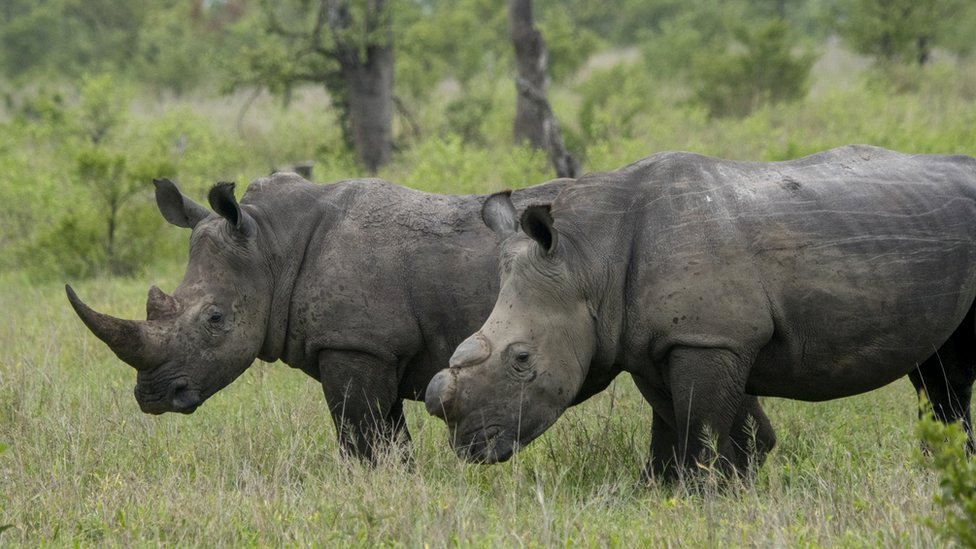
There is a rare piece of good news in South Africa’s long and painful battle against rhino poaching. The country has recorded a notable decline in killings during 2025. Yet behind that encouraging headline sits a more troubling reality, one that has conservationists watching Kruger National Park with growing unease.
A national decline that offers cautious hope
According to figures released by the Department of Forestry, Fisheries and the Environment, 352 rhinos were poached across South Africa between January and December 2025. That is down from 420 the year before, marking a 16% decrease.
Officials say the improvement did not happen by chance. It followed tighter coordination between government agencies, conservation groups, and private sector partners. State properties still carried the heaviest burden, with 266 rhinos lost, while 86 were killed on privately owned reserves and farms.
For many South Africans, the drop feels like a small but meaningful win in a fight that has stretched over more than a decade. Social media reaction has reflected a mix of relief and guarded optimism, with conservative voices praising collaboration while warning that the numbers remain far too high.
Kruger’s worst year on record
While the national picture improved, the situation inside Kruger National Park moved sharply in the opposite direction.
The park recorded 175 poached rhinos in 2025, almost double the 88 reported in 2024. The increase continues a worrying three-year trend, with 78 animals lost in 2023.
Mpumalanga emerged as the hardest-hit province overall, losing 178 rhinos compared with 92 the previous year. Most of those losses occurred inside Kruger, which has long been a frontline in the battle against organised wildlife crime.
Investigations have linked the spike to internal integrity issues. Polygraph testing revealed connections between failed tests and periods of increased poaching during late 2024 and into 2025. Seven Ranger Services employees were dismissed after disciplinary processes.
In response, the park is expanding its field ranger presence, deploying 12 operational K9 units with newly trained handlers, and investing heavily in surveillance and anti-poaching technology.
KwaZulu-Natal shows what is possible
In stark contrast, Hluhluwe iMfolozi Park in KwaZulu-Natal reported a dramatic drop in poaching. Incidents fell from 198 in 2024 to just 63 in 2025.
Ezemvelo KZN Wildlife credits the turnaround to a combination of strategies rather than a single solution. The strategic dehorning programme introduced in 2024 helped stabilise pressure, but it was reinforced by advanced camera systems, sensor-based detection, and closer cooperation with private rhino owners through the Integrated Wildlife Zones Programme.
An integrity plan that included polygraph testing of all park law enforcement personnel also formed part of the response. Conservation partners such as WWF, Save the Rhino International, Wildlife ACT, and the Peace Parks Foundation provided ongoing support.
The contrast between KwaZulu-Natal and Kruger highlights a broader lesson emerging across the sector. Technology, transparency, and partnerships appear to be as important as boots on the ground.
Courts and crackdowns send a stronger message
Law enforcement efforts have also produced significant convictions. The National Integrated Strategy to Combat Wildlife Trafficking has secured lengthy prison sentences in several major cases.
One of the most prominent involved ZM Muiambo, also known as Thomas Chauke, who received a 20-year sentence in April 2025 after being found guilty on 19 charges linked to illegal rhino hunting and related crimes across four provinces.
Other rulings included a 35-year sentence for poachers responsible for killing three white rhinos at Pilanesberg National Park and a 22-year sentence tied to illegal killing and conspiracy charges connected to Kruger.
These outcomes reflect closer coordination between prosecutors, specialised police units, and environmental investigators, an approach authorities believe is beginning to disrupt organised syndicates.
Global cooperation steps up
South Africa has also intensified its international partnerships to tackle trafficking networks that stretch beyond its borders.
A joint operation with Singapore authorities in December 2025 led to the seizure of 17 rhino horns at a storage facility in Kempton Park, along with lion and tiger bones and other wildlife products. Two suspects appeared in court on charges under environmental legislation.
The country’s enforcement work received international recognition through the Asia Environmental Enforcement Recognition of Excellence Award, acknowledging efforts to combat cross-border environmental crime.
During Operation Thunder 2025, coordinated by Interpol and the World Customs Organisation, South African teams contributed to pangolin rescues, arrests linked to succulent trafficking, and firearm seizures connected to poaching syndicates.
The fight is far from over
Officials stress that the downward national trend will only hold if collaboration continues and strategies keep evolving. The shift in hotspots is a reminder that poaching networks adapt quickly.
For everyday South Africans, the message is simple but powerful. Protecting wildlife is not only a conservation issue but also part of safeguarding tourism, rural livelihoods, and national heritage.
Authorities continue to urge the public to report suspicious wildlife activity through the environmental crime hotline or SAPS. In a country where rhinos have become both a symbol of pride and vulnerability, every tip-off still matters.
Follow Joburg ETC on Facebook, Twitter, TikT
For more News in Johannesburg, visit joburgetc.com
Source: The Citizen
Featured Image: BBC