News
“We’ve Seen This Before”: South Africa Warns UN Over US Seizure of Venezuela’s President

A Familiar Warning From Pretoria
South Africa has sounded a sharp warning at the United Nations, accusing the United States of abducting Venezuelan President Nicolás Maduro and his wife during a military operation and cautioning that the move risks dragging the world back to an era where power overrides principle.
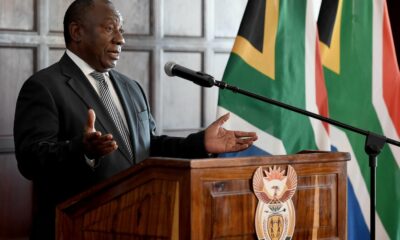
Speaking at the UN Security Council on Monday, South Africa’s acting Deputy Permanent Representative, Jonathan Passmoor, delivered a firm message: unilateral force, no matter the justification offered, threatens the foundations of international law.
For a country shaped by its own history of foreign pressure and global diplomacy, Pretoria’s intervention carried both legal weight and lived experience.
[ Watch] Statement by the Republic of South Africa to the United Nations Security Council Meeting on the situation in Venezuela delivered by Mr Jonathan Passmoor Acting Deputy Permanent Representative https://t.co/DPPXBKIAxO pic.twitter.com/KuQZdJqBVa
Chrispin Phiri 🇿🇦 (@Chrispin_JPhiri) January 5, 2026
“A Clear Violation of Sovereignty”
Addressing the Council, Passmoor said the US operation violated Venezuela’s sovereignty, territorial integrity and political independence, principles at the very heart of the United Nations Charter.
He stressed that the Charter only allows the use of force in narrowly defined circumstances, such as self-defence or with explicit Security Council authorisation.
“The prohibition on the use of force is a cornerstone of the United Nations Charter,” he said, warning that ignoring it weakens the entire rules-based international order.
South Africa rejected any attempt to frame the operation as a form of law enforcement or accountability for alleged crimes, arguing that no country has the right to enforce its domestic laws inside another sovereign state without consent.
Why the Precedent Matters
Beyond Venezuela, South Africa’s concern was about what comes next.
Passmoor warned that if such actions go unchallenged, the world risks normalising military force outside international law a shift that would leave smaller and developing nations dangerously exposed.
“This would signal a return to a system where might makes right,” he cautioned.
For countries like South Africa, which rely heavily on international legal frameworks rather than military power, that shift could have far-reaching consequences.
“We Have Seen This Movie Before”
In one of the most striking moments of the address, Passmoor drew parallels with past military interventions.
“From Iraq to Libya, the use of force has often deepened crises, destroyed institutions and left lasting instability,” he said.
The reference resonated strongly online, where South African users echoed the sentiment, with some noting that regime-change operations often promise stability but leave chaos behind. Others praised Pretoria for “speaking truth to power” on a global stage where smaller states often feel sidelined.
Call for Dialogue, Not Guns
South Africa urged the Security Council to recommit to its core mandate: maintaining international peace and security through dialogue, not force.
“The future of Venezuela must be determined by the Venezuelan people themselves,” Passmoor said, adding that external military intervention can never substitute for political solutions.
The United States has defended its actions as necessary, but growing unease within the Security Council suggests the debate is far from settled.
A Broader Global Test
At its core, South Africa’s intervention was about more than one country or one leader. It was a reminder that international law exists precisely to restrain the powerful and protect the vulnerable.
As global tensions rise and military solutions are once again floated as quick fixes, Pretoria’s message was clear: the world has been down this road before and it rarely ends well.
“I’m Still the President”: Maduro’s Defiant US Court Appearance Sends Shockwaves Through Venezuela
{Source: IOL}
Follow Joburg ETC on Facebook, Twitter , TikTok and Instagram
For more News in Johannesburg, visit joburgetc.com